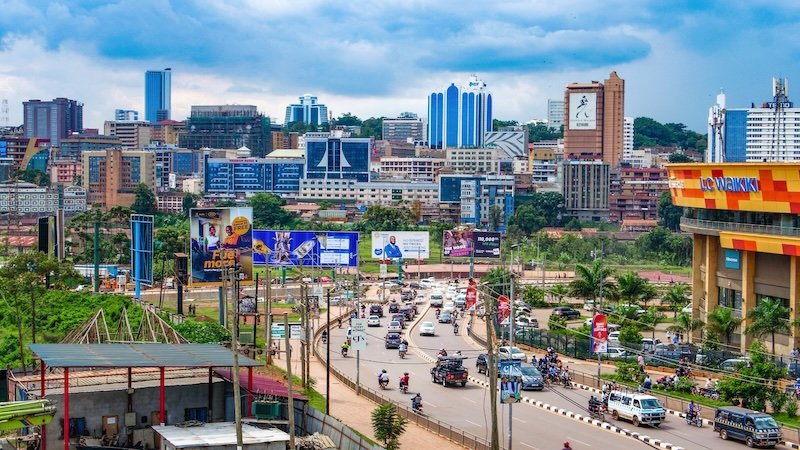
Uganda’s economic growth forecast for the 2026/27 financial year has been revised downwards to 6 – 6.5 per cent from an earlier projection of 7–7.5 per cent, as rising food and fuel prices, the depreciation of the shilling, and global economic uncertainty weigh on the country’s economic outlook.
The revision comes amid mounting inflationary pressures, with the cost of essential food items, transport and energy rising, threatening household purchasing power and increasing operating costs for businesses.
According to the Uganda Development Bank’s October 2026 Macroeconomic Digest, annual headline inflation rose to 5.8 per cent in October from 4.6 per cent in September, largely driven by higher food prices, rising transport costs and increased energy expenses.
The report indicated that food crops and related items recorded one of the sharpest increases, with annual inflation more than doubling to 10.7 per cent in October from 4.5 per cent the previous month.
Prices of commonly-consumed food items, including dry beans, sweet potatoes, tomatoes, matoke and pineapples, contributed to the increase, placing additional pressure on households that spend a substantial share of their incomes on food.
“Annual inflation for dry beans rose to 22.5 per cent from 5.6 per cent, while that of sweet potatoes increased to 15.1 per cent from 0.6 per cent. Tomato prices also registered annual growth of 3.9 per cent, reversing a 13.8 per cent decline recorded in September,” the UDB microeconomic digest report noted.
The report notes that rising food prices are particularly affecting households with limited disposable incomes as a larger proportion of their earnings goes towards meeting basic consumption needs.
Energy costs have added to that pressure. The report further highlighted that the annual inflation in the Energy, Fuels and Utilities category increased to 15.4 per cent in October from 14.5 per cent in September.
Petrol inflation rose to 34.3 per cent from 30.9 per cent, while diesel inflation increased to 49.2 per cent from 42.5 per cent. Firewood inflation also climbed to 15.5 per cent from 14.1 per cent.
The increases, as per the report, are likely to feed into the cost of transporting goods, manufacturing and distributing products, further raising expenses for businesses and consumers.
Notably, the Uganda Development Bank report warns that these pressures could persist, projecting headline inflation to average between 7 and 7.5 per cent over the next 12 months, while core inflation is expected to average between 5.5 and 6 per cent.
“Higher costs could weaken household purchasing power, squeeze business margins and increase working capital needs,” the report indicates as inflationary pressures come as the economy also faces currency depreciation and tighter financing conditions.
Additionally, the report also highlighted that the Uganda shilling depreciated by 7.8 per cent against the US dollar in October, with the average exchange rate weakening from Shs 3,868.9 per dollar in September to Shs 4,170.5 in October with the depreciation increasing the cost of imported machinery, raw materials and other production inputs, particularly for businesses that depend on foreign supplies.
The report links the currency pressure to increased demand for foreign exchange, elevated international oil prices and shipping costs, alongside weaker foreign exchange inflows from some commodity exports and tourism.
The report also highlights that the Bank of Uganda raised the Central Bank Rate from 9.75 per cent to 12 per cent in October, an increase of 225 basis points, in response to rising inflationary pressures and the need to anchor inflation expectations.
The reported noted that the weighted average lending rate on shilling-denominated loans declined to 17.19 per cent in September from 17.90 per cent in August.
But warned that “tighter domestic and external financing conditions could increase the cost of accessing credit and constrain investment. Beyond domestic pressures, geopolitical tensions, particularly the conflict in the Middle East, remain a significant risk to Uganda’s economic outlook.”
The report also warns that prolonged disruptions to international shipping routes like the Strait of Hormuz could increase fuel, freight, insurance and production costs while delaying the delivery of machinery, industrial materials and other essential supplies.
The report also noted that agriculture remains vulnerable to adverse weather conditions, which could affect production, rural incomes and the availability of raw materials for agro-processing industries.
There have been warnings of Uganda facing El Nino up to December 2026. Despite the weaker near-term outlook, the report projects that Uganda’s economy will strengthen over the medium term, with growth expected to average approximately 8 per cent.
“Private investment, stronger exports and anticipated developments in the oil sector are expected to support the recovery, creating opportunities in construction, transport, logistics, energy and business services.
Uganda is expected to launch first oil when construction of the East African Crude Oil Export pipeline is completed. The pipeline is at 93 per cent, with first oil expected at the start of third quarter of 2027.
Related