
28 November 2026
There are places you visit for their beautiful scenery, others for their history, and then there are places that introduce you to ways of life you may never have encountered before. The Omo Valley, in southern Ethiopia, is one of those places.
Known for its cultural diversity, ancient history and changing landscapes, the Omo Valley is one of Ethiopia’s most fascinating regions. It is home to several communities, each with its own language, traditions, clothing, beliefs and relationship with the land.
But the Omo Valley is much more than the photographs that often circulate online. Behind its colourful beadwork, traditional hairstyles and cultural ceremonies are real communities with families, livelihoods, histories and everyday lives. Understanding the region means looking beyond what catches the eye and taking time to appreciate the people and stories that make it special.
1. WHERE IS THE OMO VALLEY?
The Omo Valley is found in southwestern Ethiopia, in the country’s southern region. The Omo River is central to the landscape, flowing southwards from the Ethiopian highlands before reaching Lake Turkana, near the Kenyan border.
The wider South Omo area is known for its geographical and cultural diversity. It includes dry lowlands, hills, riverbanks and settlements that are home to different ethnic communities.
Jinka is one of the main towns in the region and an important starting point for visitors exploring South Omo. It provides access to surrounding communities and cultural destinations.

The region is relatively remote, which is part of what makes planning a visit different from travelling to Ethiopia’s larger cities.
2. A REGION HOME TO MANY CULTURES
One of the things that makes the Omo Valley remarkable is the number of different communities living within the wider region.
South Omo is home to more than a dozen ethnic groups, including the Hamar, Mursi, Karo, Dassanech, Ari, Banna and Nyangatom communities. Each has its own cultural identity, language and traditions.
Although these communities are often grouped together when people talk about the Omo Valley, they are not one and the same. Their customs, histories and everyday experiences differ.
For visitors, this diversity offers an opportunity to learn about the different ways people have built their lives around the region’s environment, livestock, farming and social traditions.
It is also a reminder that culture is not something that belongs only in museums. In the Omo Valley, it remains part of everyday life.


3. MEETING THE HAMAR COMMUNITY
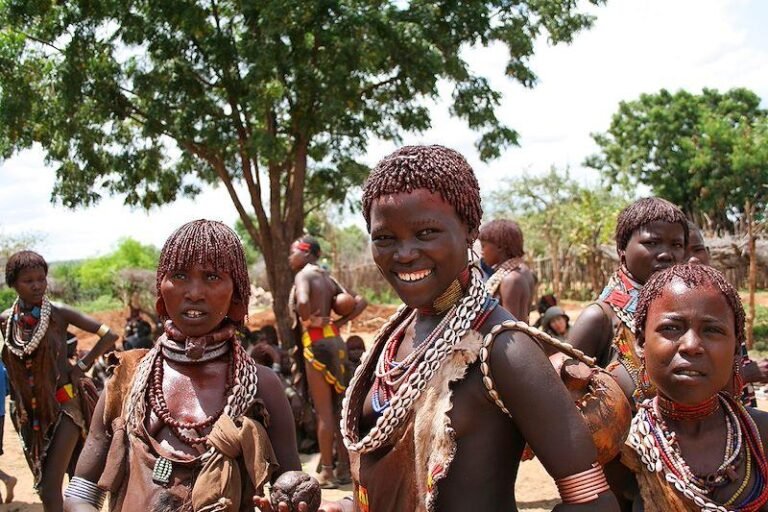
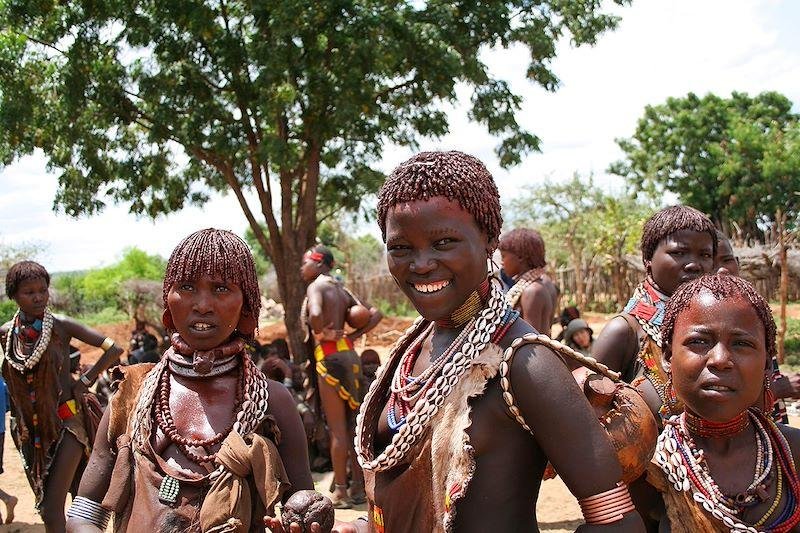
The Hamar are among the communities most associated with the Omo Valley. They are particularly recognised for their distinctive hairstyles, beadwork, leather clothing and traditional ceremonies.
Hamar women’s hairstyles, often styled with ochre and carefully arranged into sections, are among the region’s most recognisable cultural expressions. Their jewellery and clothing also carry cultural meaning and reflect traditions passed through generations.
One of the best-known Hamar ceremonies is bull jumping, a traditional rite associated with a young man’s transition into adulthood. It is an important cultural event, although it is not something visitors should expect to encounter on demand. Ceremonies take place according to community customs and circumstances.

Beyond the traditions that attract visitors, the Hamar are also farmers and pastoralists whose daily lives are closely connected to family, livestock and the surrounding environment.
4. THE MURSI COMMUNITY AND THEIR CULTURAL IDENTITY
The Mursi are another well-known community in the wider Omo region. Some Mursi women are recognised for wearing clay lip plates, an aspect of cultural identity that has attracted international attention.

However, there is much more to the Mursi than this one practice. Their lives, social organisation, cattle keeping, clothing and artistic expressions form part of a wider cultural identity.


Mursi communities live in areas around the Omo and Mago regions, where the environment influences everyday activities and livelihoods.
For anyone learning about the Mursi, it is important to approach their culture with respect rather than treating people as attractions. A photograph may capture a moment, but it cannot tell the full story of a community.
5. THE KARO: ART AND LIFE ALONG THE OMO RIVER
Living along the banks of the Omo River, the Karo community is widely recognised for its artistic body painting.
Using natural materials, including white chalk and other pigments, Karo people create patterns on their bodies. These designs are part of their cultural expression and are often associated with social occasions and celebrations.
The Karo are also known for their relationship with the river and the surrounding landscape. The Omo provides an important source of livelihood for communities in the area, supporting activities such as fishing and farming.
Their settlements and the landscapes around them offer a different perspective on life in South Omo, showing how culture and the natural environment are closely connected.
6. THE DASSANECH AND LIFE NEAR LAKE TURKANA
Further south, near the Omo River delta and Lake Turkana, live the Dassanech community.
Their lives are closely connected to the river, the lake and the surrounding dry landscape. Livestock keeping, fishing and farming all contribute to livelihoods in the region, although activities vary depending on location and environmental conditions.
The area where the Omo River meets Lake Turkana is particularly significant. It is a landscape shaped by water, seasonal changes and the people who depend on it.
Learning about the Dassanech offers another way to understand the diversity of South Omo. It also shows how different communities have adapted to the conditions of the places they call home.
7. THE MARKETS OF SOUTH OMO
Markets are among the most interesting places to experience everyday life in South Omo.
Towns such as Turmi, Dimeka, Key Afer and Jinka host markets that bring together people from surrounding communities. These gatherings are important spaces for buying and selling goods, exchanging news and maintaining social connections.
Depending on the market, visitors may find agricultural produce, household items, clothing, jewellery and handmade crafts.
Market days are also an opportunity to observe the region’s cultural diversity in a setting where people are going about their ordinary activities.
The experience is not simply about taking photographs. It is about seeing how trade, community life and cultural exchange come together.
8. THE OMO RIVER: THE REGION’S LIFELINE
It is difficult to understand the Omo Valley without understanding the river that gives the region its name.


The Omo River flows through southwestern Ethiopia and eventually empties into Lake Turkana. Along its course, it supports communities, agriculture and different ecosystems.
For many people living in the region, the river is closely connected to food production and livestock keeping. Seasonal changes in water levels have historically influenced farming practices and the movement of people and animals.
The river also shapes the surrounding scenery, creating a striking contrast between green riverbanks and the drier landscapes beyond them.
It is more than a beautiful feature of the region. It is part of the story of how people have lived there for generations.
9. THE LOWER VALLEY OF THE OMO: A WINDOW INTO HUMAN HISTORY
Beyond its living cultures, the Omo region holds an important place in the study of human history.
The Lower Valley of the Omo was recognised as a UNESCO World Heritage Site in 1980 because of its extraordinary fossil discoveries. The area contains ancient geological deposits that have produced fossils of early human ancestors and other animals, as well as evidence that helps researchers understand the development of human life.


These discoveries have made the region significant to archaeologists, palaeontologists and researchers studying human evolution.
It is worth making an important distinction: the UNESCO-listed prehistoric fossil site is not the same thing as the cultural villages and markets commonly visited on Omo Valley tours. They are connected geographically, but they represent different aspects of the region’s heritage.
For anyone interested in history, this adds another layer to the Omo Valley’s importance. It is a place where the story of human life stretches back millions of years.
10. THE LANDSCAPES AND NATURAL ATTRACTIONS
Although the people and cultures of South Omo receive much of the attention, the region also has a varied natural landscape.

The Omo River, surrounding hills, open plains and dry lowlands create scenery that changes as visitors move through the region.
Mago National Park is one of the area’s natural attractions. It is known for its wildlife and its location within the wider South Omo landscape. Omo National Park is another important protected area in the region.

Lake Turkana, at the end of the Omo River’s journey, is also significant for its natural and ecological value.
Together, these landscapes show that the Omo Valley is not only a cultural destination. Its natural environment is an important part of its identity and deserves attention and protection.
11. WHEN IS THE BEST TIME TO VISIT?
The most suitable time to explore the Omo Valley depends on the places a visitor intends to see and the conditions at the time of travel.
The period between November and February is often considered a practical window for visiting, although conditions can vary across the region. Weather, road conditions and local activities can all affect travel plans.

Anyone planning a visit should check current conditions before travelling and work with a reputable local tour operator or guide who understands the area.
It is also important to remember that cultural ceremonies and community events do not follow a tourist timetable. Visitors should respect local decisions and avoid expecting people to organise their traditions for entertainment.
12. VISITING THE OMO VALLEY RESPONSIBLY
A visit to the Omo Valley should begin with respect.
The communities living in this region are not displays in an open-air museum. They are people with their own priorities, responsibilities and ways of life.
Visitors should ask permission before taking photographs, respect restrictions around ceremonies and follow the guidance of local hosts. Where photography involves an agreed payment, the terms should be discussed beforehand.
Travelling with a knowledgeable local guide can also help visitors understand cultural practices more accurately and communicate respectfully with communities.
The region has environmental and development pressures too. Protecting its landscapes, archaeological heritage and the livelihoods of local people is important if future generations are to continue learning from this remarkable part of Ethiopia.
Travel plans should also take account of current security advice, particularly because some parts of the wider region are remote and close to international borders. Conditions can change, so visitors should check official travel guidance before making arrangements.
13. WHY THE OMO VALLEY DESERVES A PLACE ON YOUR TRAVEL LIST
The Omo Valley offers something that is difficult to capture in a single photograph. It brings together cultural diversity, ancient human history and landscapes shaped by one of southwestern Ethiopia’s most important rivers.
From the Hamar and Mursi to the Karo and Dassanech, the region introduces visitors to communities with distinct identities and histories. Its markets reveal everyday trade and social life, while the Lower Valley’s fossil discoveries connect the area to some of the biggest questions about human origins.
But perhaps the most important thing to take away is that the Omo Valley should be experienced with curiosity and respect. Its people are not simply part of its attraction; they are the heart of the region.
Ethiopia has many remarkable destinations, and the Omo Valley is certainly one of them. It is a place that encourages visitors to look beyond the scenery, learn about different cultures and appreciate the many stories that make a destination worth discovering.
About The Author