 Xavier Radio Ug News 24 7
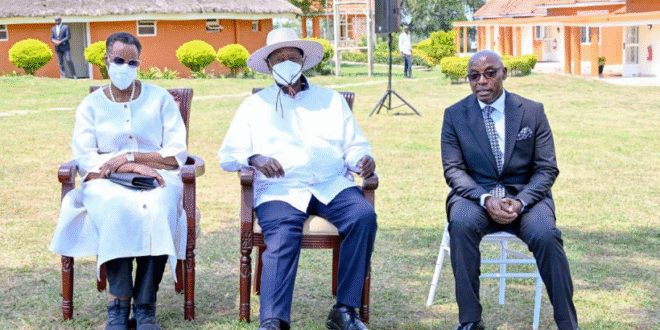
KAMPALA — Uganda’s newly appointed Chief Justice, Dr. Flavian Zeija, was sworn into office on January 24, 2026, at President Yoweri Museveni’s private country farm in Kisozi, Gomba District—a venue choice that has drawn sharp criticism from legal experts and civil society who warn it undermines the constitutional principle of separation of powers.
The ceremony, typically held at the Supreme Court or State House to symbolize the judiciary’s institutional independence, instead took place on the president’s personal 1,900-acre estate, raising questions about the appropriate relationship between the executive and judicial branches at a moment of heightened political tension following the January 15 general elections.
“This is unprecedented in Uganda’s constitutional history—and indeed, I have never seen in any country a Chief Justice sworn in at a president’s private farm,” said a senior legal analyst who requested anonymity due to security concerns. “The symbolism matters: when the head of the judiciary takes oath on the president’s private property, it visually reinforces perceptions of subordination rather than independence.”
Constitutional scholars note that Article 128 of Uganda’s 1995 Constitution guarantees judicial independence, stating that “in the exercise of his or her judicial functions, a judicial officer shall not be subject to the control or direction of any person or authority.” Critics argue that venue choices carry significant symbolic weight in reinforcing—or eroding—this principle.
The swearing-in occurred just nine days after Museveni was declared winner of the presidential election with 72 percent of the vote, a result opposition leader Bobi Wine rejected as fraudulent.
The African Union election observation mission had already expressed “concerns regarding the impartiality and independence of the judiciary in handling electoral cases” prior to the vote.
During the Kisozi ceremony, Museveni urged Zeija to maintain “zero tolerance to corruption” and reportedly instructed him to “ask the public who is corrupt”—remarks some lawyers interpreted as political guidance inappropriate for a judiciary meant to operate free from executive influence.
The Uganda Law Society had previously outlined expectations for the incoming Chief Justice, emphasizing the need for “renewed judicial independence” amid growing concerns about executive interference in judicial matters.
These concerns intensified in 2024 when lawyers reported a “chilling effect” on judicial autonomy to UN special rapporteurs.
Government officials have not publicly explained the choice of venue. State House communications typically frame such events as expressions of the president’s “accessible leadership style,” though constitutional experts counter that accessibility should not come at the expense of institutional symbolism critical to democratic governance.
“This isn’t about the physical location itself,” said one human rights lawyer. “It’s about what the location communicates to citizens, to litigants, and to the world about where ultimate power resides. When the Chief Justice is inaugurated on the president’s farm—not in a courthouse—it sends a message that the judiciary exists at the president’s pleasure, not as a co-equal branch of government.”
Zeija, a Court of Appeal judge since 2015, replaces retired Chief Justice Alfonse Owiny-Dollo, who formally handed over office on January 19, 2026. His appointment followed swift parliamentary approval earlier in January.
As Uganda navigates post-election disputes and mounting pressure on civic space—including the recent suspension of seven human rights organizations days before voting—observers warn that perceived erosion of judicial independence could further undermine public confidence in democratic institutions at a critical juncture for the nation’s governance.
Related