 Xavier Radio Ug News 24 7
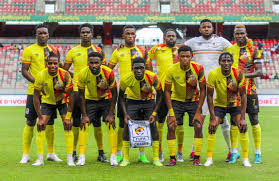
By Amiri Wabusimba. Uganda’s national football team, the Cranes, does not suffer from a lack of talent, patriotism, or public support. What repeatedly undermines the team is something far more difficult to confront: a web of governance weaknesses, policy contradictions, and informal power dynamics that surface at the worst possible moments usually just before decisive matches. The contrast between Uganda’s recent Africa Cup of Nations (AFCON) campaign in Morocco and its African Nations Championship (CHAN) performance closer to home offers a revealing case study. On the surface, the explanation appears technical: tougher opponents at AFCON, better familiarity at CHAN. Yet a closer examination shows that the Cranes’ most persistent obstacles are not tactical but institutional. This is not a story unique to Uganda, but Uganda’s case illustrates how national teams can become victims of the systems meant to support them.
The Uganda Cranes operate within a football governance structure that is reactive rather than strategic. Leadership changes, shifting technical visions, and inconsistent administrative practices mean that each tournament is treated as a fresh project instead of part of a long-term sporting plan. Coaches inherit expectations without institutional backing, and players enter camps uncertain about conditions that should have been settled months earlier. Globally competitive football nations invest as much in governance architecture as they do in players. Clear mandates, protected technical autonomy, and predictable administrative processes allow teams to focus exclusively on performance. In Uganda’s case, the absence of this continuity creates fertile ground for distraction, mistrust, and last-minute crises.
One of the most damaging patterns in the Cranes’ recent history is the recurrence of player welfare disputes on the eve of critical games. Allowances, facilitation, and logistical commitments repeatedly become points of contention not because players are opportunistic, but because systems fail to resolve these matters early. That these disputes often emerge three days to a match is telling. It is the moment when players are fully assembled, pressure is highest, and leverage however unintended is greatest. In elite football environments, welfare is resolved before travel, not during competition. When it is not, the message received by players is that their value is negotiable. The cost is not merely psychological. It fractures focus, erodes trust in management, and weakens collective discipline. No tactical briefing can fully compensate for an unsettled camp.
Another quiet but corrosive issue is the perception sometimes real, sometimes exaggerated that team selection is influenced by forces beyond form and fitness. Whether through pressure from agents, administrators, or political actors seeking visibility, the mere belief that meritocracy is compromised damages squad cohesion. Coaches, caught between technical responsibility and political expectation, often operate in constrained space. When results falter, they are held accountable; when selections succeed, credit is dispersed upward. This imbalance discourages long-term planning and incentivizes short-term risk avoidance. In successful football systems, technical decisions are insulated from politics. In Uganda, the boundaries remain blurred.
Government involvement in football is not inherently problematic. In fact, Uganda’s public investment in the Cranes bonuses, infrastructure, and logistical support has been essential. The problem lies in the absence of a clear policy framework defining how state support complements, rather than substitutes, institutional professionalism. At times, political goodwill fills gaps left by weak administration. While this can rescue tournaments, it also creates dependency and inconsistency. Support becomes personalized rather than institutionalized, varying by competition, location, or political moment. CHAN demonstrated how visible state support can uplift morale when aligned with team management. AFCON revealed how the same system can appear distant and fragmented when policy coordination is absent.
During AFCON in Morocco, unprecedented restrictions limited access to the team even for accredited national representatives’ days before competition. While intended to protect focus, the effect was symbolic isolation. Players felt removed from the broader national ecosystem at a moment when reassurance mattered most. In contrast, during CHAN, controlled but open engagement with senior officials reinforced a sense of national ownership and shared purpose. The difference was not interference versus professionalism, but isolation versus inclusion. What ultimately constrains the Cranes is the persistence of informal systems governing a professional sport. Informal negotiations, ad-hoc decision-making, and personality-driven authority may function in domestic contexts, but they collapse under continental scrutiny. AFCON didn’t punish talent gaps alone; it punishes institutional weakness.
If Uganda is serious about transforming the Cranes into a consistently competitive force, reform must begin above the touchline. Governance structures must be stabilized. Player welfare must be contractual and pre-determined. Technical autonomy must be protected. Government support must be policy-driven rather than episodic. Until then, Uganda will continue to oscillate between hopeful tournaments and painful postmortems, asking the same questions after every elimination. The tragedy is not that the Cranes fail. It is that they fail in ways that are entirely preventable. Football, like governance, rewards preparation more than passion. Uganda has no shortage of the latter. What it lacks and urgently needs is the former.
Wabusimba Amiri is a communication specialist, diplomatic Scholar, Journalist, political analyst and Human Right activist. Tel: +256775103895 email: Wabusimbaa@gmail.com
Related