 Xavier Radio Ug News 24 7
By Kabuye Ronald
Following the release of the 2025 Primary Leaving Examination (PLE) results by the Uganda National Examinations Board (UNEB), in which learners living with Spina Bifida and Hydrocephalus (SBH) performed exceptionally well, the Spina Bifida and Hydrocephalus Association of Uganda (SHAU) has called on parents, guardians, caretakers, schools, and UNEB to ensure that children’s disabilities are clearly indicated during registration to enable appropriate support throughout their education journey.
SHAU is a national organization dedicated to improving the lives of people living with Spina Bifida and Hydrocephalus, empowering them for long-term, productive, and independent living.
“We urge parents, guardians, and caretakers to always inform schools about their children’s disabilities. Schools should also relay this information to UNEB, which must provide a suitable examination environment for these learners and highlight achievements of different disability categories separately,” said Winfred Nabikolo, a Project Officer and Patient Liaison at SHAU.
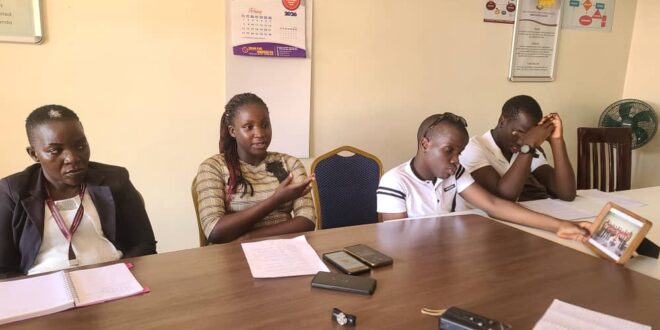
She made the remarks during a joint press conference with learners living with SBH who excelled in the recent PLE examinations and those currently in secondary school.
“By doing this, UNEB will ensure better representation and motivation for learners with special needs to remain in school and perform to their full potential,” Nabikolo added.
SHAU commended UNEB’s current candidates’ registration system for learners with disabilities, noting that it has significantly improved access to examination support. However, the organization recommended expanding and clearly publishing specific disability categories in examination results.
“We appreciate the current registration system and recommend expanding the specific disability categories published in the results. Seeing the performance of learners with Spina Bifida and Hydrocephalus will inspire more parents and children across the country,” Nabikoolo said.
She further called on the Ministry of Education and Sports to strengthen partnerships with organizations like SHAU to identify and support children living with disabilities, especially those from families that may not yet belong to an association or understand their child’s potential.
Children living with SBH, together with SHAU, also called for the strengthening of inclusive education. While acknowledging progress, they emphasized the need for continuous support to ensure a smooth transition from primary to secondary education and to eliminate gaps in accommodation and accessibility.
Success Stories from Learners Living with SBH
Nyanzi Gerald, a learner living with Spina Bifida who scored 12 aggregates in the 2025 PLE, passing in Division One at Munyonyo Parents School, expressed gratitude for the support he received.
He attributed his success to the encouragement from classmates, teachers, parents, and UNEB invigilators. Nyanzi explained that registering as a special needs candidate enabled him to receive extra time and permission to attend to his medical needs during examinations.
“My condition requires me to use crutches, change diapers, and catheterize because I cannot control urine. UNEB allowing me extra time and breaks made me comfortable and helped me perform well,” Nyanzi said, adding that he hopes to join a secondary school with accessible infrastructure.
Atusabire Pauline, a Senior One student at Hope Senior Secondary School living with Spina Bifida, shared her experience of sitting PLE in 2024 without registering as a person with disability due to lack of awareness.
“I did not know about SHAU at the time, and I didn’t register as a person with disability. I feared running out of time if I left the exam room for catheterization and changing diapers. This affected my comfort and performance,” she said, noting that she scored 13 aggregates.
Pauline urged learners with SBH to register with UNEB as persons with disabilities to receive the necessary support. She also applauded SHAU for providing her with catheterization materials, which have improved her confidence and comfort both in and outside the classroom.
“I encourage others living with Spina Bifida and Hydrocephalus to have self-confidence, listen to their parents, and remain committed to their education,” Pauline said.
Kituuka Amos Carlton, a Senior One student at Boston High School Mpala who scored 12 aggregates in PLE, said registering as a learner with Spina Bifida enabled him to sit his examinations in a supportive environment.
“I was given my own examination room and an invigilator. SHAU supported me with the necessary documentation,” Amos said. He added that his dream is to become a cardiologist and establish a world-class cardiac hospital in Uganda.
However, Amos noted that many secondary schools still lack disability-friendly infrastructure, citing stairs, slippery floors, and inaccessible and unhygienic toilets that make Clean Intermittent Catheterization difficult for learners with SBH.
He encouraged fellow learners with disabilities to remain focused and confident. “Do not feel discriminated against. Understand the people you live with, stay focused on your goals, and believe that you have a special gift and purpose,” he said.
Ssembatya People, a student at Kampala Students Centre living with Spina Bifida, also shared that registering as a person with disability during his 2024 PLE enabled him to receive adequate examination support.
“Teachers and fellow students are friendly, but my biggest challenge is the lack of a private bathroom, which affects my privacy during catheterization,” he noted.
About Spina Bifida and Hydrocephalus
Spina Bifida and Hydrocephalus are serious medical conditions requiring specialized care. Hydrocephalus is characterized by a buildup of fluid in the brain’s cavities, increasing pressure on the brain. Spina Bifida is a birth defect in which the spinal column does not develop properly, leaving part of the spinal cord and nerves exposed.
The best preventive measure for Spina Bifida is adequate intake of folic acid before and during pregnancy. Specialized treatment for both conditions is currently available at selected hospitals, including Mulago National Referral Hospital, CURE Children’s Hospital in Mbale, and Mbarara Regional Referral Hospital.