 Xavier Radio Ug News 24 7
By Dr Jamela Basani Hoveni
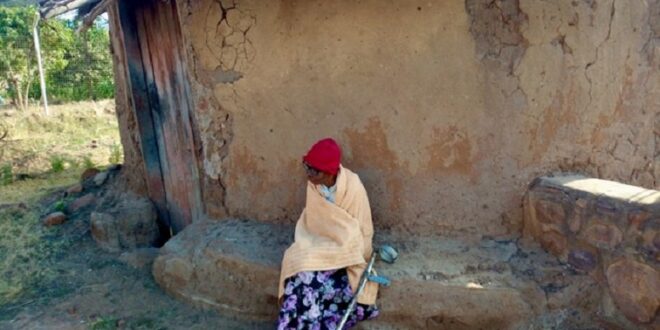
Rural households led by elderly women, where most children in South Africa live, are some of the most deprived in the country. These households survive using various social grants. Elderly women in rural areas contribute to society through unpaid care work, especially as childcare infrastructure is badly lacking, effectively subsidizing the state and private employers. They do this by providing unpaid childcare, which not only helps raise the next generation but also reproduces the workforce in a capitalist economy, which relies on both paid and unpaid labor. South Africa’s care system is shaped by a familialist view of care, seeing it as a private matter. Relying on family caregiving for essential social care needs keeps unpaid care work hidden, mostly done by Black and migrant women. This stems from apartheid racial policies, which mean that even now, we depend on and exploit Black women’s domestic labor.
In an academic article, Head of Research at the Commission for Gender Equality, Dr. Jamela Hoveni, argues that the unpaid childcare work by grandmothers funded through social grants provides a major subsidy to South Africa’s low-wage capitalist economy. This gendered burden of social reproduction is dangerously worsened by climate change, pushing these households into greater insecurity.
Navigating child poverty in ‘careless’ rural communities
Feminists asserted that capitalism does not only depend on wage labour for its survival and continued existence. It is also sustained by the unpaid care work of women. The reality for most women in South Africa is that the cost of quality childcare is prohibitive. This means that, in the absence of state-provided childcare, young women who are mothers rely on kin networks (sisters, parents, and aunts) to provide childcare. Women, particularly those who are poor and unemployed, rely on their mothers, who, despite their advanced age, care for children. Elderly women caring for young children need financial and psychological support in their role as caregivers and any support given should centre on their lived experiences as caregivers and care recipients. To understand childcare giving in rural communities, the article draws from the lived experience of elderly grannies in Mafarana, Limpopo, charged with caring for their grandchildren.
Muller (2019) analyses the status of care in capitalist societies and introduces the idea of a careless society. In many ways, South Africa has some of these characteristics, seen in the devaluation of care. This results in a society where basic care for children, the sick, and the elderly is inaccessible for many. In South Africa, the ‘carelessness’ exists alongside other social ills. South Africa is a signatory to the UN’s Sustainable Development Goals (SDGs) targeting poverty, zero hunger, quality education, and gender equality. Yet the country has failed to combat child poverty or achieve universal access to health and education and lags other middle-income countries. As a result of the sad situation, most children in the villages are not in formal preschool.
In South Africa child poverty has a spatial dimension, with children living in rural areas being hit hardest compared to those in urban areas. There are also racial differences in child poverty and deprivation, where children from the Black African population group (73.2%) are more likely to live in poverty compared to 43.6% of coloured children, 6.1% of white children and 20.1% of Indian children. South Africa’s 2023 SDG Country reports shows that high levels of poverty, poor quality Early Childhood Development (ECD) programmes for children aged 0–4 years is still a serious challenge for development in South Africa.
Apartheid racial policies have shaped South Africa’s care regime resulting in Black women disproportionately carrying the burden. The majority of this caregiving takes place in multi-generational households headed by Black grandmothers. Existing in resource-constrained environments, and relying on social grants, these households experience various socio-economic and environmental inequalities. Climate change has induced droughts, water shortages, and outbreaks of disease, which have decimated livelihoods in these households.
The high unpaid care work borne by rural grandmothers represents a significant challenge to achieving gender equality. In the first place it contributes to time poverty and reduced well-being for these women. It is also linked to a disruption in educating girls with girls reporting being late for school. It is also linked to low labour force participation (LFPR) for women and the gender wage gap in general. That is why there is a need to understand childcare-giving dynamics in Black multi-generational households to inform policy and strategies for gender equality. Such a policy should aim to recognise and redistribute unpaid care work to ease the burden on Black grandmothers who are the main actors.
Grannies are in charge of Children
Childcare care in rural multigenerational households is gendered, embedded in multi-generational networks. There are several reasons why grannies are in charge of childcare. Unemployment, illness and death of parents and inadequate earnings to support children are some of the reasons. Black African children for example are (i) more likely to live without either parent and (ii) often reside in multi-generational households which are characterized by high levels of poverty and deprivation.
Nonetheless, there exists a rich multi-generational network of women who see their role in childcare as extending beyond physical care. It encompasses the cultural work of socialising, teaching and imparting norms, customs and knowledge to the next generation. This is psycho-social and spiritual care work grounded in African epistemologies and ways of being. Tsonga grandmothers, for example, use oral storytelling to teach listening skills. Grandmothers are entrusted with teaching children their genealogy, tracing it through the paternal line. Grandmothers often invoke the African philosophy of Ubuntu, “munhu i munhu hi vanhu”. Ubuntu means that a person is a relational being, and to care for one’s descendants and offspring sustains communities. It emphasises interdependence and reciprocity. As a result of the social significance of this role, the grandmothers and great-grandmothers perceive their role to be important despite the challenges of ill health and poverty.
What are the policy implications?
Conclusion
South African rural households headed by black elderly women are vulnerable, impacted by climate change and poverty. These households eke out some form of survival using social grants and precarious forms of employment. The state’s reliance on these households to provide unpaid care work is a major subsidy for the South African capitalist low-wage regime economy. Adequate, state-resourced care for grannies and children is not a radical idea; it is an ethical thing to do considering the significant social role that grannies play.
Dr Jamela Basani Hoveni is Head of Policy and Research at the Commission for Gender Equality
www.sabcnews.com, https://www.sabcnews.com/sabcnews/childcare-by-black-grannies-is-subsidizing-state-and-private-employers/