 Xavier Radio Ug News 24 7
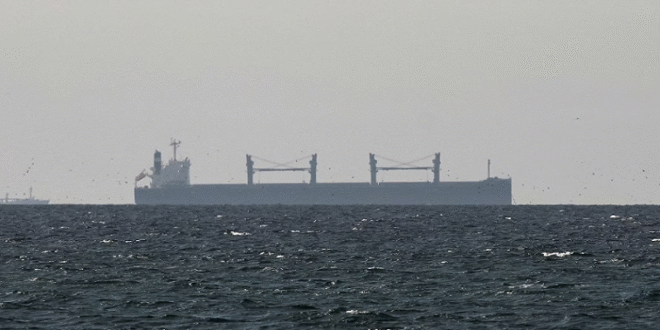
US President Donald Trump has warned that North Atlantic Treaty Organization (NATO) faced a “very bad” future if allies failed to support US efforts to secure the Strait of Hormuz.
Over the weekend, Trump also called specifically on China, France, Japan and South Korea to secure the Strait with an announcement on a potential coalition of countries to police the waterway expected, some time this week but those details remain slim for now as allies have taken a very cautious approach to joining the US-Israeli War against Iran.
The message from the White House is clear, NATO allies should stand with the United States in securing the Strait of Hormuz, warning of negative consequences where those allies not to acquiesce.
WATCH | SABC News correspondent Sherwin Bryce-Pease reports from New York as Trump warns NATO over the Hormuz crisis. pic.twitter.com/E4gAggWMpA
— SABC News (@SABCNews) March 16, 2026
“These countries are absolutely benefiting from ensuring that Iran can never obtain a nuclear weapon. This is something not just the United States, but the entire Western world has agreed with for many, many years. So, I think the president is absolutely right to call on these countries to do more to help the United States to reopen the Strait of Hormuz so that we can stop this terrorist regime from restricting the free flow of energy. And the fact that they are doing so just underscores why President Trump needed to take this action in the first place. The president spoke on that last night. He said that he wished that the UK had stepped up sooner and quicker. But he continues to speak with our allies in Europe and is calling on them to do more, just as he did when he called on them to step up with respect to their defense spending and NATO,” says White House Press Secretary, Karoline Leavitt.
Pressure from escalating energy costs has elevated concern both in the United States and around the world, with brent crude oil surging to $106 before retreating to above $90 a barrel. The response from NATO allies to help secure the Strait of Hormuz has been tepid at best, Japan and Australia signaling they would not agree, South Korea says it’s weighing the request while China has been non-committal despite threats from President Trump to delay a summit meeting with President Xi Jinping at the end of March.
Europe has largely signaled a defensive posture in relation to any assistance in the war but Germany’s defence Minister Boris Pistorius was more direct.
“What does the world expect, what does Donald Trump expect, from, let’s say, a handful or two handfuls of European frigates in the Strait of Hormuz that the powerful American Navy cannot accomplish there alone? That’s the question I ask myself. And before we make a decision, outside of NATO territory, by the way, we would need both an international framework and a mandate from the German Bundestag (parliament). I would think about that very carefully before we take that step and I see absolutely no reason to do so. It’s not our war. We didn’t start it. We want diplomatic solutions and a swift end,” says Pistorius.
Iran’s Foreign Minister Abbas Araqhchi argued that the Strait of Hormuz remained open but closed to his country’s enemies.
“They (Americans) are asking other countries to come and help them so that the Strait of Hormuz remains open, which, of course, from our perspective it is open. It is only closed to our enemies, to those who carried out unjust aggression against our country and to their allies. We have not sent any message (to the US) We are not asking for a ceasefire, but this war must come to an end in a way that it will not be repeated again,” says Araqhchi.
As the trajectory for the war remains an open question.
“It is quite evident that the US and Israel thought it might be a very short war. We might call it a limited war, which means they go in and it takes 3 or 4 days, and Iran will kind of capitulate and answer with symbolic force. This is certainly not the case, as we can see now after two weeks. So, they have miscalculated the reaction of Iran which obviously has prepared for that day for more than 40 years. One can of course win a war like that militarily, but the costs are rising every single day, not only when it comes to personnel and for money, but in particular the political price will be extremely high because the Americans have lost the myth of being the supreme power in the Gulf region,” says Professor of International Relations at Cologne University, Klemens Fischer.
The CATO Institute estimates that the USA has spent some 19 billion dollars on the conflict to date while more than 2000 lives been lost in the region, 1300 in Iran, over 800 in Lebanon, more than a dozen Israelis, 13 U.S service members, around 20 deaths in Gulf States, amid tens of thousands of injuries and massive displacement as calls for a ceasefire take a backseat to the continued military escalation.
VIDEO | Middle East Conflict | Trump warns NATO over Hormuz crisis: Sherwin Bryce-Pease reports
www.sabcnews.com, https://www.sabcnews.com/sabcnews/trump-warns-of-consequences-if-nato-doesnt-help-secure-strait-of-hormuz/