 Xavier Radio Ug News 24 7
ONE OF THE VICTIMS: TikToker Edward Awebwa was jailed six years in 2024 for abusing Museveni
TikTokers and X users bore the brunt of the Computer Misuse Act
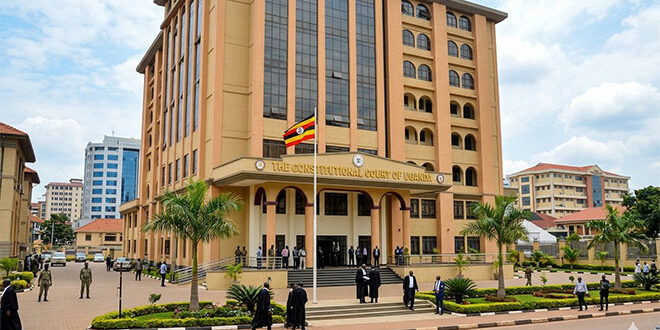
Kampala, Uganda | IAN KATUSIIME | Uganda’s long-running battle over digital freedom registered a significant victory on March 17 when the Constitutional Court swept the Computer Misuse Act — one of the country’s most controversial speech laws — off the books, dismantling a legal weapon critics say had, for years, blurred the line between cybercrime enforcement and the criminalisation of dissent.
The Constitutional Court ruling directed that no trial based on the Computer Misuse Law should proceed henceforth. The ruling was welcomed by X users in Uganda, free speech advocates, lawyers and the general public in a country where criticism of authorities can easily land one in jail or result in an abduction by masked security operatives.
A week before the landmark ruling, a TikToker, Ibrahim Musana also known as Pressure 24/7 was remanded to prison by City Hall Magistrates Court for allegedly spreading hate speech against Gen. Muhoozi Kainerugaba, the Chief of Defence Forces and son to President Yoweri Museveni. Musana was charged for hate speech based on sections of the Computer Misuse Act.
In November 2024, three TikTokers were remanded to jail by Entebbe Chief Magistrates Court for allegedly insulting President Museveni, First Lady Janet Museveni, and Muhoozi. David Ssengonzi, Isaiah Ssekagiri, and Calvin Kayanja were put behind bars on various charges of the Computer Misuse Act. The law has been used to target critics of the First Family who are under heavy scrutiny in the eyes of the Ugandan public.
Janet Museveni is also the Minister of Education and Sports while Gen. Muhoozi is the most prominent CDF, as he has actively taken on a political role, thanks to his presidential ambitions.
No quorum
The Constitutional Court also said the law was passed by Parliament without a quorum, further exposing the lengths the government had gone to target online critics and silence dissent.
The ruling brings into focus Uganda’s Digital Public Infrastructure (DPI) where a highly agitated population uses social media platforms to demand accountability, expose corruption and offer unfiltered criticism of public officials. DPI refers to the foundational, interoperable digital systems—commonly digital ID, payments, and data exchange—that enable public and private service delivery at a population scale.
To counter the digital resistance, the Ugandan government goes after individual actors using laws like the Computer Misuse Act but occasionally resorts to extreme measures such as switching off the internet during tense periods as a way of controlling the narrative.
For instance, the government ordered a four-day internet blackout during the 2026 elections, where President Museveni was declared the winner with a 71.6% victory against main opponent Robert Kyagulanyi aka Bobi Wine.
X and TikTok are the most popular social media in Uganda, and it’s not a surprise that the law has been used to go after users on the two platforms.
Agora Discourse, a digital public square that advocates for free speech and public accountability, profiled more than 30 TikTokers in April 2025 who had been jailed on the now defunct law. Agora on its X account said the jailed TikTokers were all sentenced by Magistrate Stella Maris Amabilis of the Entebbe Magistrates Court.
Most of the TikTokers were Gen Z, a tech-savvy generation that has come of age in the social media era and is using the video-sharing app to rewrite the rules of protest and governance. They are jailed on the notorious charges of “hate speech and spreading malicious information”.
Free speech advocates welcome ruling
George Musisi, a lawyer for the petitioners against the law, told journalists, “The law was draconian. It brought offences like sharing unsolicited information and sharing malicious information. ‘Who defines what is malicious?’ we asked. We also found that the law contravened the constitution as far as freedom of speech and the press are concerned.”
The ruling emanated from a consolidated constitutional court petition filed in 2022 by over 26 petitioners, including Collaboration on International ICT Policy for Eastern and Southern Africa (CIPESA), Human Rights Network for Journalists Uganda, Chapter Four, Uganda Law Society, African Centre for Media Excellence, and activists Winnie Kiiiza and Agather Atuhaire.
Justice Irene Mulyagonja, who wrote the majority judgement for the Constitutional Court, lambasted the Speaker of Parliament Anita Among for how she handled the matter during legislation.
“It is my view that these anomalies resolve the question as to whether or not there was a quorum on the passing of the Bill into law in favour of the petitioners.”
Mulyagonja added, “I would find so because the evidence (the Hansard) that was produced by the Attorney General to prove the assertions of the Clerk…does not show that the Speaker complied with the impugned provisions of the Constitution and the Rules of Procedure of Parliament.”
www.independent.co.ug, https://www.independent.co.ug/unmuted-court-strikes-down-ugandas-speech-law/