 Xavier Radio Ug News 24 7
‘To protect LGBTQ+ people’s health, we must protect LGBTQ+ people’s rights’
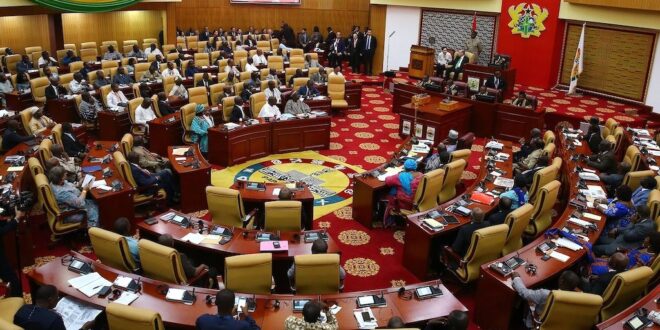
Ghana’s parliament (Photo courtesy of ISSAfrica.org)
A group of progressive West African faith leaders have denounced a proposed bill in Ghana to jail every acknowledged homosexual, increase penalties for same-sex intimacy, and prohibit “promotion” of LGBTQ behavior.
Meanwhile, the United Nations anti-AIDS agency (UNAIDS) issued a statement opposing a similar bill recently passed by the National Assembly in Senegal.
The UNAIDS statement is below, followed by excerpts from an account from Mamba Online about of the position of the Interfaith Diversity Network of West Africa (IDNOWA).
UNAIDS Executive Director, Winnie Byanyima says that to protect LGBTQ+ people’s health, we must protect LGBTQ+ people’s rights. (Courtesy UNAIDS/Youtube)
UNAIDS is deeply concerned about the impact of the harshening of a law against LGBTQ people in Senegal
UNAIDS urges the President not to sign the Bill and calls on Senegal to safeguard life-saving health services including HIV prevention, treatment and care.
GENEVA/DAKAR, 18 March 2026—On 12 March 2026, the Parliament of Senegal voted overwhelmingly to impose harsher penalties for “unnatural acts” including homosexuality and promoting or encouraging homosexuality. UNAIDS is deeply concerned about the implications for the country’s public health achievements and urges the President not to sign the Bill.
The final adopted text includes a critical public health safeguard clause which UNAIDS urges Senegal to adhere to. The clause reads: “However, activities carried out by duly authorized health structures and organizations within the framework of public health policies shall not be considered as offenses under this article.”
UNAIDS acknowledges and values Senegal’s longstanding partnership in the fight against HIV. The Ministry of Health and the country’s National Council for the Fight Against AIDS have worked with partners to ensure that people living with HIV can access the care they need and that prevention reaches the populations most at risk. These gains have saved lives and represent an investment by the Senegalese people in their own health and future.
Senegal is confronted however, by significant challenges in its response to HIV and UNAIDS urges Senegal to maintain a strong focus on the public health evidence, legal framework and community partnerships required to achieve impact and a sustainable response with essential services accessible to the most vulnerable people.
In Senegal, 79% of people living with HIV are on lifesaving treatment, however, between 2010 and 2024, new HIV infections in Senegal increased by 36% making Senegal one of only four countries in the West and Central African region experiencing a rise in new HIV infections.
Evidence shows that criminalization causes people to turn away from health services. Criminal laws also increase stigma and discrimination against groups that are already marginalized. An effective HIV response based on solid public health evidence and protections for access to services for the most vulnerable is urgent for Senegal.
UNAIDS calls on Government authorities to:
Ensure the full and effective implementation of the public health exemption enshrined in the Bill, through clear ministerial guidance and legal certainty for health organizations and workers.
Protect the confidentiality of medical information and the patient-provider relationship as non-negotiable foundations of a functioning health system.Ensure that community-based organizations providing HIV prevention, testing, treatment support, harm reduction and care can continue to operate without fear of prosecution.
Maintain international funding channels and partnership frameworks that sustain HIV service delivery and ensure that donors and implementing partners have legal clarity regarding their continued engagement.
Engage in open dialogue with health authorities, civil society, and UN partners to monitor the impact of the Bill on service access and take swift action where public health gains are at risk.
Ending AIDS requires reaching everyone, particularly people most at risk of HIV. UNAIDS remains committed to working together with Senegal to end AIDS as a public health threat in the country.
Davis Mac-Iyalla, executive director of the Interfaith Diversity Network of West Africa (IDNOWA)
Faith Leaders Urge Ghana’s Parliament to Reject Extreme Anti-LGBTQ+ Bill
As lawmakers in Ghana push forward for the second time an extreme anti-LGBTQ+ bill that would criminalise people simply for their sexual orientation or gender identity, a regional interfaith organisation is urging parliament to reject the legislation and uphold human rights.
The proposed Human Sexual Rights and Family Values Bill would impose harsh penalties not only on LGBTQ+ people but also on anyone seen to support them. Under the legislation, individuals who identify as LGBTQ+ could face up to three years in prison, while activists, journalists, teachers, parents, and organisations that advocate for LGBTQ+ rights could also be prosecuted.
The bill was first passed by parliament in 2024 but ultimately expired without being signed into law. Ghanaian lawmakers have now reintroduced the legislation and resumed efforts to push it through parliament.
The renewed push for the bill also comes as Ghana prepares to host the controversial African Inter-Parliamentary Conference on Family and Sovereignty in Accra in May 2026, a gathering that critics say has links to global anti-LGBTQ+ advocacy groups.
Interfaith Network Speaks Out
In response to the reintroduced bill, the Interfaith Diversity Network of West Africa (IDNOWA) submitted a formal public memorandum to Ghana’s Parliament in response to its call for submissions on the proposed legislation.
See Also
“Our memorandum outlines constitutional, ethical, and spiritual concerns regarding the bill and urges Parliament to uphold the dignity and rights of all persons living in Ghana,” the organisation said in a statement.
IDNOWA emphasised that its position is grounded in both faith and principles of justice.
“As an interfaith organisation rooted in African traditions, Christianity, Islam, and human rights values, IDNOWA affirms that every human being is created with inherent worth,” the statement reads.
“No law should legitimise discrimination, violence, or exclusion against any group of people. Our submission reflects our commitment to justice, compassion, and the belief that all people stand equal before the Divine.”
Faith Should Not Be Used to Harm Others
The organisation cautioned against using religion to justify laws that could harm vulnerable communities.
“We recognise the diversity of religious and cultural beliefs in Ghana,” IDNOWA said. “However, we also affirm that faith must never be used as a weapon to shame, silence, or endanger others.”
According to the network, genuine family values should centre on care and dignity rather than punishment, asserting that, “True family values are grounded in love, responsibility, and the protection of human dignity.”
For further information, read the full article “Faith Leaders Urge Ghana’s Parliament to Reject Extreme Anti-LGBTQ+ Bill” in Mamba Online.
76crimes.com, https://76crimes.com/2026/03/20/unaids-and-faith-leaders-oppose-anti-gay-bills-in-senegal-and-ghana/