 Xavier Radio Ug News 24 7
Kepher Kuchana, Director of Government Analytical Laboratory (DGAL).
Kampala, Uganda | THE INDEPENDENT | Uganda’s top forensic scientists have asked Parliament to urgently pass the Forensic and Scientific Analytical Services Bill, 2025, saying delays are putting the justice system at risk.
They cautioned that every delay increases the chances of wrongful convictions, weak prosecutions, and criminals escaping punishment.
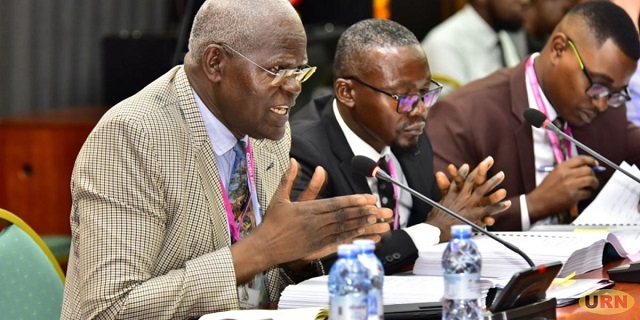
During a tense session of the Public Accounts Committee chaired by Mawokota South MP Gorreth Namugga on February 25, 2026, officials from the Government Analytical Laboratory (GAL), led by Director Kepher Kuchana, told lawmakers that Uganda’s justice system is struggling to handle modern crime without strong forensic support.
“Without this law, we are fighting blindfolded in a battlefield of evidence,” Kuchana said, urging Parliament to fast-track the Bill.
His appeal comes at a time when Uganda is facing a rise in violent crime and growing public frustration over slow investigations.
From Mukono to Kyanja, Entebbe to Kampala’s inner suburbs, families continue to ask why justice takes so long, and sometimes never comes.
The killing of Pamela Tumwebaze, Director of Student Affairs at Uganda Christian University, on February 11, 2026, shocked the nation.
A 21-year-old suspect was arrested, but concerns remained about how fast forensic tests would be processed and whether the evidence would stand in court.
Days earlier, 24-year-old TikToker Diana Namulinde, known as Diana Skyz, was found strangled in her apartment in Kyanja. A security guard was charged with rape and robbery.
Once again, questions arose about DNA testing, toxicology results, and how well crime scenes were handled. These cases reminded the public of earlier high-profile murders.
In July 2025, retired couple David and Deborah Mutaaga were killed in Entebbe. Despite CCTV footage and heavy media coverage, progress in the case appeared slow.
Their family later chose to bury them in Switzerland, a move many saw as a sign of frustration with the pace of investigations.
The 2024 Annual Crime Report recorded 4,329 homicides, nearly 12 killings per day. Robberies increased sharply, and rape cases rose by almost six percent.
Gun-related murders remain common, especially in urban areas and regions affected by land disputes and illegal firearms. Behind each crime statistic is an investigation. And behind many investigations is a forensic system under pressure.
In December 2025, Auditor General Edward Akol presented an audit report that raised concerns about the forensic body’s capacity.
The report showed that the DNA backlog had increased over five years, from 786 cases in the 2020/21 financial year to 923 cases by 2024/25.
Limited laboratory space means that only one analyst can handle certain procedures at a time, slowing case processing. Out of four genetic analyzers in the DNA division, one is outdated.
Another is meant for wildlife testing and is rarely used. A third works below full capacity. The fourth, installed in early 2025, had still not been fully used months later.
Regional laboratories in Mbale, Gulu, Moroto, and Mbarara also face challenges. Only 28 of 60 approved positions are filled.
The Moroto lab is not operational, while Mbale and Mbarara mainly collect samples instead of carrying out full tests. As a result, most samples are sent to Kampala, creating delays.
Processing times have gone beyond the 30-day target set in the forensic body’s own plan. Akol said many of these problems are linked to funding shortages and called for more resources and faster recruitment.
Although Parliament has approved additional funding for reagents, equipment maintenance, staff recruitment, and a new regional forensic laboratory in Hoima, questions remain: Is the problem only about money, or is the system itself flawed?
The Forensic and Scientific Analytical Services Bill, 2025, introduced by State Minister for Internal Affairs David Muhoozi, aims to reorganize Uganda’s forensic system.
The Bill proposes designating the forensic body as the national referral forensic laboratory, creating a National Human DNA Database, regulating forensic laboratories, licensing chemical dealers, and centralizing oversight of analytical services.
The Bill replaces the earlier Forensic Evidence Bill, 2024, which was withdrawn after lawmakers and stakeholders said it duplicated existing laws and created institutional conflicts.
Muhoozi has defended the new Bill, saying Uganda lacks a clear legal framework to guide forensic services. He also argued that the forensic body has better equipment and wider scientific capacity than the Uganda Police forensic unit.
He said a centralized DNA database would help not only in criminal investigations but also in paternity testing, identifying missing persons, and identifying disaster victims. However, concerns have been raised.
The Directorate of Public Prosecutions, represented by Deputy Director George William Byansi, warned that expanding the forensic body’s powers could weaken the constitutional role of the Uganda Police Force in investigating crime.
Byansi argued that investigative powers, such as collecting evidence and bodily samples, cannot be shifted without affecting the constitutional structure.
Wilson Kajwengye, MP for Nyabushozi County and Chairperson of the Committee on Defence and Internal Affairs, also raised concerns.
He said some parts of the Bill may conflict with existing laws, including the Identification of Offenders Act and health laws that regulate poison control.
Lawmakers questioned whether allowing the forensic body to act as both regulator and service provider could create a conflict of interest.
One of the strongest warnings came from Dr. Sylvester Onzivuwa, a senior pathologist. He questioned whether the forensic body has the capacity to handle complex forensic cases such as rape and toxicology disputes.
He said that “forensic science extends beyond laboratory analysis” and must be integrated with “medical examination, police documentation, and courtroom standards.”
Onzivuwa warned that giving the forensic body wide regulatory powers could concentrate too much authority in an institution that still faces capacity gaps.
He cited cases where toxicology findings were reportedly contradicted by international laboratories. He called for an independent national forensic oversight body, similar to the Forensic Science Regulator framework in the United Kingdom, to supervise all forensic actors, including the forensic body, the police, and the Ministry of Health.
The forensic body has argued that regulating forensic laboratories and industrial chemical imports could generate billions of shillings in revenue for the government. Critics say revenue goals should not take priority over justice.
The proposed DNA database would store profiles from crime scenes, arrested persons, convicted offenders, volunteers, and unidentified bodies.
Although the Bill includes timelines for deleting data and penalties for misuse, privacy advocates have warned about possible surveillance risks if safeguards are weak.
Uganda’s Data Protection and Privacy Act of 2019 provides guidelines, but enforcement has been inconsistent. Lawmakers will need to balance crime control with the protection of civil liberties. Currently, only about 40 percent of homicide cases lead to charges.
Case backlogs delay trials and keep suspects in detention longer. Families often wait years for closure.
Asuman Basalirwa, President of the Justice Forum and MP for Bugiri Municipality, said forensic reform could improve the justice system if properly structured.
He noted that it could reduce case delays, prevent wrongful arrests, strengthen convictions, and restore public trust. However, if poorly designed, it could worsen institutional conflicts and create new problems within the system.
****
URN
www.independent.co.ug, https://www.independent.co.ug/as-crime-rises-experts-urge-fast-tracking-of-forensics-law/