 Xavier Radio Ug News 24 7
By Ronald Kasirye
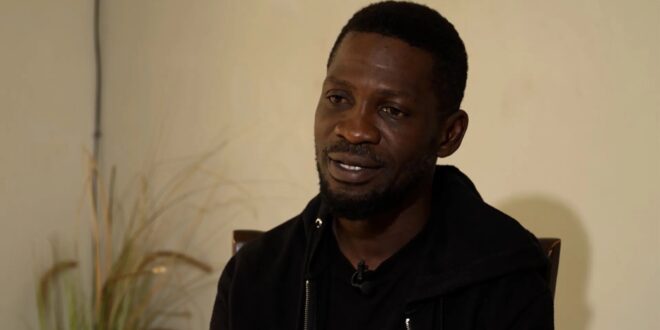
For decades, political resistance in Uganda has often been defined by street protests, opposition rallies, and tense confrontations between demonstrators and security forces. Images of tear gas, chanting crowds, and police trucks have long shaped public perceptions of political struggle in the country.In recent years, however, a different approach has gained prominence.Ugandan opposition leader Bobi Wine has increasingly focused not only on domestic political mobilization but also on building international awareness and pressure against the government of Yoweri Museveni, who has ruled the country for nearly four decades.Political analysts say this shift reflects the reality of modern politics. In an interconnected world, governments are influenced not only by internal dynamics but also by global financial systems, diplomatic relationships, and international institutions.Moving the Political Battle Beyond UgandaTraditionally, opposition movements attempt to gain power through elections, grassroots organizing, or public demonstrations. Modern political movements now recognize that governments also rely heavily on international legitimacy and economic partnerships.“Many long-serving regimes appear very strong internally,” explains political scientist Dr. Nic Cheeseman, professor of democracy at the University of Birmingham. “But their stability is often supported by international partnerships, aid flows, and diplomatic recognition. When those external relationships are questioned, it can significantly change the political equation.”For opposition leaders, political advocacy is no longer limited to national borders. The political conversation now takes place not only in Kampala but also in international capitals such as Washington, London, and Brussels.Targeting the Powerful EliteA key element of modern political pressure strategies involves targeted sanctions against specific individuals rather than broad economic sanctions against entire countries.These measures may include travel bans, asset freezes, visa restrictions, and financial investigations into overseas assets.According to governance experts, targeted sanctions aim to influence the behavior of decision-makers within the ruling establishment.“Targeted sanctions are designed to change incentives among decision-makers,” says Dr. Alex de Waal, executive director of the World Peace Foundation at Tufts University. “When personal wealth, travel privileges, or international business interests are threatened, it can create pressure within elite networks.”Many senior political figures maintain financial connections abroad, including bank accounts, investments, properties, or family members studying overseas. Restrictions affecting these privileges can introduce uncertainty within ruling circles.Questioning International LegitimacyModern opposition strategies also involve raising concerns about the international legitimacy of elections and governance practices.Governments derive authority not only from domestic institutions but also from recognition by other states and global organizations.“International recognition plays a crucial role in sustaining governments,” notes Dr. Larry Diamond, senior fellow at Stanford University’s Hoover Institution. “When the global community begins questioning the credibility of elections or democratic processes, it can gradually weaken that legitimacy.”Opposition movements often encourage foreign governments to adopt conditional engagement, linking diplomatic cooperation or financial assistance to democratic standards and human rights protections.The Role of International AccountabilityCivil society organizations and activists increasingly document alleged human rights abuses for potential review by international legal institutions such as the International Criminal Court.Although international legal proceedings can take years, experts say the possibility of future investigations can influence present decisions.“The expectation of accountability can have a powerful psychological impact,” says Dr. Kathryn Sikkink, professor of human rights policy at Harvard Kennedy School. “Officials may begin to think carefully about actions that could later be scrutinized by international courts.”Winning International ConfidenceAnalysts say credibility is critical for opposition movements seeking international support. Foreign governments often prioritize stability and hesitate to support political change unless they believe alternative leadership is capable of governing responsibly.“International policymakers are typically cautious about political transitions,” explains democratization scholar Dr. Marina Ottaway. “Opposition leaders who emphasize nonviolence, constitutional reform, and democratic institutions tend to gain more credibility abroad.”By presenting themselves as responsible political actors, opposition movements aim to reassure international partners that political change would not lead to instability.A Strategy of Gradual PressureRather than relying on sudden political upheaval, this approach focuses on accumulating pressure over time through financial, diplomatic, legal, and political channels.Political scientist Dr. Erica Chenoweth, co-author of Why Civil Resistance Works, notes that sustained nonviolent pressure can gradually shift the incentives of those in power.“Major political change rarely happens overnight,” Chenoweth writes. “More often, it emerges from persistent pressure that alters the calculations of elites and institutions.”Rethinking Power in a Globalized WorldThe evolving strategies used by modern political movements raise an important question: how much of a government’s power comes from internal control, and how much depends on international recognition and global economic systems?In an increasingly interconnected world, political authority depends on both internal and external factors.As opposition movements adapt to this reality, the struggle for political change extends beyond the streets. It now reaches the wider global system that shapes modern governance.
Related
hoimapost.co.ug, https://hoimapost.co.ug/bobi-wines-strategy-using-international-pressure-to-challenge-museveni/