 Xavier Radio Ug News 24 7
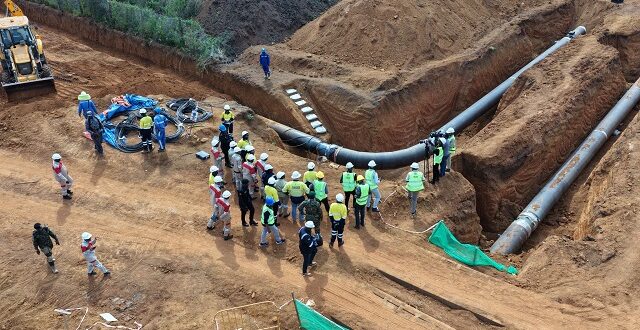
Kiryandongo, Uganda | THE INDEPENDENT | An independent environmental and social consultant representing lenders to the East African Crude Oil Pipeline (EACOP) has highlighted unresolved environmental and social actions along the 1,443-kilometre pipeline, despite overall progress in implementing safeguards.
According to a February 2025 Environmental and Social Due Diligence (ESDD) report submitted to potential lenders and signed by Federico Breda, Project Manager, and Giovanni De Franchi, Project Director, the project has made significant progress in implementing its Environmental and Social Action Plan (ESAP).
Uganda Radio Network has seen a soft copy of the report that was previously submitted to Potential Lenders and Pathfinders. The report was copied to EACOP Ltd, TotalEnergies, CNOOC, UNOC, TPDC, ICBC, Standard Bank, and KPMG.
It identified four key actions that remain unresolved, including biodiversity measures at the Kingfisher oilfield, indirect impacts from oil roads on chimpanzee habitats in the Albertine Rift, and some resettlement and livelihood restoration activities for affected communities.
The report had suggested that monitoring will be required as construction progresses, particularly for the Bugoma and Budongo Forest Reserves, critical habitats for chimpanzees.
It said conservation groups working with the International Union for Conservation of Nature’s Albertine Rift Regional Chimpanzee Taskforce (ARRC) stressed the urgent need for landscape-scale mitigation to protect these corridors.
According to the report, EACOP had initiated reforestation programs along the pipeline corridor and surveys of chimpanzee populations near new roads.
The EACOp reportedly said that it would establish conservation trust funds in Uganda and Tanzania to support long-term biodiversity offsets, including marine and terrestrial conservation programs.
The consultant team from WSP Italia S.r.l., part of global engineering and environmental consultancy WSP, is currently in Uganda.
The visit formed part of the lenders’ ongoing monitoring of the project to assess progress in the implementation of key conditions relating to land acquisition and resettlement, compensation of Project Affected Persons (PAPs), environmental protection, and biodiversity conservation along the pipeline corridor.
They visited the Petroleum Authority of Uganda (PAU) yesterday (Tuesday) to review compliance with environmental, social, and governance (ESG) conditions tied to the project’s financing.
Dr. Joseph Kobusheshe, Director for Environment, Health, and Safety at PAU, said: “The consultant is following up on aspects of environmental, social, and governance compliance, including conditions given by lenders to the EACOP project. These must be implemented by the developers to ensure that the project meets international best practices,” Dr. Kobusheshe said.
The consultant assessed the progress made in implementing mitigation measures under the environmental and social impact (ESIA) management framework, including the application of the mitigation hierarchy, which prioritises avoiding impacts where possible, minimising unavoidable impacts, restoring affected areas, and, where necessary, offsetting residual impacts.
The environmental and social impact (ESIA) for the EACOP project provides a comprehensive framework to guide environmental and social management throughout the lifecycle of the pipeline and ensure that potential impacts are responsibly managed.
At the time of compiling the report, the shareholders of EACOP intended to raise project finance debt from credit providers orlenders. The EACOP project had to meet the Equator Principles IV (EP IV) and Organization for Economic Co-operation and Development (OECD) Common Approaches.
The Lender Group required that a full Environmental and Social Due diligence (ESDD) review of the Project be carried out, including benchmarking against the International Finance Corporation (IFC) Performance Standards (PSs) and the Environmental, Health and Safety (EHS) Guidelines, and lender-specific policies.
The February 2025 report confirmed that documentation on land acquisition and resettlement is compliant with lender requirements. Livelihood restoration programs for Project Affected Persons (PAPs) are ongoing, and land access for indigenous groups in Tanzania—including the Akie, Taturu, Barabaig, and Maasai—has been secured.
The consultant report notes that the pipeline’s design uses Best Available Technology, which could reduce CO2 emissions by 30–50 percent compared with a base case scenario in Tanzania, depending on the implementation of proposed carbon reduction measures.
The pipeline will transport crude oil from Uganda’s Albertine Graben to the Tanzanian port city of Tanga for export to international markets.
It is jointly developed by TotalEnergies, China National Offshore Oil Corporation, Uganda National Oil Company, and Tanzania Petroleum Development Corporation.
As a high-risk infrastructure project under the Equator Principles, lenders require ongoing monitoring to ensure compliance with international environmental and social standards.
The unresolved ESAP items, biodiversity risks, and chimpanzee habitat concerns highlighted in the February 2025 report will continue to be closely monitored as construction progresses.
“Lenders will verify progress on remaining actions during site visits scheduled in 2025,” the report adds.
***
URN
www.independent.co.ug, https://www.independent.co.ug/lenders-consultant-checks-unresolved-safeguards-as-eacop-progresses/