 news TRUSTED NEW
LGBTQ voters keep up the pressure from Thailand to Slovenia
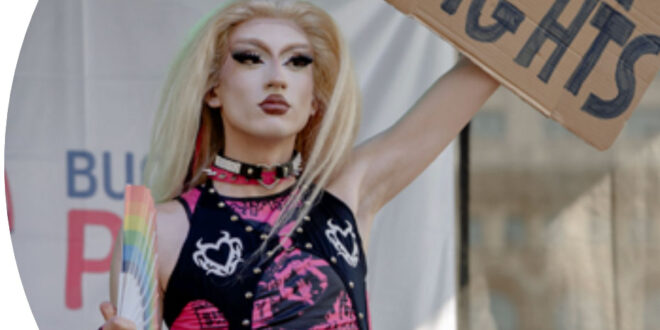
A drag queen raising a placard saying “Gay Rights” in Bucharest Pride, with the Romanian Palace of Parliament seen behind. (Claudiu Popescu photo from Outright International’s report “Queering Democracy: The Global Elections in 2024 and How LGBTIQ People Fared”)
In recognition of May 17’s International Day Against Homophobia, Biphobia, Intersexphobia, and Transphobia (IDAHOBIT), Venus Aves, lead author of LGBTQ rights advocacy group Outright International’s upcoming global report on elections, shares examples of queer resistance as well as election-related queerphobia since January 2026.Fighting hate on the ballot: Queer resistance in elections in 2026By Venus Aves
In 2024, hate was on the ballot in around 85 percent of countries that held elections, as captured in Outright’s Queering Democracy, the most comprehensive global report to date on lesbian, gay, bisexual, trans, intersex, and queer (LGBTIQ) people’s participation in elections. In the “super election year,” politicians engaged in anti-LGBTIQ campaigning in 51 of the 61 jurisdictions examined in the report: from presidential candidates outdoing each other’s commitment to pass an anti-LGBTQ law in Ghana to the Republican Party spending US$200 million on anti-trans campaign ads in the U.S.This year, around 55 countries are sending their citizens to the ballot box. While researching electoral developments for the follow-up report to Queering Democracy (to be released in early 2027), I came across more examples of political queerphobia, barely four months into 2026. To name a few:
Leading up to the general election in Uganda in January, ruling party members accused electoral opponents of “promoting homosexuality,” a charge that can result in 20 years in prison.A far-right presidential candidate in Peru made a homophobic rape threat against the election chief in a bid to overturn the results. Another presidential candidate was constantly questioned about his alleged homosexuality—unnecessary scrutiny that nevertheless led him to defend people’s right to “live your sexuality however you want.”Ahead of the state election in Saxony-Anhalt, Germany in September, the far-right party AfD unveiled its most extremist platform yet, vowing to eradicate “gender ideology” and the “rainbow doctrine” by abolishing gender studies programs, gender quotas, gender-responsive budgeting, and comprehensive sexuality education, among others. AfD is currently leading the polls with a wide margin.Ahead of the U.S. midterm general election in November, Republican Party members are putting anti-trans measures on the ballot in at least four states, targeting gender-affirming care and trans participation in sports.
The full list is long and likely to grow but so is the list of stories of queer resistance for democracy in 2026:
Winning Political Representation
India and Nepal elected their first openly trans lawmakers. While South Asian societies have traditionally embraced some forms of gender diversity, these wins are a significant feat at a time when anti-trans actors are making progress toward reversing or undermining hard-won rights.Claudia López was the first queer mayor of Colombia and is the first queer presidential candidate.Colombia saw its first openly lesbian presidential candidate when Claudia López qualified as an independent candidate, pledging to rely on grassroots citizen support rather than big-party donors. López was also the country’s first openly queer mayor and the first woman to hold that position in the capital city of Bogotá. While she is not currently favored according to the polls, her candidacy is in itself significant in a country that recently saw its number of elected queer officials reduced.
Mobilizing Voters in Hostile Contexts
Hungarian voters came out in record numbers in April to boot out Viktor Orbán ten months after the historic 2025 Pride march, the country’s largest demonstration to date. For trans activist Marina E. Sáenz, the people “stopped Orbán” during that Pride march, emphasizing the catalyzing power of the event.In Uganda, where same-sex intimacy is prohibited and “aggravated homosexuality” is a capital crime since 2024, Let’s Walk Uganda Executive Director Edward Mutebi told a media outlet that “fear of backlash limited visibility and direct participation throughout the election cycle.” However, amid a campaign period marked by queerphobic rhetoric, Let’s Walk Uganda is engaging with the electoral process by organizing informal voter education, community discussions, and training for trans youth on electoral safety.In Kenya, queer groups, led by the Initiative for Equality and Non-Discrimination (INEND) and galck+, launched a voter mobilization campaign in March ahead of general elections scheduled to be held in 2027. The groups’ Queering the Ballot Campaign aims to promote the full inclusion of LGBTIQ Kenyans in democracy, with a strategy informed by a 2024 study on political participation of sexual gender minorities in 14 of the 47 local governments in Kenya and lessons from the first Queering the Ballot Campaign during the 2022 elections.In countries where the far right is gaining ground, queer activists are also mobilizing to meet the challenge.France is heading into a consequential 2027 presidential election, with the far-right party National Rally currently leading in polls. Ahead of the vote, queer advocates engaged with candidates during the March 2026 municipal elections through advocacy letters and a guide on queer-friendly policy measures at the municipal lever, seeking to secure concrete commitments on equality.In Bavaria, Germany, queerphobic hate incidents and support for the far-right party AfD are both on the rise. Organizers are responding by promoting the visibility of queer candidates in the March 2026 local elections.In Peru, where this year’s elections have seen a surge in far-right candidacies, the Victory Institute trained over 300 queer activists as part of a long-term strategy for political representation. Some of the institute’s alumni are now on the ballot.See Also
Putting Equality on the Ballot
A year after marriage equality became the law in Thailand, trans and queer groups are shifting the conversation to legal gender recognition. This made its way to the campaign platform of the People’s Party, the country’s largest opposition party. The party pledged to “allow transgender individuals to choose their preferred title” as “traditional titles” like “Mr.,” “Mrs.,” and “Ms.” no longer “accurately reflect the reality of individuals with diverse gender identities.” Thai ID cards and passports indicate titles or prefixes based on a person’s age and assigned sex at birth. While the proposal falls short of rights-based gender recognition it is an important step toward full recognition.
Monitoring Hate
In Brazil, a democracy grappling with high levels of political violence, the civil society organization VoteLGBT is monitoring reports of violence or threats against queer candidates through Sentinela, an online tool launched in 2024 to receive such reports and strengthen the evidence base against gendered political violence. The platform also directs survivors to free psychological support. Sentinela also facilitates access to justice, as a cooperation agreement with the Ministry of Human Rights and Citizenship (MDHC) allows for the direct referral of cases. The October presidential election pits the incumbent Luiz Inácio Lula de Silva against Senator Flávio Bolsonaro, son of the imprisoned former president Jair Bolsonaro. Flávio Bolsonaro has actively courted the evangelical vote and has a record of fearmongering around “gender ideology”; in this context, the Sentinela tool is certain to play a critical role.
Queer Resistance at the Heart of Democracy
These stories of queer resistance are a reminder that queer people continue to believe in the promise of democracy, even as it comes under threat worldwide. While anti-democratic regression affects everyone, minorities bear the brunt.Despite the diversity of their strategies, politicians across the political spectrum weaponize hate in both liberal democracies and authoritarian regimes. Some falsely portray queer identities as foreign to exploit nationalist sentiments, while others act tough on “gender ideology” to attract Western anti-gender actors’ support. Some resort to queerphobia to bolster their credentials as defenders of “traditional values,” and others scapegoat sexual and gender minorities to distract from the real problems that they refuse to address.They all send one message: sexual and gender minorities do not belong in the body politic. Queer people are not full and equal citizens, but fair game as targets to win votes.LGBTIQ people are an important bellwether of democratic backsliding. Being among the first casualties of authoritarian repression gives queer people insight and experience in fighting back. Everyone concerned about the future of democracy must recognize that fighting queerphobia lies at the heart of our shared democratic struggle. As the Slovenian queer group Ljubljana Pride Association said in a campaign ahead of the March 2026 parliamentary elections:
The LGBTIQ+ community is part of democracy–and our vote counts…The human rights of LGBTIQ+ people are not a marginal issue. They are a question of democracy. When they attack the rights of trans people, when they restrict the freedom of assembly, when they spread hate speech–they are not attacking just one community. They are attacking the foundations of democracy.
If you have information on LGBTIQ people’s participation and queer-related campaigning in elections in 2026, please reach out to Venus Aves at vaves@outright.org. They are currently drafting their global report on the 2026 elections, to be released in early 2027.
Related
Source link