 news TRUSTED NEW
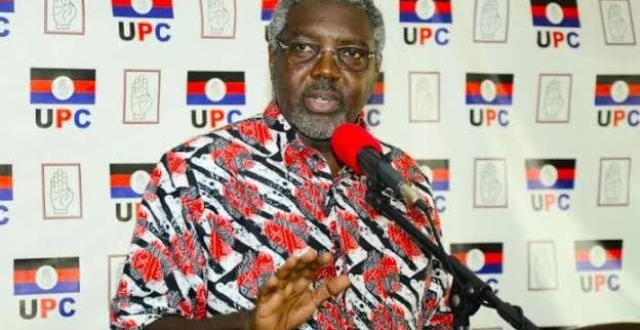
The Uganda People’s Congress (UPC) has reaffirmed Jimmy Akena as its legitimate party president, moving to consolidate unity after the 2026 General Election amid ongoing internal leadership disputes. The decision was adopted during a hybrid Extra-Ordinary Meeting of the UPC National Council held on June 13 at Uganda House in Kampala, according to a press statement released on Wednesday.Party officials said senior leaders, Members of Parliament, and district representatives attended the meeting physically and virtually from across the country. The council declared that Akena remains party president “by law and fact” under the UPC Constitution and warned that anyone acting outside the constitutional framework would bear personal responsibility for their actions.The resolution comes as UPC continues efforts to rebuild its national political influence after years of declining electoral performance since the post-independence era under former President Dr. Apollo Milton Obote. Although the party retains representation in Parliament, it has struggled to regain its former dominance amid competition from the ruling National Resistance Movement (NRM) and opposition formations such as the National Unity Platform (NUP).Despite this, party leaders described the 2026 election outcomes as “notable gains,” crediting Akena’s leadership for improved performance under difficult political conditions. UPC increased its parliamentary representation from five MPs in the 10th Parliament to nine at the start of the 11th Parliament, later rising to 11, before settling at 10 MPs after the 2026 general elections.UPC spokesperson Arach Oyat Sharon said the National Council commended Akena for steering the party through the elections and adopted his report on the state of the party, which will be forwarded to the upcoming Delegates Conference for further consideration. She added that the council reaffirmed UPC’s commitment to remain within the Inter-Party Organisation for Dialogue (IPOD), the legally recognised platform for engagement between political parties represented in Parliament and government.UPC’s continued participation in IPOD has occasionally sparked debate within opposition circles, with some parties questioning its effectiveness in driving political reforms, while others defend it as an important channel for dialogue and institutional engagement. In another resolution, the National Council directed party leadership to strengthen safeguards for UPC symbols, including its flag, logo, and official documents, to prevent misuse and protect the party’s identity.The council also opened a 14-day consultative process, inviting delegates to submit additional recommendations in writing or via recorded video messages to the Office of the Secretary General. The submissions will be compiled into a report for consideration by the Delegates Conference, the party’s highest decision-making organ. UPC has experienced recurring leadership disputes since the death of Dr. Apollo Milton Obote in 2005.The succession contest between Miria Obote and Olara Otunnu exposed deep divisions that later escalated into prolonged legal and political battles over the party’s direction. Further tensions emerged after Jimmy Akena defeated Otunnu in the 2015 party presidential race, triggering another wave of internal disagreements over legitimacy and constitutional authority.GOT A HOT STORY? EMAIL: redpeppertips@gmail.com WITH AS MUCH EVIDENCE AS POSSIBLE.SOURCE PROTECTION/CONFIDENTIALITY IS OUR NO.1 PRIORITY.About Post Author
Post navigation
Source link