 news TRUSTED NEW
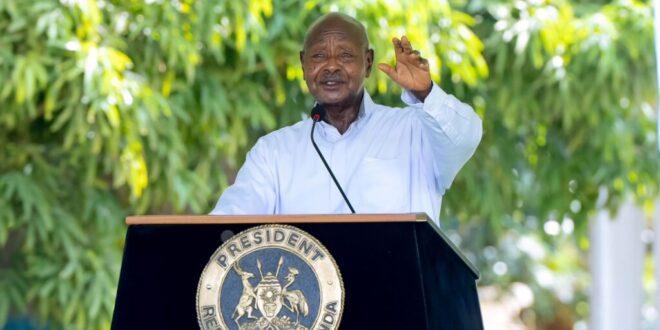
Kampala, Uganda — A recent communication attributed to Yoweri Kaguta Museveni has added new clarity and complexity to Uganda’s ongoing debate around sovereignty and policy independence. Framed as both a philosophical reflection and a policy directive, the message outlines a vision of sovereignty rooted not in isolation, but in decisive control over national policy direction while preserving the country’s long-standing commitment to a free and open economy.
At the centre of the President’s argument is a clear distinction: sovereignty, in the Ugandan context, is primarily about decision-making authority. Political, social, economic, and diplomatic choices, he suggests, must ultimately reflect domestic priorities rather than external influence. This position resonates with broader currents across Africa, where questions of external pressure whether through funding, advocacy, or geopolitical alignment continue to shape governance debates.
Yet, notably, the message also seeks to reassure both domestic and international stakeholders that Uganda’s economic model remains fundamentally open. The President emphasizes that private enterprise, capital flows, remittances, and religious contributions should remain free from undue restriction. Uganda, he reiterates, operates a liberalized economic system where foreign exchange is traded openly and cross-border financial flows are part of its structural strength.
This dual framing asserting political sovereignty while protecting economic openness reveals an attempt to strike a delicate balance. On one hand, the government signals resistance to perceived external interference in sensitive policy domains. On the other, it acknowledges that Uganda’s economic resilience is closely tied to global integration, diaspora remittances, and private sector dynamism. For many observers, this reflects a pragmatic recalibration rather than a radical shift. Uganda is not rejecting globalization; it is seeking to define the terms of its participation within it. The President’s remarks also situate sovereignty within a historical narrative. Referencing Uganda’s past political instability, he underscores the importance of policy choices grounded in national interest rather than identity-based politics. In this framing, sovereignty becomes both a safeguard against external pressure and a corrective against internal fragmentation an effort to anchor governance in economic and developmental priorities.
Equally significant is the emphasis on constitutional legitimacy. By pointing to electoral processes and constitutional provisions as the foundation of sovereignty, the message reinforces the idea that national authority is exercised through established democratic mechanisms. This positions sovereignty not as an abstract concept, but as a lived practice embedded in institutions and civic participation. However, the communication also raises important policy questions particularly regarding implementation. If sovereignty is to be asserted more firmly in decision-making, how will Uganda manage its relationships with international partners, development institutions, and multilateral frameworks? The country’s economic and diplomatic engagements are deeply intertwined with global systems, from trade agreements to financial cooperation.
Balancing autonomy with partnership will therefore be critical. A more assertive policy stance may require clearer communication with external stakeholders to avoid misinterpretation. Investors, donors, and diplomatic partners typically prioritize predictability and coherence. Ensuring that Uganda’s sovereignty agenda is understood as constructive rather than confrontational will be essential in maintaining confidence.
The reference to private sector freedom is particularly consequential. Uganda’s economic growth over recent decades has been driven in large part by liberalization policies that encouraged entrepreneurship, foreign investment, and financial openness. By reaffirming these principles, the President appears to signal continuity an important reassurance at a time when policy debates could otherwise create uncertainty. From a regional perspective, Uganda’s position aligns with a broader African conversation about agency in global affairs. Countries are increasingly seeking to negotiate partnerships on more equal terms, emphasizing mutual benefit over dependency. Within frameworks such as the African Continental Free Trade Area, sovereignty is being reinterpreted not as withdrawal from the global system, but as stronger participation within it.
Domestically, the message may resonate with citizens who value national self-determination, particularly in areas perceived as culturally or politically sensitive. At the same time, it places responsibility on institutions to ensure that sovereignty translates into effective governance, transparency, and inclusive development outcomes. Ultimately, the evolving discourse suggests that Uganda’s sovereignty agenda is less about erecting barriers and more about defining boundaries clarifying where external influence ends and domestic authority begins.
As the debate continues, the central challenge will be maintaining equilibrium. Sovereignty, in a globalized economy, cannot exist in isolation. It must coexist with interdependence, requiring careful calibration between independence and engagement. In that sense, Uganda’s approach may be best understood not as a departure from global integration, but as an effort to navigate it on more self-defined terms anchored in national priorities, yet responsive to the realities of an interconnected world.
About The Author
Post navigation
Source link