 news TRUSTED NEW
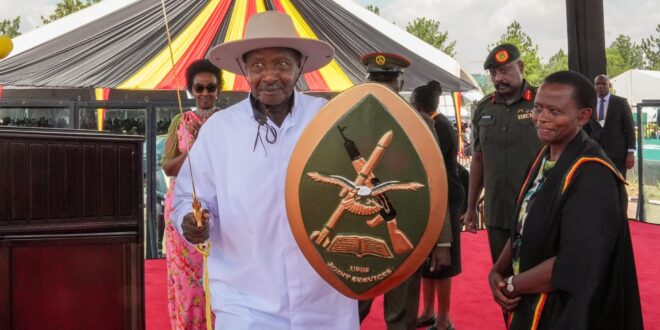
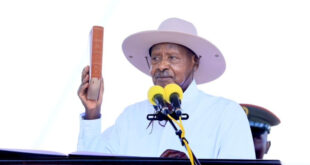
Kampala, Uganda — Uganda officially entered a new political chapter as H.E. President Yoweri Kaguta Museveni was sworn in for another five-year term at a ceremony that drew regional leaders, diplomats, policymakers, and international guests from across Africa and beyond.
Held at the Kololo Ceremonial Grounds in Kampala, the inauguration reflected not only Uganda’s domestic political transition but also the country’s growing diplomatic relevance within regional affairs, continental integration, and African-led cooperation frameworks.
President Museveni, who secured victory in Uganda’s January 2026 general elections, used his inaugural address to emphasize continuity, economic transformation, stability, and national discipline as central pillars of the next phase of Uganda’s development agenda. Opening his remarks with a multilingual greeting “Habari nzuri woote? Mungu asifiwe… Apoyo Rubanga, yebazibwe Katonda” the President congratulated Ugandans for what he described as the successful completion of a broad electoral cycle that included presidential, parliamentary, district, and local government elections.
He particularly commended the ruling National Resistance Movement (NRM) for securing what he called “big majorities” across the elections, while also recognizing opposition parties that participated peacefully within the constitutional framework. “The peace, security and progress we enjoy today are the foundation on which we must now build more jobs, better services, stronger markets and greater household incomes,” Museveni said during his address. The President framed his renewed mandate not as a political privilege, but as a national responsibility requiring discipline, focus, and collective effort. Declaring the new term, a “Kisanja of no more sleep for all Ugandans,” Museveni signaled an administration likely to intensify implementation of economic and productivity-oriented policies aimed at accelerating wealth creation and socio-economic transformation.
A significant portion of his speech focused on Uganda’s economic trajectory, particularly the country’s expanding real estate sector, which he described as evidence of growing domestic wealth and entrepreneurial participation. Museveni noted that many of Uganda’s modern commercial buildings, residential projects, and urban developments have increasingly been financed and constructed by Ugandans themselves a trend he linked to the expansion of the money economy and private sector investment. While acknowledging that poverty remains a challenge for sections of the population, the President emphasized the emergence of a growing middle and upper-income class that has embraced enterprise, innovation, and commercial agriculture. “There is now a growing class of wealthy Ugandans who listened to the message of wealth creation,” he observed, reiterating the importance of investing in productive sectors capable of generating employment opportunities and raising household incomes.
The inauguration followed a high-level State Dinner hosted by President Museveni and the First Lady in her Absential at Speke Resort Munyonyo on the eve of the ceremony. The event brought together Heads of State, Prime Ministers, diplomats, and senior officials attending the swearing-in ceremony. Reflecting on the gathering, Museveni described Uganda as “strategically located at the centre of the world” and naturally positioned as a regional hub for trade, diplomacy, tourism, and connectivity. The dinner also served as an opportunity to showcase Uganda’s hospitality, geography, and investment potential to visiting dignitaries.
The ceremony itself evolved into a major continental diplomatic gathering, reinforcing Uganda’s longstanding role within African regional politics and multilateral cooperation. Among the leaders in attendance were H.E. Salva Kiir Mayardit of South Sudan, H.E. Hassan Sheikh Mohamud of Somalia, Rt. Hon. Dr. Justin Nsengiyumva of Rwanda, Zimbabwe’s Vice President Constantino Chiwenga, former Ethiopian Prime Minister Hailemariam Desalegn, The State Department’s African Affairs Senior Bureau Official, Nick Checker represented the USA president Donald Trump and H.E. Brahim Ghali of the Sahrawi Arab Democratic Republic among others.
Uganda also welcomed representatives from regional organizations including the Intergovernmental Authority on Development (IGAD), alongside senior delegations from across East, Central, and Southern Africa. Their presence highlighted Uganda’s active engagement in continental diplomacy, peacebuilding initiatives, infrastructure cooperation, and regional integration efforts under frameworks such as the East African Community and the African Union. The large turnout of regional leaders reflects Uganda’s enduring influence in African security, mediation, and economic affairs despite evolving geopolitical dynamics across the continent.
As Uganda embarks on another five-year political cycle under Museveni’s leadership, attention is expected to focus on economic implementation, youth employment, infrastructure expansion, energy development, regional trade, and governance reforms. For many observers, the inauguration represented more than a constitutional ceremony. It was also a projection of Uganda’s broader diplomatic ambitions and its continuing effort to position itself as a central actor in Africa’s political and economic transformation.
Post navigation
Source link