 Xavier Radio Ug News 24 7
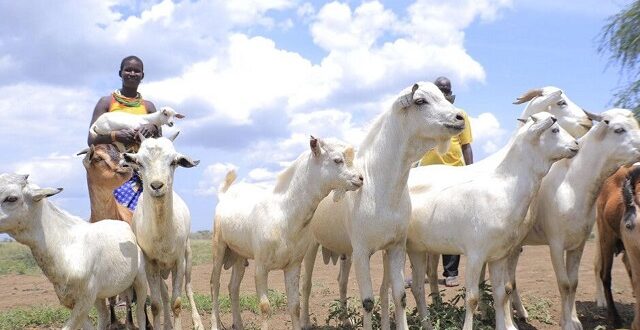
Across the East Africa region and Karamoja, livestock are an important asset for rural households, and livestock products contribute to human nutrition and to local, national, and regional economies. For the goats, some female farmers like Regina Loboborio Village, Rupa Subcounty, Moroto District have benefited. That calls for planning and careful execution of the projects. This picture was taken by Save the Children in Moroto
Abim, Uganda | THE INDEPENDENT | A government programme meant to rebuild lives in Karamoja has instead left communities counting losses.
Approved in 2021 with nearly 40 billion shillings, the Karamoja Goat Initiative promised livestock and dignity to former cattle rustlers who had laid down their arms. In Abim District, however, only a fraction of the goats arrived, many sick, stolen, or dead within days.
Investigations point to political interference, flawed procurement, ignored veterinary standards, and billions of shillings lost.
Five years on, beneficiaries are still waiting for compensation, accountability, and answers, turning a project meant to restore trust into a powerful symbol of broken promises and failed governance.
In 2021, Uganda’s parliament approved a supplementary budget of nearly 40 billion shillings with a promise to transform lives in Karamoja, a region long plagued by insecurity and poverty.
The initiative, dubbed the Karamoja Goat Initiative, was designed to deliver thousands of goats and iron sheets to vulnerable communities, particularly former card wrestlers known as Karachunas who had disarmed voluntarily. But for many in Abim district, that promise remains unfulfilled.
“When you see them, you cannot even eat; they were sick,” says Reverend Caleb Omony, speaking from his office in Abim sub-county. His voice carries the weight of broken promises. “Instead of receiving what was promised, we received grief.”
Under the program, 25 billion shillings were earmarked for goats, another 8 billion for iron sheets, and the rest for mobilization and sensitization. Beneficiaries were each promised 16 goats, with the expectation that they would breed them and pass on offspring, promoting sustainability.
Yet field reports paint a different picture. Out of 18,000 goats slated for distribution in Abim district, only 4,100 were delivered, and many of those were sick, poorly managed, or stolen shortly after distribution.
“The main contractors sub-contracted locals to buy goats cheaply, so the animals were no longer the high-quality hybrid goats intended for the Karachunas,” explains Lowoth Francis, Former commissioner for Karamoja Affairs.
In some areas, the program bypassed its intended beneficiaries entirely. Political interference, favoritism, and biased allocation lists meant goats were given to relatives of officials rather than the Karachunas.In Abuk Town Council, where goats did arrive, the condition of the livestock raised an alarm.
“All the animals had red eyes on distribution day,” says LC3 chairperson Okelo Richard Walter. “The next day, their eyes turned green, and they began dying.”
The veterinary protocols, including a mandatory holding period for vaccination and observation, were ignored, contributing to widespread losses.
“By law, animals should spend two to three weeks in a holding ground for vaccination and monitoring before distribution, but these goats were taken directly from the trucks for distribution immediately. This negligence contributed to their death,” said Okelo.
Most of the new goats died on arrival and even infected the ones that existed with an unknown disease. “In some places, they said they would compensate. But did not,” said Omuge Tom
Even those who managed to keep some goats faced theft and disease.
Charles Owili, LCT chairperson of Abuk town council, lost nearly all his goats and sold the few survivors to pay his children’s school fees.
According to district officials, only seven of the 16 sub-counties in Abim actually received goats. Yet reports to the Office of the Prime Minister (OPM) claimed full delivery, creating a stark contrast between official records and reality.
By March 2023, the Inspectorate of Government launched a probe into the program, citing irregularities including inflated prices, procurement of sick animals, and lack of oversight.
Reports indicated that goats costing up to 800,000 shillings each were sold locally for 100,000–150,000 shillings.
Parliamentary committees, including the Public Accounts Committee and the Committee on Local Government and Public Service, criticized the program, estimating financial losses exceeding 19 billion shillings.
Yet, as of early 2026, reports remain largely undebated in parliament, with officials prioritizing concurrent investigations into related scandals, such as the iron sheets program.“ People were not involved in designing these programs,” says Ambrose Toliit, executive director of Grassroots Alliance for Rural Development.
“Projects must meet the actual needs of communities. Some areas may need oxen, others seeds or irrigation. One-size-fits-all approaches fail vulnerable populations.”
For the people of Abim sub-county and other affected areas, the Karamoja Goat Initiative has become a story of disillusionment. Hundreds of millions were spent, tens of thousands of goats were brought, but for many, the outcomes were sickness, loss, and betrayal.
Reverend Omony reflects on the human cost: “We are still waiting for compensation. The government should plan to give relief. What they may consider help has, in reality, worsened our situation.
The goats that never came are more than livestock lost to mismanagement; they are a symbol of broken trust, failed governance, and a reminder that development is about people, not just budgets or policies.
Until those responsible are held to account, the Karamoja Goat Initiative will stand not as a development success, but as a warning of how public money can vanish while suffering remains.
As investigations continue, communities in Karamoja remain vigilant, holding onto hope that accountability will finally match the promises once made to them. For families in Abim, the real loss was not just livestock, but faith in a system that promised recovery and delivered disappointment.
*****
This article was written by an Abim-based Journalist/ Podcaster Isaac Okeng, edited by URN Karamoja Hub lead Godfred Eyoku. Okeng indicated that the investigation was facilitated by a grant from the African Centre for Media Excellence (ACME) under the Media Support for Public Accountability and Civic Engagement in Uganda (M-SPACE) project.