 Xavier Radio Ug News 24 7
World Social Work Day 2026: A Timely Call to Heal a Divided World
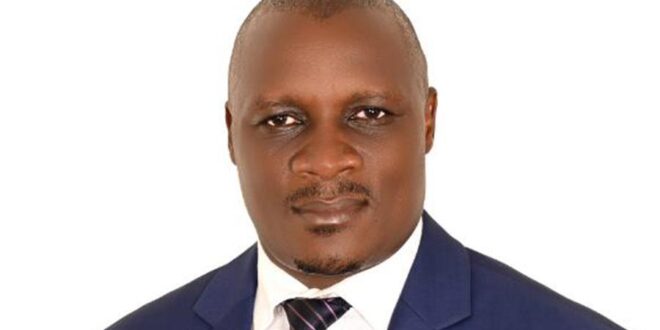
By John Mary Ssekate
Africa-Press – Uganda. World Social Work Day is an annual celebration that highlights the achievements of the social work profession, raises the visibility of social services, and promotes social justice and human rights.
Marked every year on the third Tuesday of March, the day brings together social workers, communities, and global stakeholders to reflect on the role of social work in transforming individuals, families, and societies.
This year’s celebration falls on March 17 and carries the theme: “Co-building Hope and Harmony: A Harambee Call to Unite a Divided Society.” The theme resonates deeply with the current global context, where divisions, conflicts, and mistrust continue to challenge the foundations of peaceful coexistence.
“Harambee” is an African concept meaning “pulling together.” It symbolizes collective effort, solidarity, and shared responsibility. In the context of today’s world, it calls for rebuilding trust, strengthening social cohesion, and encouraging communities and nations to work together toward common goals.
The theme also draws inspiration from the African philosophy of “Ubuntu,” which emphasizes humanity, compassion, and interconnectedness. Ubuntu is often captured in the phrase, “I am because we are,” underscoring the belief that individuals thrive through mutual care, respect, and cooperation within their communities.
These principles align closely with the values of the social work profession—service, social justice, respect for human dignity, and the importance of human relationships. They also echo the 2022 People’s Charter for an Eco-Social World, which calls for societies built on love, care for people and the planet, dignity, solidarity, inclusion, and collaboration.
The relevance of this year’s theme becomes even clearer when viewed against the backdrop of escalating global conflicts and violence.
Across the world, numerous crises continue to threaten unity, human dignity, and social stability. The war between Russia and Ukraine, which began in 2014 following tensions over Crimea, remains a major geopolitical conflict. The long-standing Israel-Palestine conflict continues to fuel instability in the Middle East.
In Africa, the protracted ethnic conflict in South Sudan has claimed hundreds of thousands of lives and displaced millions, despite the 2018 peace agreement. Violence in the Sahel region—particularly in Burkina Faso, Mali, and Niger—has intensified due to insurgency and political instability. Meanwhile, insecurity persists in northern Nigeria due to extremist violence.
Closer to the East African region, the conflict in eastern Democratic Republic of Congo involving the M23 rebel group has created a severe humanitarian crisis. Despite diplomatic efforts, the situation continues to displace communities and strain regional stability.
Elsewhere, civil war in Myanmar, tensions between Afghanistan and Pakistan, and geopolitical rivalries in the South China Sea highlight how fragile global peace has become. The international community has also witnessed rising tensions involving Iran, the United States, and Israel following recent political and military developments.
These conflicts have devastating consequences: loss of lives, displacement of communities, destruction of infrastructure, and disruption of social and economic systems. Women and children are often the most affected, bearing the heaviest burden of war, poverty, and forced migration.
In this context, the World Social Work Day 2026 theme—“Co-building Hope and Harmony”—serves as a powerful call to action. It reminds leaders, policymakers, and communities that sustainable peace cannot be achieved without empathy, dialogue, and shared responsibility.
The theme challenges humanity to rethink what it truly means to be human. It calls for renewed commitment to compassion, respect, and justice—values that are essential for building peaceful and inclusive societies.
For social workers around the world, the message is clear. Their role goes beyond providing services; it involves advocating for human rights, strengthening community resilience, and fostering environments where dignity and equality are upheld.
At the community level, the theme encourages individuals to build bridges rather than walls, to strengthen communication and understanding, and to open their doors to those in need. By nurturing solidarity and cooperation, societies can overcome divisions and restore hope.
Ultimately, World Social Work Day reminds us that humanity’s strength lies in unity. Through collective effort, compassion, and respect for human dignity, it is possible to create a more harmonious and inclusive world.
Happy World Social Work Day 2026.
Mr John Mary Ssekate works with the National Association of Social Workers of Uganda
Source: Nilepost News
Find more news and analyses on Uganda on the Africa Press website
www.africa-press.net, https://www.africa-press.net/uganda/all-news/world-social-work-day-2026-a-timely-call-to-heal-a-divided-world