November 28, 2026

Pearl Times Reporter


Eng. Dr. Eric Tiyo Sekebuga Adriko, Uganda’s former Second Deputy Prime Minister, industrialist and academic, has died at the age of 85.

Adriko died at 4:00am on Saturday, November 28, 2026, at Medipal Hospital, near his residence.

Family 728X90

His death was announced by Caleb Alaka, President of the West Nile Forum (WNF), who conveyed the sad news on behalf of the organisation.

Adriko’s death marks the end of a career that spanned academia, engineering, industrial development, business and government, with the former minister who served under Museveni’s government remaining one of the prominent personalities to emerge from West Nile.

Born on March 1, 1941, in Vurra, Arua District, Adriko pursued engineering studies and later obtained a Doctor of Philosophy (PhD) in Mechanical Engineering from the University of London.

He returned to Uganda in 1970 and joined Makerere University, where he played a significant role in establishing the Faculty of Technology and served as its founding Dean.

His stay at Makerere was relatively short. In 1972, he left the university to establish Adriko and Associates Limited, a consultancy firm specialising in industrial plant and machinery design and evaluation.

He subsequently ventured into manufacturing, founding West Nile Distillers Limited in Arua in 1978.

However, the political upheavals that followed the 1979 overthrow of former President Idi Amin disrupted his business activities and forced him into exile in Kenya, where he spent approximately a decade.

Adriko eventually returned to Uganda in 1989 and became involved in the country’s political and constitutional processes.

Sad! Former Museveni Minister Dead 
Former Second Deputy Prime Minister Eric Adriko Was 85

He participated in the work of the commission that contributed to the drafting of Uganda’s 1995 Constitution before joining the National Resistance Council as the representative of Vurra County.

His political career subsequently took him into Cabinet, where he served as Minister of Industry and Technology before rising to become Second Deputy Prime Minister.

After leaving elective politics in 1996, Adriko continued serving in public institutions.

Between 1997 and 2004, he chaired the board of the Uganda Revenue Authority (URA).

He later served as Chancellor of Kyambogo University for two terms, from 2004 to 2014.

In September 2016, he was installed as Chancellor of Muni University in Arua, a position that brought him back to the region where he was born and had established his business interests.

Beyond his academic and political career, Adriko documented his life experiences in an autobiography titled Otuko, detailing his childhood in Vurra, education, business ventures, exile and eventual involvement in Uganda’s political leadership.

His journey from an engineering academic at Makerere University to Cabinet, industrial development and university leadership made him a notable figure in Uganda’s public life.

His death is expected to be felt particularly in West Nile, where he was associated with business development, education and public service.

Further details about funeral arrangements and burial plans are expected from his family and the West Nile Forum.

Adriko’s death comes months after the death of Gen Moses Ali, another West Nile giant, as was reported Here.


Source link


President Yoweri Museveni’s November reshuffle was expected to usher in a new administrative chapter at the Ministry of ICT and National Guidance. Instead, the transfer of Permanent Secretary Dr Aminah Zawedde to the Office of the Prime Minister has triggered an extraordinary confrontation, exposing tensions over authority, government expenditure and the control of public resources.

More than two weeks after Museveni announced the changes, Zawedde was still occupying the office she had been ordered to leave, even as a successor had been appointed and senior government officials had repeatedly instructed her to report to her new duty station.

Family 728X90

The standoff eventually spilled into an office confrontation on Thursday evening, November 26, when State Minister for National Guidance Alioni Yorke Odria reportedly cut short a meeting he was chairing and headed to Zawedde’s office, accompanied by several directors from the ministry.

What followed, reports say, was an uncomfortable encounter between two senior government officials, with the minister questioning why the outgoing permanent secretary was still conducting business from an office that had effectively been reassigned.

According to reports, Alioni demanded to know what Zawedde was still doing at the ministry nearly two weeks after Museveni had transferred her.

Zawedde reportedly explained that she was completing some tasks that were pending by the time her transfer was abnounced.

The exchange ended with the outgoing permanent secretary being compelled to vacate the office she had continued occupying despite directives to leave.

Alioni is also reported to have taken possession of several signed and unsigned framework contract documents during the encounter, amid growing concerns about procurement decisions and financial commitments being undertaken during the administrative transition.

The dramatic scenes marked the culmination of a dispute that had gradually escalated from an apparently routine presidential reshuffle into a question of who had the legitimate authority to run the ministry and authorise expenditure.

The presidential reshuffle that started it all

On November 9, 2026, Museveni announced changes to the leadership of several government institutions, transferring Zawedde from the Ministry of ICT and National Guidance to the Office of the Prime Minister (OPM).

She was designated Permanent Secretary in charge of Coordination at the OPM.

In her place, Museveni appointed Professor Stephen Akandwanaho as the new Permanent Secretary of the Ministry of ICT and National Guidance.

The changes effectively ended Zawedde’s tenure at the ministry, where she had provided administrative leadership since 2021.

However, the transition did not proceed as smoothly as expected.

Although the presidential decision had been communicated, Zawedde reportedly continued performing the functions of permanent secretary, including responsibilities associated with the ministry’s financial administration.

This created an increasingly uncomfortable situation for the incoming leadership and the political heads of the ministry, particularly as government business continued to be transacted under an officer who had already been redeployed.

The matter eventually attracted the attention of the Head of Public Service and Secretary to Cabinet, Lucy Nakyobe, who intervened to remind Zawedde that a presidential transfer was not an invitation to negotiate her departure.

Nakyobe’s instructions and Lumumba’s intervention

On November 18, Nakyobe formally wrote to Zawedde, reminding her of Museveni’s decision and instructing her to assume her new responsibilities at the Office of the Prime Minister.

In the communication, Nakyobe confirmed that Zawedde had been redeployed as Permanent Secretary in charge of Coordination at the OPM.

“You are kindly requested to report to your new duty station and assume your responsibilities,” Nakyobe wrote.

She explained that arrangements for the formal handover would be made once the incoming permanent secretary had assumed office, in accordance with the Uganda Public Service Standing Orders and other applicable government regulations.

But the communication did not immediately resolve the impasse.

A little over a week later, on November 26, ICT and National Guidance Minister Justine Kasule Lumumba wrote to the Minister of Finance, Planning and Economic Development raising concerns that Zawedde was still exercising the powers of permanent secretary and accounting officer in the same docket from which she was transferred.

Lumumba questioned the legality of financial and administrative decisions being made under Zawedde’s authority after the presidential reshuffle.

“I am particularly concerned that Dr. Zawedde continues to undertake the functions and responsibilities of the Permanent Secretary, including those of the Accounting Officer, despite the above administrative developments,” Lumumba wrote.

“This situation raises concerns regarding the authority and legality under which she continues to exercise these functions and the validity of any financial and administrative transactions undertaken in that capacity.”

Lumumba went beyond questioning the administrative arrangements. She asked the Ministry of Finance to stop processing financial transactions associated with Zawedde until the ministry’s accounting officer had been formally confirmed.

She asked that no financial transactions, payment instructions, commitments or other financial instruments initiated, authorised or endorsed by Dr. Aminah Zawedde in her purported capacity as Permanent Secretary or Accounting Officer be honoured or processed.

The letter came amid reports that Zawedde had authorised payments amounting to Shs12.2 billion after her redeployment.

Of this amount, Shs10 billion was reportedly transferred on Thursday for pension obligations and payments to lawyers, raising further questions about the financial decisions being made during the leadership transition.

Lumumba said she was reporting to protect government resources and ensure that public funds were handled in accordance with the law.

“This is intended to safeguard public resources, uphold the principles of financial accountability and ensure that all transactions are undertaken and authorised by officers duly mandated to exercise the respective responsibilities,” she wrote.

“I trust that you will treat this matter with the urgency it deserves.”

It remains unclear whether the Ministry of Finance acted on the request before Thursday’s confrontation.

The minister also wrote to Nakyobe seeking her intervention to ensure that Zawedde surrendered all government records, institutional assets and official responsibilities under her custody and reported to the OPM without further delay.

“I wish to request your intervention to ensure that Dr. Zawedde formally hands over the Office of the Permanent Secretary, including all official responsibilities, records and institutional assets under her custody, and reports to her designated duty station at the Office of the Prime Minister without further delay,” Lumumba wrote.

By Thursday evening, the dispute had moved beyond correspondence between government offices and into a direct confrontation at the ministry.

Who is Aminah Zawedde?

The woman at the centre of the administrative storm is not a career politician but a computer scientist, academic and technology professional whose career was largely built in universities and research institutions before she entered the upper ranks of public administration.

Dr Aminah Zawedde was born on September 17, 1978, in Kampala. She developed an academic background in statistics, economics and computing before building a career in software engineering, research and technology management.

She studied at Makerere University, where she obtained a Bachelor of Science degree in Statistics and Economics in 2002. She subsequently pursued a Postgraduate Diploma in Education at the Islamic University in Uganda in 2003 before returning to Makerere for a master’s degree in Computer Science, which she completed in 2006.

Her academic journey later took her to the Netherlands, where she enrolled for doctoral studies at Eindhoven University of Technology in 2010.

She obtained her PhD in Software Engineering in 2016, researching systems thinking and modelling, particularly the dynamics of requirements process improvement.

While pursuing her doctoral studies, she also enrolled for a Postgraduate Diploma in Educational Technologies at the University of Cape Town in South Africa, which she completed in December 2014.

Before joining the senior ranks of government, Zawedde spent several years in academia, teaching and conducting research at Makerere University’s School of Computing and Informatics Technology.

She joined the university as an assistant lecturer in 2007 and subsequently advanced into teaching and research positions, supervising undergraduate, master’s and doctoral students.

Her professional experience also includes involvement in local and international information technology consultancy projects.

Beyond the university, she became involved in Uganda’s technology policy and institutional development, serving on the board of the National Information Technology Authority-Uganda (NITA-U), where she also chaired the Digital Transformation Committee.

She has also served as a non-executive director of dfcu Group.

Her professional interests include ICT advisory, business transformation, digitalisation of the economy, systems modelling, process improvement, research, technology integration and capacity building.

In July 2021, Museveni appointed her Permanent Secretary of the Ministry of ICT and National Guidance, replacing Vincent Waiswa Bagiire, who was transferred to the Ministry of Foreign Affairs.

Her appointment brought a technically trained computer scientist into one of the government’s most important administrative positions, overseeing a ministry tasked with supporting Uganda’s digital transformation agenda.

In May 2023, she received national recognition for her contribution to the ICT sector when Museveni decorated her during Labour Day celebrations.

She has also been recognised internationally for her work in digital transformation and technology development.

Her transfer to the Office of the Prime Minister therefore marks a significant change for a public administrator who spent several years building her career around technology, research and the development of Uganda’s digital systems.

Procurement questions add another layer to the dispute

The confrontation comes at a time when the Ministry of ICT is facing scrutiny over procurement, expenditure and the management of major government technology projects.

Among the issues attracting attention are concerns about the reported renewal of framework contracts, staff redeployments and financial commitments made after the presidential reshuffle was announced.

The questions have added another dimension to the disagreement over Zawedde’s continued exercise of administrative authority.

Parliament’s Public Accounts Committee has also been examining contracts worth Shs79.17 billion relating to the development, acquisition and upgrading of government ICT systems over a three-year period.

The parliamentary scrutiny covers incomplete digital infrastructure projects, outstanding contractual obligations and concerns about procurement and financial management.

Zawedde and her team have previously attributed some of the challenges affecting the ministry’s projects to inadequate funding, delayed financial approvals and technical limitations.

The latest developments now place the ministry’s administrative transition under an additional spotlight, with questions extending beyond who occupies the permanent secretary’s office to the validity of decisions made during the period between the presidential reshuffle and the formal handover.

For Alioni, Thursday’s confrontation brought an end to an increasingly contentious situation inside the ministry. For Zawedde, it closed a chapter that began with her appointment in 2021 and ended with a transfer to another government institution under circumstances that have raised questions about public administration, financial accountability and the handling of presidential appointments.

Whether the reported financial transactions will be subjected to further review, and whether the procurement concerns will attract additional scrutiny, remains to be seen.

You can see the list of permanent Secretaries that Museveni fired, those he retained and those he transferred HERE.


Source link


A total of 20 lawyers have been nominated to contest for various elective positions on the Uganda Law Society (ULS) Council in the 2027 elections, setting the stage for a competitive race that includes incumbent President Isaac Ssemakadde, who is seeking a second term.

The list was issued by Moses B. Mwase, the Presiding Officer and Chairperson of the Uganda Law Society Elections Committee, under Regulations 4(a) and 16(4) of the Uganda Law Society (Elections) Regulations, 2016.

Family 728X90

The committee said the candidates had been duly nominated for the elective offices of the society’s Council.

The list, released by the ULS Elections Committee on November 27, 2026, features five candidates contesting for the presidency, three for vice president, three for secretary and three for treasurer.

Ssemakadde, who became president of the lawyers’ professional body in 2024, is seeking another term alongside Kenneth Muhangi, Kalule Ahmed Mukasa, Atukunda Isaac and Linda Alinda Ikanza.

The presidential contest is among the most closely watched races in the forthcoming elections, with the five nominees seeking the support of lawyers registered with the society.

For the position of Vice President, the nominated candidates are Anita Nantale, Kalali Steven and Asiimwe Anthony.

The race for Secretary will be contested by Hazel Irene Baagalaaliwo, Ssali Babu and Rutaro Robert, while Geoffrey Turyamusiima, Rose Wakikona and Isiko Arthur have been nominated for Treasurer.

The Elections Committee also announced candidates for the four regional Council Member positions.

In the Northern Region, Lobo Akera Stephen is the sole nominated candidate, while Agaba Kenneth Mugira and Lule Alexander will compete for the Central Region seat.

Musinguzi Arnold Mugisha is the only nominee for the Western Region, while Kanyago Agnes Eres and Eddie Nangulu will contest for the Eastern Region position.

Only two regional candidates have no challengers. Lobo Akera Stephen is unopposed for the Northern Region seat, while Musinguzi Arnold Mugisha has no competitor for the Western Region position.

The Central Region race will be contested by Agaba Kenneth Mugira and Lule Alexander, while Kanyago Agnes Eres and Eddie Nangulu will compete for the Eastern Region seat.

Full List of Nominated Candidates

1. President

  • Kenneth Muhangi
  • Kalule Ahmed Mukasa
  • Atukunda Isaac
  • Linda Alinda Ikanza
  • Isaac Ssemakadde Kimaze

2. Vice President

  • Anita Nantale
  • Kalali Steven
  • Asiimwe Anthony

3. Secretary

  • Hazel Irene Baagalaaliwo
  • Ssali Babu
  • Rutaro Robert

4. Treasurer

  • Geoffrey Turyamusiima
  • Rose Wakikona
  • Isiko Arthur

5. Council Member – Northern Region

  • Lobo Akera Stephen (Unopposed)

6. Council Member – Central Region

  • Agaba Kenneth Mugira
  • Lule Alexander

7. Council Member – Western Region

  • Musinguzi Arnold Mugisha (Unopposed)

8. Council Member – Eastern Region

  • Kanyago Agnes Eres
  • Eddie Nangulu

The Uganda Law Society is the statutory professional body representing advocates in Uganda. Its Council provides leadership and oversight of the society’s affairs, including matters concerning the legal profession, the administration of justice and the protection of the rule of law.

Ssemakadde’s bid for a second term comes as the society continues to play a prominent role in debates surrounding judicial independence, human rights, constitutionalism and the independence of the legal profession.


Source link


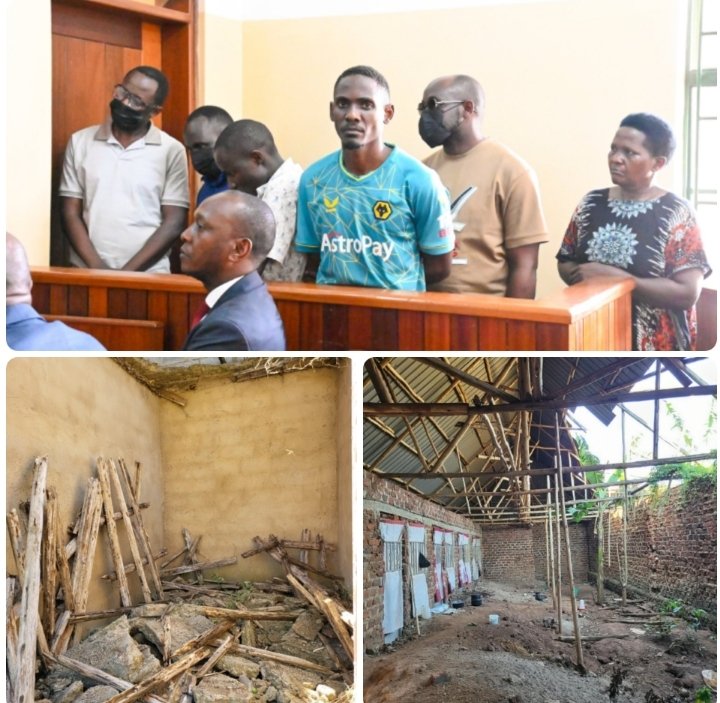
Six people have been remanded to prison over an alleged Shs13 billion compensation fraud scheme involving the construction of unauthorised buildings on land earmarked for a major road project in Mpigi District.

The suspects are accused of erecting structures along the planned Kasanje-Mpigi Expressway corridor before allegedly working with officials from the Ministry of Works and Transport, including former officials of the Uganda National Roads Authority (UNRA), to inflate their compensation valuations at the expense of taxpayers.

Family 728X90

Those charged are Anthony Pascal Ssengooba, a banker with Centenary Bank; Michael Lukusa, a businessman; Joseph Ssendagire, a teacher; Ronald Mugerwa, an engineer; Abas Ibrahim Kigozi, a businessman; and Grace Nalubega, a businesswoman.

The six were arraigned before the Mpigi Chief Magistrate’s Court following investigations conducted by the State House Anti-Corruption Unit in collaboration with the Criminal Investigations Directorate (CID) and the Office of the Director of Public Prosecutions (ODPP).

They face charges relating to carrying out development and building operations within a designated planning area without the necessary development permission, allegedly with the intention of obtaining more than Shs13 billion from the government through inflated compensation claims.

According to the prosecution allegations, the activities took place between February 2022 and December 2025 in Mmembe Makuku and Lufuka villages in Mpigi Town Council.

During this period, the accused, together with other individuals who are still at large, allegedly constructed buildings on land that had already been designated for the Kasanje-Mpigi Expressway without obtaining valid building permits or the required development approvals.

Investigators allege that the construction was part of a scheme to create structures that would subsequently qualify for compensation when the government acquired the land for the road project.

The alleged fraud went beyond putting up buildings on the planned road corridor. The suspects are also accused of colluding with surveyors and valuers, including former UNRA officials, to assign the structures compensation values far above their actual worth.

The inflated assessments reportedly exposed the government to potential losses exceeding Shs13 billion, while threatening to delay the implementation of the road project.

The investigation was triggered by concerns over what authorities described as exorbitant compensation rates awarded to owners of buildings along the proposed road corridor.

The Minister of Works and Transport, Fred Byamukama, had raised concerns over the valuations and requested the State House Anti-Corruption Unit to investigate the matter after visiting the affected areas.

The Chief Government Valuer had also questioned the compensation figures attached to some of the buildings, raising further concerns about how the valuations were arrived at.

The affected properties are located along the proposed Kisubi-Nakawuka-Nateete-Kasanje-Mpigi road corridor, which forms part of the planned road infrastructure development in the area.

Authorities say investigations are continuing, with efforts underway to identify and apprehend government officials and other individuals suspected of participating in the alleged compensation scheme.

The six suspects were remanded until December 1, 2026, as investigations and the prosecution process continue.

It should be remembered that a Museveni minister uncovered fake graves and ghost houses during an inspection of the land. (See Details Here).


Source link


APAC — What began as a public accountability meeting in Apac turned into an emotional confrontation over land ownership, displacement and the fate of families who say they are at risk of losing the homes and gardens they have occupied for years. And Fred Enanga has been named in the allegations.

Residents from seven villages took turns addressing a visiting government delegation, raising allegations against Senior Commissioner of Police (SCP) Fred Enanga, the Deputy Director of Interpol and International Relations, whom they accused of attempting to take over their land and force entire communities out of their ancestral homes.

Family 728X90

The complaints emerged during a baraza attended by the Minister of Local Government, Balaam Barugahara Ateenyi, whose visit to the district provided residents with an opportunity to bring their grievances directly to the government.

As one resident after another rose to speak, the gathering became increasingly charged, with families expressing fears that they could soon find themselves homeless if the dispute was not urgently addressed.

For the residents, the dispute was not simply about competing claims over a piece of land. It was about the security of their homes, the gardens on which they depend for survival and the possibility of being uprooted from communities where they have lived for years.

They appealed to Barugahara to intervene, warning that the situation required urgent government attention against the powerful Enanga before more families were displaced

The minister, who listened to the complaints, sought to calm the gathering, urging residents not to panic as he assured them that their concerns would be investigated.

He made it clear that possession of a land title, regardless of who holds it, should not become a licence to remove entire communities without following the law.

Barugahara assured the residents that government would not stand by while people were allegedly driven from land they had occupied for years, insisting that any attempt to displace them must be subjected to the appropriate legal procedures.

He subsequently directed the State House Anti-Corruption Unit to investigate the land title reportedly held by Enanga, placing the circumstances surrounding its acquisition and validity at the centre of the inquiry.

The investigation, he said, should establish whether the document is genuine, how it was obtained and, crucially, whether the land described in it corresponds with the areas currently occupied by the residents.

The minister made it clear that the existence of a title document would not automatically settle the dispute if questions emerged about its authenticity or the extent of the land it covers.

He indicated that a title found to be inauthentic would have no legal standing, signalling that the government intended to establish the facts before allowing any further action that could affect the communities.

But beyond the investigation into the disputed ownership documents, Barugahara also ordered the Apac District leadership to undertake a survey of the contested land to establish precisely where the claims of the residents and those attributed to Enanga, a former Uganda Police Force spokesperson, overlap.

Under the proposed arrangement, the survey should begin by identifying the portions already occupied by families and securing those areas for the residents. Their homes, gardens and other sources of livelihood should be protected before any consideration is given to the remaining land.

Only after the occupied portions have been identified and safeguarded should Enanga be allocated any unoccupied section of the disputed property, and even then, only if investigations establish that his land title is authentic.

The directive effectively places the protection of existing occupants ahead of any decision to recognise competing claims over the unoccupied portions.

For families who attended the baraza fearing that they could lose everything, the minister’s intervention offered an assurance that their complaints would not simply be dismissed.

Land Grabbing Allegations: Fred Enanga On The Spot For Reportedly Threatening To Chase People From Land Covering Seven Villages
Minister Balaam Barugahara Ateenyi addressing the residents during the baraza

Barugahara urged them to remain on their land as investigations and the survey proceed, cautioning them against taking the law into their own hands.

He also warned against violence and opportunistic land grabbing, stressing that the dispute should be resolved through established legal and administrative channels rather than confrontation.

The minister further called on Apac’s political and administrative leaders to take an active role in documenting the families affected by the dispute and ensuring that no household is overlooked during the verification exercise.

He insisted that the survey should be conducted transparently, with affected residents present to witness the exercise and verify the boundaries being established.

For now, the focus shifts to the State House Anti-Corruption Unit and the district leadership, whose findings could determine the validity and extent of the competing land claims, as well as the fate of the seven villages whose residents have appealed to government for protection.


Source link


The National Unity Platform (NUP) has accused police and the military of raiding its headquarters and blocking a scheduled engagement with artistes and creatives who identify with the opposition party’s political cause, an event dubbed Revolutionary Catch-up.

The opposition party said the event had been organised to appreciate artistes and creatives for their support while re-energising its supporters and other people associated with the party.

Family 728X90

NUP President Robert Kyagulanyi Sentamu, popularly known as Bobi Wine, said the latest incident was another raid on the party headquarters, accusing security agencies of interfering with activities organised within the party premises.

“Our National Unity Platform Headquarters have yet again been raided by the police and military to block a scheduled event with artistes and creatives who identify with the People’s cause,” Kyagulanyi said.

He explained that the gathering, known as Revolutionary Catch-up, was intended to recognise the contribution of artistes and creatives while strengthening their relationship with the opposition movement.

“The event, was organised to appreciate these artistes and re-energize our people,” he said.

Kyagulanyi also questioned what he described as a new requirement for the opposition party to seek permission before conducting activities at its own headquarters.

“Now the criminal regime says we need permission to even hold activities at our Party Headquarters!” he added.

NUP Secretary General David Lewis Rubongoya also confirmed the disruption, saying the party headquarters were once again under siege as security personnel blocked the engagement with artistes.

“Sadly, the NUP Headquarters are under siege yet again. Our engagement with the revolutionary artistes blocked by the police and military,” Rubongoya said.

Like Kyagulanyi, Rubongoya questioned why the party should be required to obtain permission to organise activities at its own headquarters.

“That we need to obtain permission to even hold events at our Party Headquarters!!!” he added.

The latest incident adds to tensions surrounding the activities of the opposition party and its interactions with security agencies.


Source link


Stanbic Bank Uganda has pledged to mobilise and deploy up to UGX 1 trillion by 2028 to support women, young people and farmers, scaling access to affordable finance, enterprise development, market opportunities and climate resilience under its Positive Impact Agenda.

The commitment was unveiled at a multi-stakeholder brunch at Kampala Serena Hotel to mark 35 years since Standard Bank Group entered Uganda in 1991. The event brought together Government officials, regulators, business leaders, shareholders, customers, development partners and employees to celebrate the bank’s journey and outline its next chapter of contribution to Uganda’s economic transformation.

Family 728X90

The three-year Positive Impact Agenda is anchored on five pillars: financial inclusion, enterprise development and job creation, infrastructure investment, climate resilience and corporate social investment, with women, youth and farmers at its centre.

Guest of Honour Dr Chrispus Kiyonga, representing the Prime Minister, Rt. Hon. Robina Nabbanja commended Stanbic for its contribution to Uganda’s economic recovery and transformation over the past 35 years, noting that the bank has supported productive sectors, expanded financial access and helped businesses grow.

“Over the past 35 years, Stanbic has not only contributed to the transformation of Uganda’s banking industry but has also emerged as one of the country’s leading financiers of productive sectors, including agriculture, manufacturing, infrastructure, trade and energy,” he said.

Dr Kiyonga welcomed the bank’s renewed commitment to women, youth and farmers, saying Government values partnerships that mobilise financing, expertise and opportunities to strengthen enterprises, livelihoods and communities.

Henry Musasizi, Cabinet Minister for Finance Planning and Economic Development who also addressed the gathering, underscored the importance of long-term private capital in delivering Uganda’s ambition of a US$500 billion economy by 2040, saying Government alone cannot finance the country’s transformation.

One Trillion Pledge: Inside Stanbic Bank's Commitment To Support Women, Youth And Farmers By 2028
Finance Minister Henry Musasizi signing

He challenged financial institutions to redirect capital towards productive sectors, value addition, exports and inclusive growth, particularly supporting women, young people, farmers and small enterprises.

Musasizi commended Stanbic’s contribution to agricultural financing, women’s empowerment and youth development, citing its financing across agricultural value chains, support to women entrepreneurs through Stanbic for Her and initiatives such as the Stanbic Business Incubator and National Schools Championship.

He called on the bank to sustain its partnership with Government in mobilising long-term financing to support industrialisation, enterprise growth and job creation.

“Government values the role of the private sector in driving economic growth, and I assure you of our commitment to maintaining a conducive business environment and partnering with you to drive Uganda’s development,” he said.

Stanbic Bank Uganda Chief Executive Mumba Kenneth Kalifungwa said the pledge builds on existing programmes and partnerships, with the bank using its balance sheet and strategic collaborations to extend financing and business support to underserved segments.

“This pledge is not the beginning of our work. It is a decision to scale what we know works. We will use capital, capability and partnerships to widen productive participation and ensure that Uganda’s growth is felt by women, youth and farmers at the last mile,” Kalifungwa said.

By June 30, 2026, Stanbic had mobilised approximately UGX 440 billion towards the target, including a UGX 420 billion European Investment Bank credit facility extending to 2032 and a UGX 20 billion Gates Foundation grant running from 2026 to 2030.

The European Investment Bank facility is expected to enable at least 500 Ugandan enterprises to access affordable long-term financing, while the Gates Foundation partnership targets 1.5 million women- and youth-owned small enterprises with financing, financial literacy and structured mentorship.

The commitment also aligns with Uganda’s Tenfold Growth Strategy, which seeks to expand the economy towards US$500 billion by 2040 through productivity, value addition, exports, private investment and a knowledge-based economy.

Stanbic currently has approximately UGX 1.07 trillion in lending linked to Government’s priority sectors of agro-industrialisation, tourism, minerals and science, technology and innovation, with an ambition to grow this exposure to approximately UGX 3.2 trillion by 2029.

Chief Executive of Stanbic Uganda Holdings Limited, Mark Ocitti Ongom, said the bank’s broader ecosystem of financial services, incubation, market access, payments and partnerships enables it to support businesses beyond traditional lending.

“The power of the Stanbic Uganda platform is that finance does not stand alone. Across the Group, we can connect capital to incubation, markets, payments, property solutions and partnerships. This is how we move enterprises from potential to productivity and from participation to scale,” Ongom said.

Stanbic Bank Uganda Board Chairman Damoni Kitabire said the bank’s anniversary commitment would be guided by responsible governance, sustainability and measurable value for customers, communities, shareholders and the country.

“Thirty-five years gives the institution a strong foundation, but it also creates a higher obligation. The Board’s focus is to ensure that this commitment is governed responsibly, delivered sustainably and measured by the value it creates for customers, communities, shareholders and Uganda,” Kitabire said.

The pledge builds on programmes already delivering results across the country. Since the launch of its community-finance programme, Stanbic has cumulatively disbursed more than UGX 200 billion through Savings and Credit Cooperative Organisations (SACCOs), reaching nearly 500,000 households directly and more than three million people indirectly. In the first half of 2026 alone, UGX 81 billion was disbursed through 88 SACCO loans.

Through Stanbic for Her, the bank has introduced more than 40,000 women to formal banking and unlocked approximately UGX 330 billion in credit for more than 29,000 women. Meanwhile, the Stanbic Business Incubator has trained more than 11,400 women and youth entrepreneurs, supported over 5,700 small and medium-sized enterprises and helped unlock UGX 76 billion in credit. In the first half of 2026, more than UGX 64 billion was disbursed to young entrepreneurs.

The Minister of Gender, Labour and Social Development, Gen. Henry Tumukunde, commended Stanbic Bank Uganda for its contribution to the country’s economic development, urging the bank to scale up financing for value addition and industrialisation to accelerate job creation.

“I commend Stanbic for its contribution to Uganda’s development and urge the bank to invest more in value addition. By supporting businesses to process our raw materials, grow local industries and expand production, we can create more jobs and opportunities for our people. Uganda has over five million people who are neither in education nor employment, and addressing this challenge requires deliberate investment in sectors that can absorb our young people and drive sustainable economic growth.” Tumukunde said.

The bank also unveiled Luminaries of Our Journey, a digital Wall of Fame honouring 14 individuals whose contributions helped shape Stanbic’s history in Uganda, including Group leaders, board chairpersons, country chief executives and national policy and regulatory leaders.

As the bank enters its next chapter, Kalifungwa said the anniversary was an opportunity to build on its heritage while expanding opportunities for more Ugandans.

“Today is not a full stop. It is a comma. There are more pages to write, more enterprises to help grow and more Ugandans to enable to participate meaningfully in the economy,” he said.


Source link