November 20, 2026

Reporter


dfcu Bank has called for stronger financing partnerships, improved business readiness and increased access to long-term capital to accelerate Uganda’s industrialisation agenda.

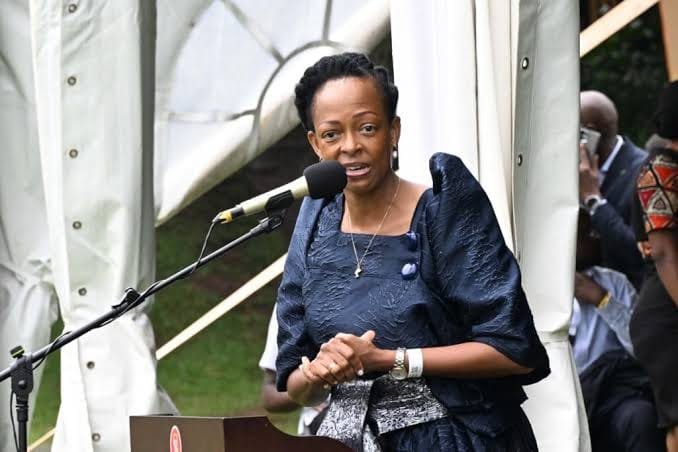
Kate Kiiza, dfcu Bank’s Executive Director and Chief Corporate and Institutional Banking Officer, said financial institutions must go beyond traditional lending and develop innovative financing solutions that enable businesses to expand, add value to local products and compete sustainably.

She made the remarks during a panel discussion at the Uganda Industrialisation Conference 2026, held at Speke Resort Munyonyo and Convention Centre on Thursday, November 19, as part of celebrations marking the 10th anniversary of the Uganda Development Corporation (UDC).

The discussion, held under the theme “Financing Africa’s Industrialisation Agenda”, brought together representatives from commercial banking, development finance institutions, pension fund management and capital markets to examine how Uganda can mobilise the long-term financing required to support industrial growth.

Kiiza said access to financing alone was not enough to guarantee the success of industrial projects, arguing that businesses must demonstrate commercial viability, identify and manage operational risks, and have competent teams capable of implementing their investment plans.

She identified project feasibility, effective risk identification and mitigation, and the technical capacity and experience of project teams as key considerations in financing decisions.

“Unlocking industrial financing begins with preparing businesses to attract and effectively utilise investment,” she said.

Kiiza also highlighted the importance of partnerships between commercial banks, government institutions and development finance organisations in financing projects that require substantial capital.


Advertisement

She cited dfcu Bank’s collaboration with the Uganda Development Corporation and other development finance institutions as part of efforts to connect businesses to appropriate financing arrangements.

Agriculture, she said, remains central to Uganda’s industrialisation ambitions, particularly through agro-processing, value addition and the development of stronger local supply chains.

Through initiatives involving the dfcu Foundation, the bank supports agricultural enterprises at different stages of growth, including primary production, business development, certification and preparation for value addition and processing.

Kiiza also pointed to the bank’s support for women entrepreneurs through targeted financial solutions and business development programmes, including initiatives such as GROW and green financing.

The panel further examined


Advertisement


Source link


US President Donald Trump has claimed that America is leading China and the rest of the world in artificial intelligence, while warning Iran against pursuing biological weapons, as he used an interview in Shenzhen to outline his administration’s foreign policy and technological ambitions.

In an exclusive interview with Fox News on Wednesday, November 18, Trump said the United States had established a commanding position in what he described as “Super Intelligence”, following discussions with Chinese President Xi Jinping during his visit to China.

Trump said he had spent the evening with Xi during a state dinner, where the two leaders discussed developments in artificial intelligence and America’s technological progress.

“I was with President Xi all night last night, sitting next to him at the dinner, right on his right-hand side, and we spoke the whole evening, and we talked about that, and he’s amazed at how well we’ve done with that. We’re leading China, we’re leading the whole world,” Trump said.

His remarks come amid intensifying competition between Washington and Beijing over artificial intelligence, semiconductor technology and control of critical digital infrastructure.

Trump also described his relationship with Xi as strong, saying the Chinese leader had demonstrated unusual diplomatic respect through his reception arrangements and the elaborate ceremony accompanying his visit.

“The relationship that I have with China is a great one. You know, it’s a friendship relationship. It’s a respect relationship,” he said.

He described the reception as a diplomatic achievement for both countries, praising the military honours, pageantry and public welcome organised for his visit.

However, Trump maintained a hard line on Iran, saying Washington was willing to negotiate an agreement with Tehran but wanted guarantees that would make any deal sustainable beyond his presidency.

“They want to make a deal, but I want a deal that can be lasting,” Trump said.

He also raised concerns about reports that Iran could be exploring biological weapons capabilities, including what he described as interest in gas and biological weapons.

“There is indication that Iran is looking at gas and they’re looking at the bio — the biological weapons, not nice — and other things, and we’ll see,” he said.

Trump warned that the United States would respond forcefully if Iran pursued such capabilities or threatened American interests.

“Look, if it does happen, we wipe them out,” he said.


Advertisement

The remarks underscore the administration’s continued pressure on Tehran, even as Trump indicated that negotiations remained possible.

On relations between Russia and China, Trump blamed former US President Barack Obama for bringing the two countries closer, arguing that Washington had allowed what he described as a strategic alignment between countries that were historically rivals.

“The relationship should have never been allowed to happen,” Trump said.

He argued that energy relations had contributed to the closer ties between Moscow and Beijing, adding that he had long viewed an alliance between the two powers as something the United States should have prevented.

“All my life I read you never want to have Russia and China team up,” he said.

Trump also expressed confidence about working with Democrats in the US Congress over the next two years, saying he had received an unexpectedly positive response from members of the opposition party seeking cooperation.

He said he expected negotiations over legislation, including healthcare, to provide opportunities for bipartisan engagement, although he maintained that he would use his presidential veto where he disagreed with proposed measures.

On domestic infrastructure, Trump highlighted plans to modernise America’s air traffic control system, describing the existing equipment as outdated and in need of replacement.

“This is 50-year-old equipment, and it has to be changed,” he said, adding that his administration wanted to ensure the country developed the best air traffic control system in the world.

He also dismissed concerns surrounding recent technological outages, describing them as isolated incidents and accusing sections of the media of exaggerating their significance.

The White House said the interview reflected Trump’s message of American resurgence, highlighting his administration’s focus on technological leadership, infrastructure modernisation and diplomacy.

His remarks in Shenzhen come amid heightened global attention on relations between the United States, China and Russia, particularly as the three powers navigate competition over technology, security and international influence.


Advertisement


Source link


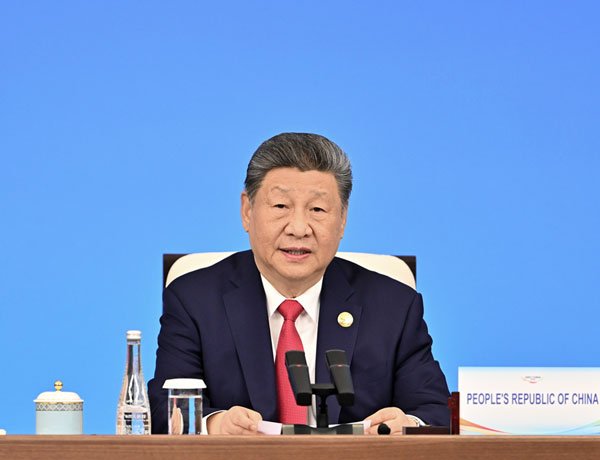
Chinese President Xi Jinping has pledged $20 million to support practical cooperation among Asia-Pacific economies, as he called for deeper regional economic integration, freer trade and increased investment in digital technology and connectivity.

Xi made the announcement on Thursday while addressing the 33rd Asia-Pacific Economic Cooperation (APEC) Economic Leaders’ Meeting in Shenzhen, China, where he urged member economies to strengthen cooperation amid growing global economic uncertainties and rapid technological changes.

He said China would also establish a Center for Asia-Pacific Community Studies in Shenzhen to conduct policy research and exchanges, alongside specialised cooperation institutions focusing on digital technology, cross-border data flows, clean energy and the development of small and medium-sized enterprises.

“China is an advocate, promoter and forerunner of Asia-Pacific economic cooperation. We would like to work with all parties to pool wisdom and synergy in building the four key pillars of an Asia-Pacific community,” Xi said.

The four pillars, he outlined, are economy and trade, connectivity, innovation and development, which he said should guide efforts to build a more integrated and inclusive Asia-Pacific region.

Xi called for renewed efforts to advance the proposed Free Trade Area of the Asia-Pacific (FTAAP), a long-standing APEC vision aimed at strengthening economic integration among member economies.

He urged countries to reduce barriers to trade and investment, improve trade facilitation and align existing regional economic and trade agreements to create greater opportunities for businesses.

“Open cooperation is a sure path to the development and revitalization of the Asia-Pacific,” he said, warning against exclusive economic arrangements and fragmented regional cooperation.

On connectivity, Xi called for investment in infrastructure, smart transportation and customs systems, as well as stronger institutional cooperation to facilitate cross-border payments and maintain stable supply chains.

He also emphasised the importance of people-to-people exchanges, particularly by facilitating travel for business, tourism and other purposes.

The Chinese leader said connectivity should go beyond physical infrastructure to include policies and regulations that make it easier for businesses and individuals to operate across borders.

On innovation, Xi identified the digital economy and artificial intelligence as important drivers of future economic growth, urging APEC economies to strengthen digital infrastructure, improve data governance and facilitate secure cross-border data flows.


Advertisement

He also called for an open and fair environment for technological cooperation, arguing that innovation should benefit economies across the region rather than be restricted by discriminatory practices.

The fourth pillar, development, focused on addressing shared challenges through cooperation in energy and food security, environmental protection, skills development and employment.

Xi said APEC economies should expand green and low-carbon cooperation while investing in human capital, including vocational skills, women’s economic empowerment and opportunities for young people.

He also called for greater cooperation in managing natural resources and protecting the environment to ensure sustainable economic growth.

The meeting comes at a time when global economies are navigating technological disruption, changing trade relationships and growing pressure to secure supply chains.

Xi said the Asia-Pacific region had recorded remarkable economic progress over the past three decades but needed to adapt to changing global realities to sustain its growth.

He urged member economies to embrace solidarity, openness, innovation and inclusive development, saying the countries were interconnected and should work together to address common challenges.

“Members of APEC are like passengers riding the same ship. To navigate the waves of the Pacific, we must unite as one and look out for each other,” he said.

Xi further reaffirmed China’s commitment to regional cooperation, saying Beijing would continue supporting initiatives that promote economic integration and shared development.

The 33rd APEC Economic Leaders’ Meeting brought together leaders and representatives of member economies in Shenzhen to discuss the future of regional cooperation and ways of sustaining economic growth in the Asia-Pacific.


Advertisement


Source link


Fresh Cuts Uganda Limited has returned to government seeking a Shs20 billion bailout to revive its struggling meat-processing business, barely three months after Parliament approved a Shs8.73 billion tax waiver for the company, raising fresh questions about the growing cost of rescuing the private firm with public resources.

The company’s latest request has attracted scrutiny from MPs, particularly because it comes after the government extended financial support to the meat processor under the Science, Technology and Innovation (STI) Secretariat, including Shs798 million intended to support an Ankole beef products initiative targeting the Serbian market.

Fresh Cuts managing director Amos Tindyebwa presented the request before Parliament’s Committee on Science, Technology and Innovation on November 17, 2026, where he appeared to respond to questions about the company’s utilisation of government funding.

Tindyebwa told MPs that the company needed Shs20 billion to implement its recovery and expansion plans, although it was initially seeking Shs10 billion as the first phase of financing.

He said the company had a 10-year strategic plan requiring Shs50 billion in financing and projected that the investment could generate Shs175 billion in revenue over five years.

However, the request raised questions about whether the government was being asked to finance innovation or simply rescue a struggling private business.

The concerns follow an oversight visit by the committee to Fresh Cuts’ processing facility in Seguku along Entebbe Road on November 4, where MPs reportedly found machinery idle and the company struggling with outstanding electricity bills.

Committee chairperson Samuel Opio Acuti expressed concern that the facility had reportedly remained non-operational for about three years despite benefiting from government support.

The Shs798 million extended through the STI Secretariat was intended to support the development and promotion of Ankole beef products for export to Serbia.

During the oversight process, questions also emerged about the utilisation and results of the money, with the company’s representatives reportedly explaining that part of the funding had been used to launch a product in the Serbian market during a one-day event.

The explanation prompted further questions about whether the expenditure had translated into a sustainable export business and whether Uganda had received value for the public investment.

The latest request comes against the background of Parliament’s September 1 approval of a Shs8.732 billion tax waiver for Fresh Cuts, relieving the company of substantial tax arrears owed to the Uganda Revenue Authority (URA).

The Finance Committee had recommended the waiver after concluding that the company was experiencing financial difficulties and that efforts to recover the outstanding taxes had failed.

According to the committee report presented by its chairperson, Maximus Ochai, Fresh Cuts had liabilities of Shs28.66 billion against assets of Shs8.49 billion in 2022.

The company had also accumulated salary arrears, Pay As You Earn (PAYE) and National Social Security Fund (NSSF) obligations.

Ochai told Parliament that the company employed about 110 people and provided an off-taker market for thousands of farmers across the country.


Advertisement

The committee further heard that URA’s enforcement measures, including freezing the company’s bank accounts, had contributed to the collapse of its operations and affected its ability to meet financial obligations.

However, the tax waiver was not without controversy.

Nyendo-Mukungwe Division MP Gyaviira Ssebina opposed the proposal, arguing that writing off the tax arrears would not address the underlying governance and management problems affecting the company.

He also questioned the company’s outstanding bank loans, unpaid salaries and mortgage obligations to DFCU Bank, warning that the waiver alone would not restore its financial stability.

Jinja South Division West MP Timothy Batuwa, on the other hand, proposed that government consider converting some of the company’s debt into equity through the Uganda Development Bank, arguing that this would allow the State to protect its strategic interests in the meat-processing sector.

With the company now seeking another Shs20 billion, questions are likely to intensify over the sustainability of repeated government interventions and the conditions attached to public financing of private businesses.

During the November 17 meeting, Tindyebwa defended the request, saying Fresh Cuts was not asking government for free money but wanted financing under an arrangement that would allow it to repay the funds against agreed commitments, monitoring and supervision.

He attributed the company’s difficulties partly to its previous tax disputes with URA, arguing that the business had the standards, trained personnel and certifications required to resume operations.

He also dismissed suggestions that Fresh Cuts had completely closed, saying the company was still fulfilling some orders, including supplying products to a supermarket in Mbarara.

The managing director said the company was developing new value-added meat products, including Beef Bertong, a dried beef snack, as part of efforts to introduce innovative products to the market.

Science, Technology and Innovation Minister Jonard Asiimwe told the committee that government was reviewing the way the Innovation Fund operates, including tightening accountability requirements and ensuring that beneficiaries sign clear memoranda of understanding.

He acknowledged challenges in distinguishing between funding genuine innovations and rescuing struggling businesses, saying the ministry would scrutinise Fresh Cuts’ proposal to establish whether it offered value for money.

The latest developments put the spotlight on how government determines which private businesses qualify for public financing, particularly when previous interventions have not produced the expected results.

For Fresh Cuts, the central question is whether another Shs20 billion injection will finally restore its operations and deliver the promised returns, or whether taxpayers will be required to shoulder another round of financial rescue without sufficient guarantees.


Advertisement


Source link


President Museveni has asked Kampala city traders to suspend their ongoing shop-closure strike as government works to address their grievances, with a meeting between the President and the traders scheduled for Tuesday next week.

Prime Minister Robinah Nabbanja told Parliament on Thursday, November 19, that the President had made the request following a series of meetings between traders, sector ministries and the Uganda Revenue Authority (URA) held on Tuesday and Wednesday.

Traders, operating under the Kampala City Traders Association (KACITA) and other associations, closed their shops on November 17 to protest high taxes on textiles and garments, delays in customs clearance and what they described as unfair URA enforcement practices.

Updating Parliament on the strike, Nabbanja said discussions had established that the dispute between traders and URA largely stemmed from the tax policy on textiles and garments, which she described as the central issue behind the other complaints.

“The meeting established that the impasse between URA and the traders largely concerns the tax policy on textiles and garments. This was discovered as the central issue from which others emanate,” Nabbanja said.

She said Museveni had directed that the matter be handled through Cabinet and subsequently Parliament, given that it involved policy decisions, and urged traders to call off the strike as government worked towards a lasting solution.

“It is the guidance of the President that since this is a policy matter that needs to be addressed through Cabinet, then Parliament, he requested the traders to suspend the strike until when we shall give them a clear answer after the Cabinet meeting,” she said.

Nabbanja said government had agreed to review the tax policy on textiles and garments and align it with those of other East African Community (EAC) partner states to harmonise the region’s tax regime.

“Today, the President also directed me to present a Cabinet paper, so that government can handle the issue conclusively. We do not want a repeat of strikes in the city,” she said.

To address the wider concerns, government will establish an inter-agency revenue harmonisation committee to engage traders and resolve cross-cutting challenges affecting their businesses.

The committee, which will be chaired by Nabbanja, will comprise the ministers of Finance, Planning and Economic Development; Trade and Cooperatives; Public Service; and the URA Commissioner General.

Nabbanja said the absence of effective engagement between traders, URA and government had contributed to the dispute, adding that government wanted to create a platform through which grievances could be addressed before they escalate into industrial action.

“There has been no link between the traders, URA and government. We thought it wise that before going on strike, people can converge and agree on a number of issues,” she said.

On complaints about goods held at customs, Nabbanja said she had directed URA to expedite the release of consignments and ensure that cases were handled promptly.


Advertisement

“I directed URA to expedite the release of the goods and ensure that the cases are handled promptly. Traders who meet the applicable compliance should pay the requisite taxes and have their goods released within three days,” she said.

The Prime Minister also revealed that government was losing revenue because some traders had resorted to under-declaring or evading taxes under the existing tax regime.

She told Parliament that some traders were reportedly offloading goods in Kenya, paying taxes there before transporting them into Uganda on buses as small cargo.

“We were told that because of what the tax regime brought, this resulted into traders offloading goods in Kenya, pay taxes there and transport them to Uganda using buses under the category of small cargo,” Nabbanja said.

She added that URA had deployed several enforcement teams to address the practice, while Museveni is expected to meet the tax authority on Monday, November 23.

Deputy Speaker Thomas Tayebwa directed Nabbanja to return to Parliament with an update on Wednesday, November 25, following government’s engagements with the traders.

Meanwhile, as government pursued negotiations with KACITA, another traders’ umbrella body, the Federation of Uganda Traders Association (FUTA), asked Parliament to intervene in its dispute with URA over prolonged import clearance procedures.

FUTA, led by its president John Kabanda, appeared before Parliament’s Committee on Trade and Tourism, chaired by Boniface Okot, where members raised concerns about delays in clearing imported goods, which they said were increasing the cost of doing business.

Kabanda said some containers had remained at URA facilities for months, with others held for nearly a year, leaving traders struggling with mounting storage charges, bank loans and declining value of their merchandise.

“Some containers have been held at URA for months, others for almost a year and traders continue to pay rent, bank loans, URA storage while goods lose value, customers are lost and many traders have collapsed into debt,” Kabanda said.

Okot asked the association to provide documentary evidence to support its allegations against URA, promising that the committee would engage the relevant stakeholders to find a solution.

“Parliament is interested in these matters, we shall look at them comprehensively, we shall engage URA and other stakeholders to ensure they facilitate your trade,” he said.


Advertisement


Source link


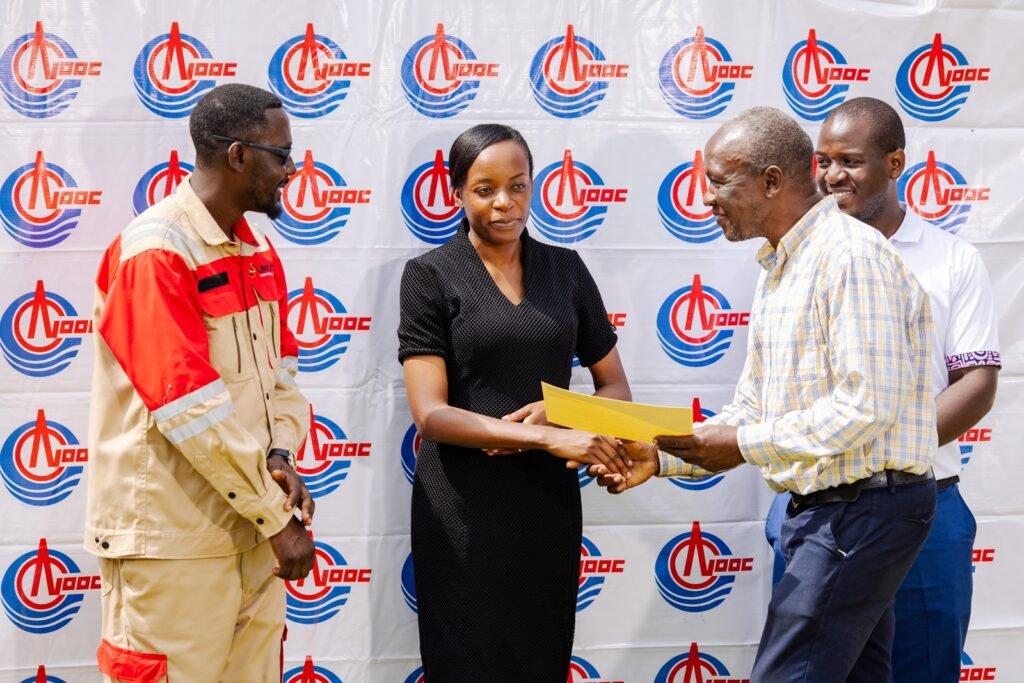
CNOOC Uganda Limited has trained 413 vocational instructors in industry-related skills, in a move aimed at strengthening Uganda’s capacity to produce a skilled workforce for the petroleum sector and other industries.

The latest beneficiaries are 168 lecturers and vocational trainers from 29 vocational training institutions who graduated after completing the company’s Train-the-Trainer Programme, implemented under its National Content Skilling and Capacity Development agenda for the Kingfisher Development Project.

The programme, conducted in partnership with Q-Training Limited, seeks to bridge skills gaps in vocational institutions by equipping instructors with practical, industry-relevant knowledge that they can pass on to students preparing to enter the job market.

The latest training was conducted in Kampala and covered seven technical areas, including mechanical engineering, electrical engineering, instrumentation engineering and process control, welding certification, quality control inspection, non-destructive testing operations and scaffolding.

Speaking on behalf of the graduates, Keuber Deogratius, a welding and fabrication trainer at Kiryandongo Vocational Training Institute, said the programme had strengthened their ability to deliver practical training and prepare students for workplace demands.

He said the initiative would have a wider impact because the graduates would transfer the acquired skills to successive groups of students, helping expand the country’s pool of skilled workers.

Eric Jumba Daniel, CNOOC Uganda Limited’s national content manager, commended the graduates for completing the intensive training, saying strengthening vocational institutions was critical to developing a sustainable workforce for Uganda’s industrial sectors, including oil and gas.

“Our goal is to ensure that Ugandans are not only participants but leaders in the oil and gas sector. We will continue to invest in the skilling of Ugandans, enterprise development and support, employment opportunities for nationals, and technology transfer to build sustainable capacity for the future,” he said.


Advertisement

With the latest graduation, the number of vocational instructors trained under the programme has risen to 413, creating a network of trainers expected to pass industry-related skills to thousands of Ugandans.

The initiative is part of CNOOC’s broader national content programme, which targets the development of local expertise and participation in the petroleum industry.

Other interventions include providing information technology laboratory equipment and computers for simulations and modelling at training institutions such as Uganda Petroleum Institute Kigumba. The company has also supported practical learning through the provision of a drilling rig.

Under its wider skills development initiatives, CNOOC says it has trained 250 vocational skills trainees, 360 heavy goods vehicle drivers, 580 welders in 6G and 3G arc welding certification, and 90 heavy equipment and heavy lifting operators.

The investments are intended to improve access to employment opportunities for Ugandans while supporting technology transfer, enterprise development and the growth of local capacity to serve the petroleum industry and other sectors of the economy.


Advertisement


Source link


Former NTV Uganda presenter and pastor Edwin Musiime has confirmed that his marriage to Christabell Nansubuga has hit a difficult chapter, publicly defending his estranged wife against allegations circulating on social media and appealing for respect for their family.

In a statement shared on Thursday, November 19, Musiime described the developments as painful, saying private family difficulties had been turned into a subject of speculation, false stories and public attacks.

He dismissed the allegations against Nansubuga, whom he described as the mother of his child, and also defended the Aine family, saying they had been kind family friends.

“I firmly dismiss the baseless allegations against Christabell, the mother of my child, and the unfair attacks on the Aine family, who have been nothing but kind family friends,” Musiime said.

He did not disclose what had caused the breakdown of the relationship or when the couple decided to go their separate ways. However, he made it clear that despite their differences, he still believes Nansubuga deserves dignity and respect.

“Whatever differences have led us to walk separate paths, Christabell remains someone I once chose to love and who deserves dignity and respect,” he said.

Musiime and Nansubuga’s relationship dates back to their professional association through The Property Show, a real estate television programme on NTV Uganda. Their professional relationship eventually developed into romance.

The couple held their traditional introduction ceremony, commonly known as kwanjula, at Nansubuga’s family home in Mutungo, Kampala, on August 3, 2019.

A week later, on August 10, 2019, they exchanged marriage vows at Kampala Serena Hotel in a ceremony officiated by UK-based evangelist Pastor Bruce Oliver, who was also Musiime’s mentor. Their wedding reception was held at Turaco Hall at the same hotel.

The wedding attracted attention partly because Musiime chose a best lady, Anitah Beryl, instead of the traditional best man.


Advertisement

In November 2021, the couple welcomed a son, Montel Mykel Musiime. Musiime announced the birth on social media, thanking Nansubuga for bringing their child into the world.

In August 2022, as they celebrated their third wedding anniversary, Musiime publicly praised his wife, describing her as a wonderful partner and mother.

In his latest statement, Musiime reflected on the difficulties of marriage, arguing that the breakdown of individual relationships should not diminish the value of the institution.

“No one walks down the aisle expecting to walk separate paths. Our experience should never diminish the beauty and sacredness of marriage. The shortcomings of individuals do not define the institution,” he said.

He further acknowledged that the experience had humbled him and taught him difficult lessons, while apologising to people he may have disappointed in his capacity as a leader and mentor.

“Leadership does not make us perfect; it makes us more accountable,” he said.

Musiime also criticised people he accused of exploiting the family’s private difficulties for popularity, saying some painful experiences should not be turned into public entertainment.

He ended his statement by appealing for prayers for himself and his family, urging the public to allow them to navigate the difficult period with dignity and compassion.

“Some chapters are painful enough without the cruelty of an audience. May truth, kindness and grace prevail,” he said.


Advertisement


Source link


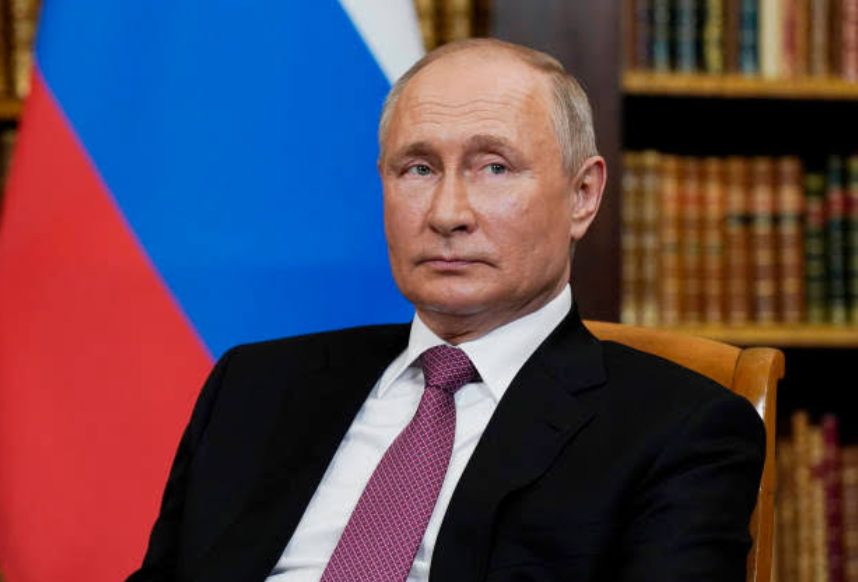
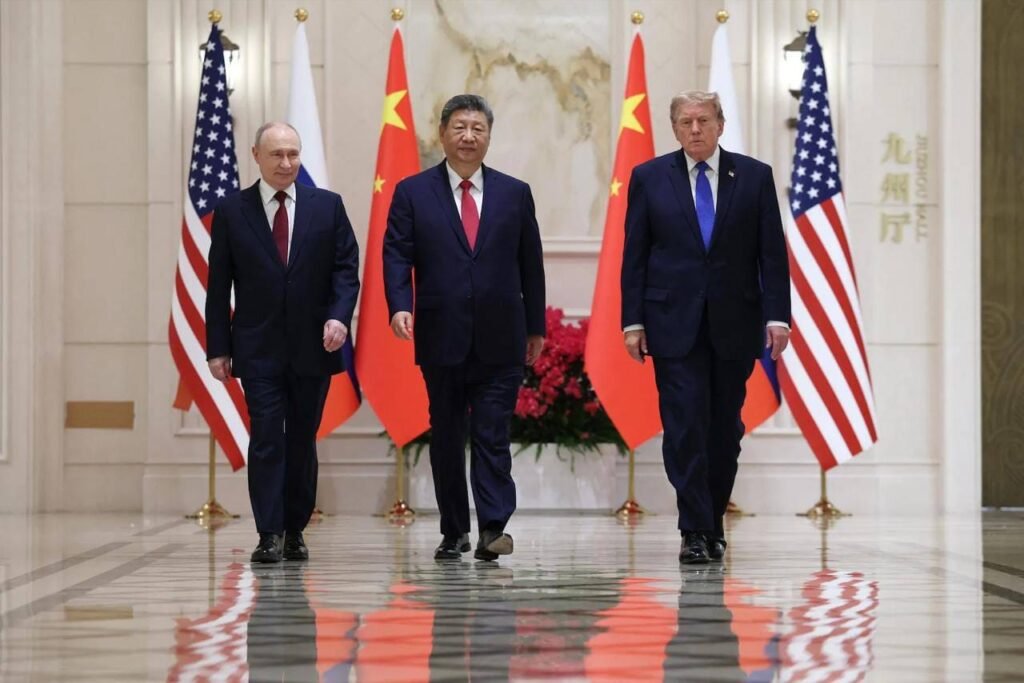
Russian President Vladimir Putin has described his meeting with US President Donald Trump and Chinese President Xi Jinping as a historic diplomatic engagement, expressing optimism that the three countries can build greater understanding despite their geopolitical differences.

Speaking at a press conference in Shenzhen on Thursday, November 19, Putin said the discussions had been frank and productive, providing an opportunity for the three leaders to exchange views on international affairs and better understand one another’s positions.

He credited Xi with creating an atmosphere of trust that enabled the leaders to speak freely, particularly during discussions held after the formal part of the meeting.

Putin said the meeting marked a new chapter in international diplomacy, although he cautioned against interpreting it as the emergence of a permanent new diplomatic arrangement.

“Only God knows what will happen next,” he said, adding that the engagement had nevertheless demonstrated the usefulness of direct communication among the three major powers.

“It is a new page in the history of diplomacy,” Putin said, describing the meeting as historic because such an engagement involving the three leaders had not happened before.

He said discussions covered United Nations reforms, nuclear non-proliferation and what he described as unlawful actions by the International Criminal Court.

Putin said he was particularly impressed by Xi’s contribution to the discussions, noting that the Chinese leader had suggested creating an environment where the presidents could freely exchange ideas.

He also expressed confidence in Trump’s intentions regarding the conflicts facing the international community, particularly the war in Ukraine.

“I have no doubt that President Trump is sincerely trying to resolve the conflicts, including the one in Ukraine,” Putin said.

The Russian leader said the discussions had created grounds for optimism, although reaching common ground would require compromises and recognition of the realities surrounding the conflicts.

He maintained that Russia was prepared to pursue compromises but would not sacrifice its national interests in the process.

“We’re not going to sacrifice anything, we’re going to look for compromises, which I think are quite feasible,” he said.

Putin also referred to previous discussions in Anchorage, saying Russia had agreed to compromises, but accused European countries and Ukraine of opposing such concessions.

On the war in Ukraine, he argued that Kyiv’s leadership was reluctant to end hostilities because doing so would require holding elections.

He reiterated Russia’s opposition to Ukraine joining NATO, saying Moscow had repeatedly communicated that the country’s membership in the military alliance was unacceptable.


The Russian president argued that security arrangements must take Russia’s concerns into account, accusing Western countries of concentrating on Ukraine’s security while disregarding Moscow’s own security interests.

On Europe’s involvement in peace negotiations, Putin said Russia first needed to understand what European leaders intended to contribute to the process.

He criticised what he described as increasingly confrontational rhetoric from European capitals, saying Moscow was not seeking a war with Europe.


Advertisement

Putin invited European diplomats to Moscow to discuss the disagreements and clarify their positions, arguing that relations between Russia and European countries had deteriorated without Moscow being solely responsible.

“Everyone understands we’re not seeking a war with Europe. What kind of nonsense is that?” he said.

He also questioned European concerns about a possible new Yalta-style arrangement, referring to the 1945 conference where the Soviet Union, the United States and Britain discussed the post-war international order.

Putin argued that the conference had formalised victory over Nazi Germany and suggested that the current international situation required recognition of what he described as the defeat of neo-Nazism.

The Russian leader also issued a warning over the Crimean Bridge, saying any further attacks would trigger retaliation rather than negotiations.

He maintained that the bridge was a civilian facility and that he had personally ordered that it should not be used for military transportation.

Putin warned that Russia’s response to another attack would be more painful, although he did not provide details of the measures being considered.

Beyond the security discussions, Putin used the press conference to highlight Russia’s ambitions in technology and energy, claiming that the country had a global advantage in artificial intelligence and was an undisputed leader in the construction of nuclear power plants.

He argued that Russia’s nuclear energy capabilities gave it an advantage in developing the electricity infrastructure required for artificial intelligence and data centres.

On economic relations, Putin said trade between Russia and China was expected to reach a new record this year, potentially rising to $280 billion.

He attributed the strengthening of Russia’s economic engagement with Asia-Pacific economies partly to Western sanctions, which he said had pushed Moscow to diversify its international partnerships.

Putin also thanked Trump for inviting him to the G20 summit but said he would first consider domestic priorities before deciding whether to travel.

He indicated that Russia would nevertheless be represented by a high-level delegation.

The Russian president further questioned the value of the Nobel Peace Prize, arguing that some decisions surrounding the award had been politically motivated. His remarks followed questions about whether Trump deserved the recognition for his diplomatic efforts.

Despite the differences that continue to divide Moscow, Washington and Beijing, Putin said the trilateral discussions had demonstrated that direct engagement among major powers remained possible.

He described the meeting as a serious joint effort rather than merely a symbolic diplomatic gathering, while cautioning that the three countries were not seeking to impose decisions on other nations.

For Moscow, the engagement offers an opportunity to maintain direct communication with Washington and Beijing as disagreements over Ukraine, European security and the future of the international order continue to shape global politics.


Advertisement


Source link


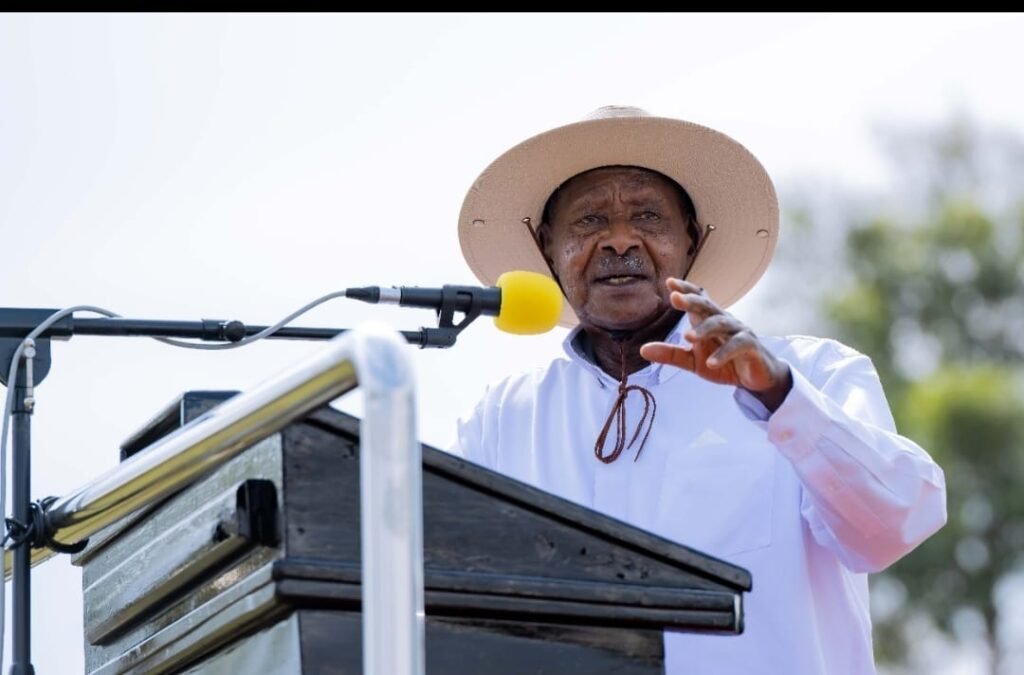
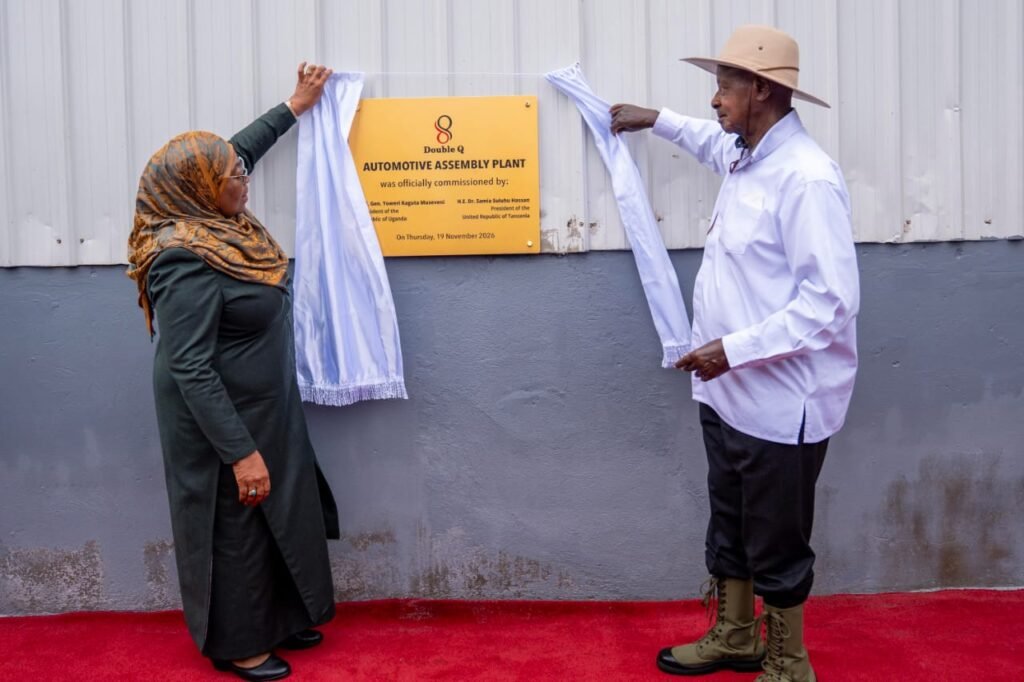
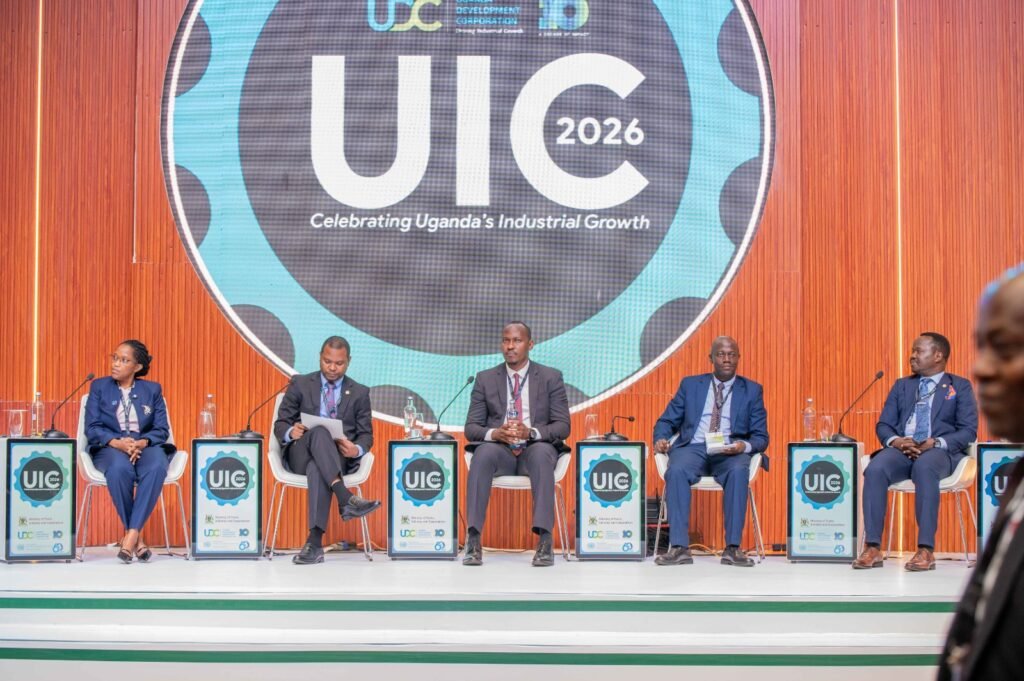
President Yoweri Museveni and his Tanzanian counterpart, Samia Suluhu Hassan, have called for greater industrial cooperation among East African countries, warning against fragmented markets and competition that could undermine the region’s manufacturing ambitions.

The two leaders made the call on Thursday while commissioning a $30 million vehicle assembly plant operated by Double Q Automotive in Nakirebe, Mpigi District, where they argued that regional integration, local value addition and shared natural resources were critical to building competitive industries.

The facility, which assembles Sinotruk heavy-duty trucks, has an annual production capacity of 4,000 units and currently employs more than 1,200 Ugandans.

The commissioning marked the climax of President Suluhu’s two-day state visit to Uganda and highlighted the growing interest in positioning East Africa as a manufacturing and investment destination.

Museveni said Uganda and Tanzania could achieve greater economic benefits by combining their natural resources and industrial capabilities instead of pursuing development independently.

He pointed to Uganda’s iron ore deposits and Tanzania’s natural gas reserves as complementary resources that could support industrial production if the two countries coordinated their investment and manufacturing strategies.

“You find that Tanzania has got gas, Uganda has got iron ore, and other products. So, when you put them together, instead of using them in a fragmented way, you will do better business. You succeed more easily,” Museveni said.

He argued that Africa’s industrialisation would depend on its ability to organise production, access larger markets and improve communication infrastructure, adding that individual countries could struggle to sustain industries without sufficient market demand.

“This is not just music; it is showing the future. If you want to succeed, you need a united market for Africa,” he said.

Museveni urged African governments to prioritise economic integration, saying a larger continental market would enable local manufacturers to expand production, attract investment and compete with established global industries.

He also called on Chinese investors to deepen their involvement in Africa, describing the continent as an emerging centre of global business.

With Africa’s population projected to increase from approximately 1.5 billion to 2.5 billion over the next three decades, Museveni said the continent presented significant opportunities for manufacturers and investors seeking expanding consumer markets.

However, the President challenged Double Q Automotive to move beyond assembling imported vehicle components and establish stronger links with Uganda’s domestic manufacturing sector, particularly the steel industry.

He commended the company for investing in Uganda and encouraged it to increase the use of locally produced materials in vehicle production.

The President noted that the company was already undertaking vehicle body-building activities, contributing approximately 20 per cent in local value addition.

He said Uganda’s iron ore deposits could provide the foundation for a domestic steel industry capable of supplying manufacturers with raw materials and reducing dependence on imported components.

President Suluhu echoed the call for regional industrial cooperation, arguing that East African countries should stop viewing one another as competitors when establishing manufacturing industries.

She said the region needed complementary industrial policies that would allow member states to specialise, share production capabilities and develop interconnected value chains.

“East Africa must compete with the world, not within itself,” she said.

Suluhu said industrialisation was no longer simply an economic choice but a necessity for African countries seeking to create jobs, increase exports, transfer technology and reduce dependence on imported manufactured goods.

She urged East African Community member states to transition from predominantly agricultural economies towards industrial production while modernising agriculture to supply raw materials to factories.

“Let us turn from being consumers of imported goods to regional production and marketing hubs. We should aspire to manufacture, assemble, and produce,” she said.

The Tanzanian leader cited the presence of Sinotruk operations in both Uganda and Tanzania as an example of why countries should pursue complementary investments rather than compete for the same industrial opportunities.

She also welcomed proposals to harmonise regulations governing vehicle assembly and manufacturing across the region, saying this would create a predictable operating environment and expand the market for locally assembled vehicles.

Suluhu revealed that Tanzania was exploring partnerships to establish a railway locomotive manufacturing plant as part of its broader industrialisation programme.

She also pointed to the Port of Dar es Salaam, which handled approximately 33 million tonnes of cargo in 2026, as evidence of the growing demand for transportation and logistics services in the region.


Advertisement

The demand, she said, presented opportunities for local vehicle manufacturers to supply trucks and other equipment needed to support trade and regional infrastructure.

The Double Q Automotive plant is expected to contribute to this growing industrial capacity.

According to the company’s managing director, Lin Yu, the business began operations in Uganda in 2013 as a transporter of construction materials before expanding into vehicle spare parts, after-sales services and vehicle leasing.

It became an official Sinotruk distributor in Uganda in 2017 and started assembling trucks locally in 2020.

Yu said the company had since assembled more than 5,000 trucks through its Ugandan operations, with the new facility providing capacity for 4,000 units annually.

He said the company’s ambition was to develop a broader automotive manufacturing ecosystem involving local steel production, engineering, metal fabrication and logistics.

“We want to buy more materials locally, make more truck parts in Uganda, and expand our work in metal fabrication, engineering, and logistics,” Yu said.

He said the company was committed to supporting the government’s Buy Uganda, Build Uganda policy by increasing purchases from local suppliers and manufacturers.

Yu also disclosed that Double Q was developing training partnerships with Kyambogo University, Uganda Christian University and Nakawa Vocational Institute to equip Ugandans with practical skills needed in the automotive industry.

The company intends to expand into passenger vehicles and electric trucks as it strengthens its manufacturing operations.

Works and Transport Minister Fred Byamukama said the investment had created significant employment opportunities, particularly for young people.

He disclosed that the plant directly employs more than 1,200 Ugandans, many of whom have acquired technical competencies through government skilling programmes and workplace training.

The minister said the lowest-paid employee earns approximately Shs800,000 monthly, describing the investment as an important contribution to the development of Uganda’s industrial workforce.

Byamukama also revealed that government was engaging the company on plans to expand its manufacturing activities, including a proposed tyre production facility at Kayunga Industrial Park.

The proposed investment would further strengthen Uganda’s automotive value chain and reduce dependence on imported vehicle components.

Chinese Ambassador to Uganda Wu Guangrong said the commissioning demonstrated the commitment of the Ugandan and Tanzanian governments to industrial development and regional economic cooperation.

He commended Double Q for expanding from construction materials and vehicle distribution into local vehicle assembly, urging Chinese companies operating in Uganda to comply with local laws, protect the environment and invest in skills development.

Sinotruk International General Manager Song Yang said the company was committed to supporting Uganda’s industrial development through technology transfer and investment.

He said Sinotruk products were available in more than 160 countries and regions, with overseas heavy-duty truck sales exceeding 1.2 million units.

Yang projected that the company would produce and sell more than 360,000 heavy-duty trucks globally in 2026, approximately 110,000 of which would be destined for African markets.

He said the company’s contribution should not be measured only by sales but also by the employment opportunities, skills transferred and economic value generated in countries where it operates.

The two presidents toured the facility, inspected its production lines and interacted with management, engineers and employees before officially commissioning the plant.

The launch was attended by government ministers and senior officials from Uganda and Tanzania, representatives of the Chinese business community and players in the automotive industry.


Advertisement


Source link


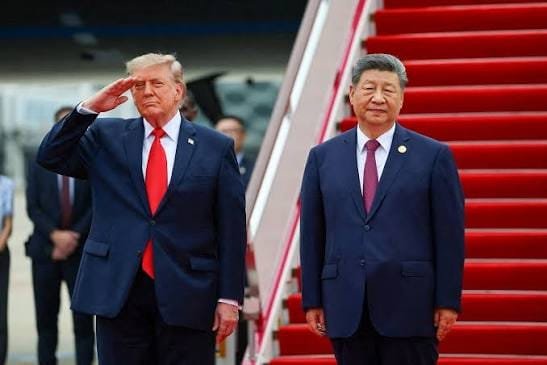
Russian President Vladimir Putin, United States President Donald Trump and Chinese President Xi Jinping have signed a joint declaration on peace and international security following a historic trilateral summit in Shenzhen, China.

The declaration, adopted on November 19, 2026, outlines four key areas of cooperation among the three global powers, including reforming the United Nations, strengthening energy security, checking the powers of international institutions and reducing nuclear risks.

The trilateral summit lasted approximately one and a half hours, bringing together the leaders of the three countries, which are permanent members of the United Nations Security Council, at a time of heightened international tensions and continuing conflicts, particularly the war between Russia and Ukraine.

According to the declaration, the three countries committed themselves to reforming the United Nations to enable it to respond more effectively to global challenges and fulfil its fundamental responsibility of maintaining international peace and security.

On energy security, the leaders agreed to increase the production and supply of refined petroleum products for the benefit of countries across the world. They also reaffirmed the importance of maintaining stable energy supplies.

The declaration further emphasised respect for state sovereignty and the immunities of state officials, with the three leaders agreeing that the International Criminal Court (ICC) and similar institutions should not abuse their powers.

On nuclear security, Putin, Trump and Xi reaffirmed that a nuclear war cannot be won and must never be fought. They committed their countries to holding dialogue on reducing nuclear risks and preventing the proliferation of nuclear weapons.

The declaration followed what the three leaders described as a historic engagement, during which they exchanged views on the international situation and expressed their commitment to maintaining strategic stability and international security.

Russia and the United States also thanked China for organising and hosting the summit.

Speaking during the meeting, Putin said Russia, China and the United States had a shared responsibility for maintaining international peace and security, particularly given their historical roles in the Second World War and the establishment of the post-war international order.

“Our three states are the victors of World War II. We have a joint responsibility for maintaining international peace and security,” Putin said.

He added that cooperation among the three countries, based on mutual respect, could make a significant contribution to strengthening global stability.

Xi called on the three powers to abandon Cold War thinking and recognise their special responsibility in addressing international challenges.

“Major powers bear special responsibility. Today’s world no longer consists of isolated islands,” Xi said.

He emphasised the importance of respecting national sovereignty and territorial integrity, avoiding interference in the internal affairs of other countries and resolving international disputes through dialogue and diplomacy.

The Chinese leader also called for the complete elimination of nuclear weapons, warning that nuclear war must never be allowed to happen.

Trump, meanwhile, described the engagement as historic, arguing that major powers should maintain dialogue even when they disagree.

“Too often, past leaders avoided talking to nations with whom they had disagreements. We feel the opposite,” Trump said.

He also stressed the importance of cooperation in addressing nuclear proliferation and other global security threats.

The three leaders had earlier addressed the Asia-Pacific Economic Cooperation (APEC) forum, where they presented their respective positions on international trade, economic cooperation, technology and global development.

Putin, addressing the APEC Business Summit, highlighted the growing economic importance of the Asia-Pacific region, describing it as the centre of global economic activity and a leading industrial and technological hub.

He said the region accounted for more than 60 per cent of global Gross Domestic Product (GDP), 36 per cent of the world’s population, half of global trade in goods and more than 60 per cent of foreign direct investment flows.

Putin also noted that Russia’s trade turnover with APEC economies had grown by a third in the first eight months of 2026.


Advertisement

He expressed Russia’s willingness to strengthen technological cooperation with Asia-Pacific partners, particularly in artificial intelligence and digital solutions.

“We are ready to share our expertise in digital solutions and artificial intelligence with our Asia-Pacific partners,” Putin said.

He, however, emphasised that such cooperation should be based on arrangements that guarantee national sovereignty and data security.

“Russia wants to remain open to the world,” he said, adding that Moscow viewed its engagement with the Asia-Pacific region as an important component of international economic integration.

Trump, in his address at the APEC Economic Leaders’ Meeting, emphasised American leadership in artificial intelligence, which he described as superintelligence, and rejected international regulatory frameworks that could restrict its development.

“We oppose any form of globalist regulation or anything to control or stifle SI, and we won’t allow that to happen, frankly,” Trump said.

He described the United States as the world leader in superintelligence, calling the technology the greatest technological transformation since the Industrial Revolution.

Trump acknowledged that artificial intelligence had potential risks but said governments needed to manage them without stifling innovation.

He also promoted American energy exports, including plans to supply Asian markets through a liquefied natural gas pipeline in Alaska.

Xi, in his address at the 33rd APEC Economic Leaders’ Meeting, called for greater regional solidarity, open trade, investment and technological cooperation to sustain economic growth across the Asia-Pacific.

He urged member economies to strengthen economic integration and avoid protectionist policies that could undermine regional cooperation.

“Open cooperation is a sure path to the development and revitalisation of the Asia-Pacific,” Xi said.

He called for free and open trade and investment, the removal of barriers to economic activity and stronger regional connectivity.

Xi also identified artificial intelligence and the digital economy as important drivers of future economic growth, urging APEC members to strengthen digital infrastructure, improve data governance and encourage the wider application of emerging technologies.

He further called for inclusive development, arguing that economic cooperation should benefit all countries regardless of their levels of development.

The Ukraine conflict featured prominently in the discussions, with Kremlin foreign policy aide Yuri Ushakov indicating that it was the principal subject of the earlier bilateral engagement between Putin and Trump.

The bilateral meeting lasted approximately 35 to 40 minutes before the three leaders held their joint discussions, which lasted about one and a half hours.

Trump said the United States and China shared an interest in ending the conflict, while Putin maintained that constructive cooperation between Moscow, Washington and Beijing could contribute to international stability.

The Shenzhen meeting places renewed emphasis on cooperation among the three major powers at a time when international relations are increasingly shaped by geopolitical competition, energy security concerns and technological rivalry.

However, the extent to which the commitments will translate into concrete action will depend on subsequent diplomatic engagements and the willingness of the three governments to implement the agreed areas of cooperation.


Advertisement


Source link


As the festive season comes closer, dfcu Bank is redefining the value of everyday transactions, transforming everyday purchases into opportunities for savings. Through its “Pay. Save. Get More.” VISA campaign, the Bank is encouraging every Ugandan to embrace smarter, safer, and more rewarding cashless payments.

From groceries and fuel to dining, travel, and online shopping, customers can unlock exciting discounts and cashback rewards. In this interview Q&A with Isaac Bigirwa, Head of Cards and Payments at dfcu Bank, he explains the strategy, benefits, and vision driving this customer rewards-focused campaign.

  1. Beyond the promise of cashback and discounts, what is behind dfcu Bank’s “Pay. Save. Get More.” VISA campaign, and why is this the right time to introduce it?

Isaac Bigirwa: At dfcu Bank, we believe banking should go beyond facilitating transactions to creating tangible value in our customers’ everyday lives.

The festive season presents this unique opportunity as households and businesses are spending more on groceries, fuel, dining, travel, shopping, and family celebrations. By paying with a dfcu VISA card, customers can access attractive merchant discounts and cashback on qualifying purchases. We want customers to see their dfcu VISA card not simply as a way to access money, but as a preferred payment solution that delivers convenience, security, and additional value.

  1. Many Ugandans already own bank cards but predominantly use them to withdraw cash. How is dfcu turning these cards from occasional banking tools into everyday shopping companions?

Isaac Bigirwa: Most customers consider their bank cards as tools for withdrawing money from ATMs. However, a dfcu VISA card can do much more. You can use it to pay for groceries at the supermarket, settle a restaurant bill, purchase fuel, shop online, or make payments when travelling.

For example, rather than withdrawing UGX 200,000 to shop for household essentials, a customer can pay directly using their dfcu VISA card. Where the transaction qualifies, that spending can contribute towards earning cashback.

  1. With household budgets under pressure during the festive season, what exactly can customers save, and whatdoes the UGX 40,000 cashback offer look like?

Isaac Bigirwa: We recognise that every shilling matters. That is why we have structured this campaign around rewards customers can understand and work towards through their normal spending. Additionally, under the campaign, customers can earn up to UGX 40,000 cashback when they reach UGX 500,000 in qualifying VISA card spending, subject to the applicable campaign conditions.

Smart spending is not about spending more, but it’s about getting more value from what you spend.

  1. Your campaign promises attractive discounts across several spending categories. Where can customers enjoy these benefits, and how do these partnerships enhance the value of a dfcu VISA card?

Isaac Bigirwa: One of our priorities has been to make the campaign relevant to how Ugandans actually live, shop, and spend. We understand that our customers have different lifestyles and financial priorities. That is why we have focused on delivering value across multiple spending categories rather than restricting benefits to one type of purchase. Through our merchant partnerships, customers can enjoy discounts at selected participating outlets such as Fraine Supermarket.


Advertisement

Additionally, beyond domestic shopping, we are leveraging our partnership with Visa to offer dfcu Visa cardholders exclusive savings on selected online purchases and international travel. Through Emirates, cardholders can save up to US$250 on return flights using code UGVISA1, for bookings made between October 12, 2026, and February 21, 2027. Qatar Airways offers up to 12% off using code VISA, while Ethiopian Airlines provides up to 10% off using code VIS01, with both offers valid until December 31, 2026.

  1. 5. Finally, for a Ugandan who already owns a dfcu VISA card but rarely uses it, what is your strongest reason for them to start paying with it today, and how can they take advantage of the campaign before it ends?

Isaac Bigirwa: If you already have an active dfcu VISA debit or credit card, you have a convenient payment solution that can help you unlock additional value from purchases you were planning to make anyway.

The next time you visit a supermarket, buy fuel, dine out or make an eligible purchase, consider paying directly with your card rather than withdrawing cash. Eligible transactions can bring you closer to the campaign’s cashback threshold, while selected merchant offers provide additional opportunities to save.

For customers who enjoy online shopping or are planning festive travel, I would also encourage them to explore the available VISA offers and participating merchant promotions.


Advertisement


Source link


Uganda’s coffee industry is seeking a bigger role in the country’s ambition to grow its economy to $500 billion (about Shs1,000 trillion) by 2040, with industry stakeholders calling for increased investment in processing, manufacturing, branding and coffee tourism.

The stakeholders argue that Uganda is losing out on the bigger economic opportunities in the global coffee trade by concentrating largely on producing and exporting raw beans instead of developing finished products that can command higher prices in international markets.

They want the government and private sector to redirect investment towards soluble coffee manufacturing, roasting, processing and other value-addition activities to enable local companies to capture a bigger share of the global coffee business.

The proposals were contained in a statement of resolutions from the second edition of the Coffee Roundtable Think Tank held on November 13 and 14 at Africa Coffee Park in Rwashamaire, Ntungamo district.

The meeting brought together government officials, policymakers, investors, coffee exporters, researchers and other industry players to discuss how coffee can contribute to industrialisation, tourism, investment and international trade.

In their statement, the participants challenged Uganda’s traditional approach of measuring success in the coffee industry by production and export volumes, arguing that the country should instead focus on the economic value generated from the crop.

“Uganda can no longer be defined by how much coffee it produces or how many bags it exports, but by how much of the global economy it can build around coffee while developing competitive brands that can compete globally,” the statement reads.

The stakeholders said this shift was necessary if Uganda is to move from being a supplier of agricultural raw materials to a country that manufactures and sells competitive products in international markets.

The government targets to expand the economy to $500 billion by 2040 under its Tenfold Growth Strategy, while the National Coffee Strategy 2015/2016 to 2040 targets annual coffee production of 12 million 60-kilogramme bags.

However, the coffee players argue that increasing production without expanding local processing capacity could limit the industry’s contribution to economic transformation.

Processing takes centre stage

One of the major proposals is to make coffee industrialisation a priority by directing more resources towards processing and manufacturing.

“Treat coffee as an industrialisation agenda, not just a commodity. Invest in soluble coffee, processing, roasting and other high-value-addition interventions,” the statement reads.

The participants also want government to reconsider how it supports the coffee industry, moving away from production-based subsidies towards investments that reward productivity, quality, market value and industrial competitiveness.

They further called for affordable financing and coffee export guarantees to support exporters of value-added products.

The proposals are aimed at helping local businesses acquire processing equipment, expand production and compete with established international coffee brands.

Government procurement to create local market

The stakeholders are also pushing for government institutions to become consistent buyers of Ugandan coffee brands, arguing that public procurement could help build a reliable domestic market for locally processed products.

Under the proposal, public institutions would procure local coffee for their offices and conferences instead of relying on imported or foreign brands.


Advertisement

“Public institutions will focus on consistently creating domestic demand for local coffee by procuring local brands for offices and conferences,” the statement reads.

The move is expected to provide a market for domestic processors while encouraging more businesses to invest in coffee manufacturing and branding.

The participants also called for the digitalisation of coffee value-addition systems to improve efficiency, quality and competitiveness.

To monitor the impact of investments, they proposed a consolidated coffee investment and performance scorecard to track the sector’s performance and the value generated from different interventions.

Coffee tourism emerges as another revenue stream

Beyond exports and manufacturing, the stakeholders want Uganda to turn coffee production areas into tourism destinations capable of attracting visitors and investment.

They proposed developing the Africa Coffee Park tourism circuit in Ntungamo and replicating the model in other coffee-growing areas.

The initiative would connect coffee farms with cultural experiences, conservation, destination marketing, farm visits and coffee-tasting activities.

“Make coffee tourism a serious economic product moving forward, rooted in connecting culture, conservation, destination marketing, farm visits, and coffee tasting experiences,” the statement reads.

The proposal seeks to create additional income opportunities for coffee-growing communities while expanding Uganda’s tourism products beyond traditional wildlife and nature attractions.

Diplomatic missions tasked with opening markets

The coffee stakeholders also want Uganda to use its diplomatic missions to attract investment and secure international markets for locally processed coffee.

They proposed integrating coffee tourism and value addition into the country’s economic diplomacy strategy, arguing that Uganda’s foreign engagements should generate commercial opportunities for local businesses.

The statement calls on heads of diplomatic missions to “treat every foreign engagement or meeting as a business opportunity for Uganda”.

The participants believe that diplomatic missions can play a bigger role in connecting Ugandan coffee exporters and manufacturers to international buyers, investors and commercial partners.

The resolutions also call for continued investment in coffee quality through washing, roasting and tertiary value-addition innovations.

The second edition of the roundtable comes at a time when Uganda is seeking to increase coffee production and earnings while positioning the crop as a major contributor to industrial development, employment and foreign exchange generation.


Advertisement


Source link


Banks and other financial institutions across the country will be required to integrate the National Security Information System (NSIS) into their operations to enable real-time verification of customers’ personal information against the National Identification and Registration Authority (NIRA) database.

The Minister for Internal Affairs, Ephraim Kamuntu, told Parliament that the new verification arrangement requires financial institutions to retrieve customers’ information directly from NIRA using their National Identification Numbers (NINs), instead of relying solely on information obtained from reading national identity cards.

Kamuntu said the system is intended to strengthen security, protect personal information and prevent the misuse of identity details in financial transactions.

“The new system was intended to improve security, privacy and data protection rights of personal data for any individual with a NIN. This was a significant departure from verification that depended only on information presented on reading the ID document,” Kamuntu said.

He was responding to concerns raised by Paul Mwiru (NUP, Jinja South Division East) during Wednesday’s plenary sitting, November 18, 2026, over the new identity verification requirements for financial transactions.

Mwiru questioned why financial institutions could not continue using information previously collected from customers when they registered using their old national identity cards, arguing that the new process had created unnecessary difficulties for the public.

“You have added an extra burden to Ugandans and creates extra charges. If you go to NIRA, it is not easy to get the required confirmation letters,” Mwiru said.

Kamuntu acknowledged that the transition had required banks and telecommunications companies to make significant technological upgrades, but said the integration process had progressed more slowly than anticipated.

He told MPs that NIRA had shared integration guidelines with 107 partner institutions, but only 10 had started transacting through the new system by October 28, 2026.

“NIRA shared integration guidance with 107 partners and as at 28 October 2026, 10 partners were transacting on the new system. Uganda Bankers’ Association reported that many member institutions were still installing compatible biometric readers,” Kamuntu said.


Advertisement

The minister advised that customers whose identity cards cannot be verified at the point of service can have their information confirmed through NIRA’s secure channel or obtain a Confirmation of Information Letter for the particular transaction.

However, the arrangement triggered concerns among MPs over who would bear the cost of obtaining the confirmation letters, particularly where customers are required to produce them because financial institutions have not completed their technological upgrades.

Denes Sekabira (NUP, Katikamu County North) questioned why customers should pay for documentation needed to facilitate transactions initiated through financial institutions.

“Each time you go to a bank and are required to have your data transmitted, a charge will be imposed, yet they should have the system in place. Some charges may be borne on a client in trying to stabilise a microfinance institution that is trying to equip itself,” Sekabira said.

Deputy Speaker Thomas Tayebwa, however, defended the new verification arrangement, saying it would strengthen Uganda’s efforts to combat money laundering and terrorist financing.

He said the country had previously faced the risk of being blacklisted by the Financial Action Task Force (FATF) because of weaknesses that allowed people to use forged national identity cards to facilitate illicit financial transactions.

“We passed laws to remove Uganda from the grey list of the Financial Action Task Force regarding money laundering. Uganda was about to be blacklisted because people used forged national IDs to launder money and finance terrorism. The new move will support the country’s efforts in ensuring that we do not take a step back,” Tayebwa said.

The new verification arrangement is part of efforts to strengthen the integrity of identity information used by financial institutions, although questions remain over the pace of integration and the additional costs customers may incur during the transition.


Advertisement


Source link


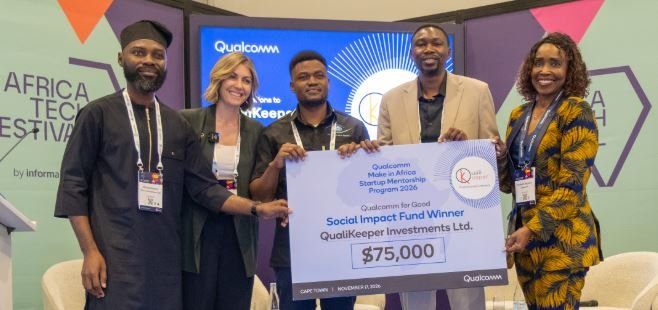
A Ugandan technology startup has won a $75,000 (about Shs278 million) grant from Qualcomm Technologies to expand an artificial intelligence-powered livestock monitoring system designed to improve animal health and farmers’ livelihoods.

Qualikeeper Investments Ltd was named the winner of the 2026 Qualcomm for Good Social Impact Fund following the conclusion of the fourth edition of the Qualcomm Make in Africa Startup Mentorship Programme in Cape Town, South Africa.

The company was recognised for developing StocKeeper, an affordable livestock intelligence platform that combines artificial intelligence and the Internet of Things (AIoT) to help monitor livestock and improve animal management.

The grant, which is equity-free, will be accompanied by technical support to help the company scale its technology, expand its reach and measure its social impact.

Qualcomm said Qualikeeper was selected because of its focus on improving animal health and supporting the livelihoods of communities that depend on livestock, particularly in areas with limited resources.

“Qualikeeper was selected in recognition of its vision, ingenuity and dedication to strengthening animal health and farmer livelihoods among livestock-dependent communities in resource constrained environments,” said Erica Ciaraldi, manager, Government Affairs at Qualcomm Incorporated.

She said the company’s technology demonstrates how innovation can address practical challenges facing communities and generate lasting social and economic benefits.

“We are delighted to recognise their achievements through the Qualcomm for Good Social Impact Fund. We look forward to seeing how they continue to grow their AIoT livestock monitoring system, reach new communities and expand their impact across Africa and beyond,” Ciaraldi said.

The announcement was made during the programme’s first in-person finale at the Africa Tech Festival in Cape Town, bringing together entrepreneurs from nine African countries.

The 2026 cohort comprised 10 startups developing solutions based on embodied artificial intelligence and edge computing across sectors including agriculture, fish farming, electric mobility, water purification and accessibility.

Qualcomm said the programme is designed to support early-stage African technology businesses through business mentorship, engineering assistance and intellectual property guidance.


Advertisement

The participating startups worked with Qualcomm technologies and Arduino development platforms, including the Arduino UNO Q, to advance their prototypes and develop solutions for practical challenges in their respective markets.

They also received intellectual property support through L2Pro Africa and specialist consultations from Adams & Adams to help them protect and commercialise their innovations.

Upon completing the programme, participating startups will receive a $5,000 stipend and reimbursement of up to $5,000 towards one full utility patent application.

Wassim Chourbaji, senior vice-president and president of Europe, Middle East and Africa at Qualcomm France S.A.R.L., said the initiative reflects the growing potential of African entrepreneurs to develop technologies with practical applications.

“By providing access to Qualcomm technologies, Arduino’s development platforms, mentorship, and ecosystem support, we help founders transform bold ideas into scalable embodied AI solutions that deliver real-world impact in a cost- and energy-efficient manner,” Chourbaji said.

Sudeepto Roy, Qualcomm’s vice-president of engineering, said the participating startups had made progress in developing prototypes while gaining knowledge on intellectual property and commercialisation.

The African Telecommunications Union also linked the innovations to broader efforts to expand digital inclusion across the continent.

Martial Dhossa, deputy director of radiocommunications at the union, said the startups demonstrated how artificial intelligence and advanced connectivity could be used to develop locally relevant solutions to challenges facing African communities.

Meanwhile, Qualcomm announced that applications for the 2027 edition of the Make in Africa Startup Mentorship Programme are open, inviting early-stage African technology businesses to apply.


Advertisement


Source link


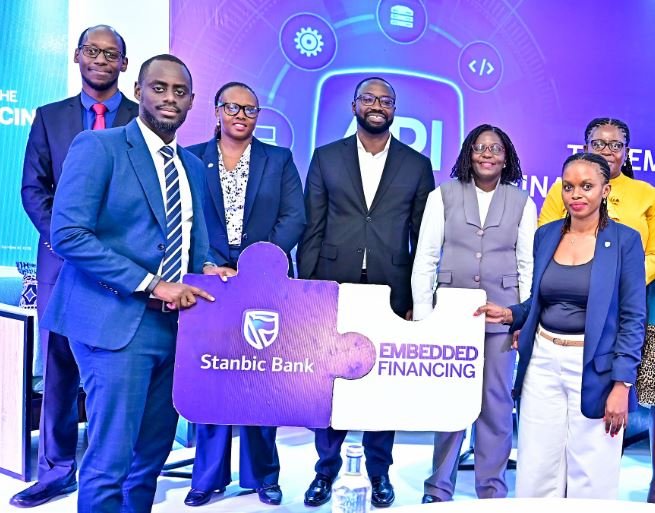
Stanbic Bank Uganda has moved a step closer to strengthening partnerships with Enterprise Resource Planning (ERP) providers, fintechs and technology service providers to accelerate embedded finance, while enhancing business efficiency and expanding access to financial services across Uganda.

During a launch of the embedded finance model at Onomo Hotel in Kampala , Racheal Atuhaire, the Head of Channels, Business and Commercial Banking at Stanbic Bank Uganda said, “The world is evolving, and it calls us to understand how businesses operate, anticipate where the economy is going and build financial infrastructure that allows enterprises to trade, invest and create jobs with greater speed, visibility and confidence.”

“Uganda’s tenfold growth strategy seeks to expand the economy from about US$50 billion to US$500 billion by the year 2040.Reaching this 2040 ambition will require sustained double-digit growth, higher productivity and much faster movement of capital into productive enterprise,”Atuhaire said.

Atuhaire, said Stanbic, through the ‘Stanbic for Her’  flagship programme, , has supported over 22,800 women with more than 280 billion Ugandan shillings in finance, enhanced growth of SACCOs and reached over 678,000 people with 248 billion in financing, while the Stanbic Business Incubator has cascaded enterprise development to more than 9,000 small and medium enterprises.

“Through Application Programming Interface (API) and ERP partnerships, we will digitise payments and collections, strengthen business records and credit visibility, improve access to finance and markets, supporting our ambition to mobilise up to Shs 1 trillion by 2028 for women, youth and farmers,” Atuhaire said.

“Together we can build commercially relevant solutions, nationally aligned and trusted by the market. Trust must remain non-negotiable. Security, data protection, regulatory compliance and clear operating standards must be designed into every integration from the outset,”Atuhaire said.

Catherine Nansubuga, the Manager, Regulation and Compliance at the National Information Technology Authority (NITA)-Uganda, said stakeholders need to be mindful of compliance and consumer protection.


Advertisement

“Sustainable digital growth requires continuous compliance, and not just one-time certification or approval.  Do not build a solution merely to work today. Build a solution that can be trusted tomorrow; therefore, I encourage stronger collaboration between technology companies, financial institutions, NITA-U and other relevant regulators,”Nansubuga said.

Diana Agaba Tukundane, the Chief Information Security Officer at Stanbic Bank, said such embedded finance comes with the risk shift, highlighting the importance of managing partnership expectations through protecting customer data, demonstrating assurance and owning the full supply chain.

“Integration expands the trust boundary. Every connection introduces identities, data flows, privileges and dependencies that must be governed. It is not just about integrating systems. It is about integrating trust,”Agaba said.


Advertisement


Source link


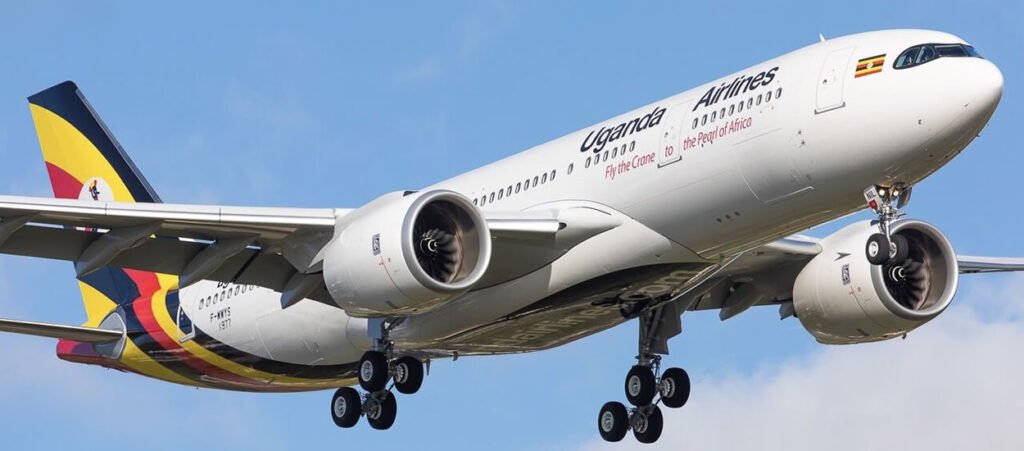
Uganda Airlines has entered the Entebbe-Kigali route with daily flights, seeking to tap into growing business, tourism and trade opportunities between the two neighbouring East African countries.

The national carrier launched the service on November 18, with its inaugural flight departing Entebbe International Airport for Kigali International Airport, adding Rwanda’s capital to its expanding regional network.

The development gives travellers an additional option on a route that has largely been served by Rwanda’s national carrier, RwandAir, while positioning Uganda Airlines to compete for passengers travelling between the two capitals.

Uganda Airlines chief executive Girma Wake described the route as long overdue, given the historical, economic, social and cultural connections between Uganda and Rwanda.

He said the introduction of daily flights would make movement between the two countries easier while providing passengers from Rwanda with connections to the airline’s wider network across Africa, the Middle East, Asia and Europe through Entebbe.

“These are two neighbouring countries that are connected by everything. This should have been the first flight when the airline launched. Sorry for the delay, but we are going to Kigali,” Wake said.

The airline will operate the route using its Bombardier CRJ900 aircraft, which has a seating capacity of 76 passengers.

Uganda’s Minister of State for Transport, Julius Maganda Wandera, said the new service would strengthen regional integration by easing the movement of people and businesses between the two countries.

He said improved air connectivity was important in creating opportunities for trade, investment and tourism, particularly as Uganda and Rwanda seek to deepen economic cooperation under the East African Community.

However, Wandera challenged the airline and the business community to ensure the route becomes commercially sustainable by identifying opportunities that would generate passenger traffic.

The route is expected to serve business travellers, tourists, government officials, conference delegates, students and people visiting relatives and friends in either country.


Advertisement

Rwanda has increasingly positioned itself as a destination for international conferences and business meetings, creating opportunities for airlines seeking to connect Kigali to other regional and international markets.

Uganda Airlines is also banking on Entebbe’s position as its main hub to attract passengers from Kigali who may wish to connect to other destinations served by the national carrier.

Rwanda’s High Commissioner to Uganda, Col. (Rtd) Joseph Rutabana, welcomed the new connection, saying it would strengthen relations between the two countries by making travel more convenient.

The launch comes at a time when Uganda Airlines is seeking to expand its presence in the African aviation market. In October, the carrier introduced flights to Accra, Ghana, operating four times a week.

With Kigali added to its network, Uganda Airlines now serves 18 destinations.

The airline resumed commercial operations in August 2019 after nearly two decades without a national carrier, with government positioning its revival as part of efforts to improve international connectivity and support tourism, trade and investment.

The entry into the Kigali market, however, comes with the challenge of competing for passengers with established operators while ensuring that the new service attracts sufficient traffic to justify its operating costs.

For Uganda and Rwanda, the new connection offers an opportunity to translate their geographical proximity and economic ties into increased movement of people, goods and investment.


Advertisement


Source link


Questions have emerged over the proposed deployment of new Deputy Resident District Commissioners (RDCs) and Resident City Commissioners (RCCs), indicating that personal relationships and political influence may have played a role in the selection of some candidates.

Among the names attracting scrutiny is Twine Richard, who is expected to serve as a Deputy RDC in Mubende.

Sources familiar with the proposed appointments said that Mr Twine is related to Ritah Kubasinga, a woman the sources say has a close personal relationship with Richard Todwong, the Secretary General of the ruling National Resistance Movement (NRM).

These have raised questions about whether personal and political connections are influencing appointments to sensitive government positions.

Our deep-throat sources said that Mr Todwong has provided financial and material support to Ms Kubasinga, including property and vehicles, and that a hospital in Mubende was constructed for her.

They also say that the two have met at different locations, including in a hotel called MGP in Nwoya.

This publication can confirm that sources close to the matter said the wife of Ms Anne Todwong became aware of the relationship, which made her leave their matrimonial home.


Advertisement

The revelations come at a time when the government is preparing changes involving RDCs and RCCs, positions that play an important role in coordinating central government programmes and representing the government at district and city level.

The controversy therefore raises a broader question about the criteria used to select individuals for these positions.

Public appointments, particularly those involving politically sensitive offices, are expected to be based on competence, integrity, experience and suitability for public service.

Questions also remain about the process through which the names of the proposed RDCs and RCCs were generated, vetted and approved.

The central issue remains whether the reported appointments were made strictly based on merit and public-service considerations, and whether the government can provide sufficient transparency about the process.


Advertisement


Source link


The National Drug Authority (NDA) Manager of Public Relations, Abiaz Rwamwiri, has been charged before the Anti-Corruption Court over alleged false accounting involving Shs296.075 million in public funds.

Rwamwiri, 41, faces charges of false accounting by a public officer and wilfully obstructing an investigation by the Inspectorate of Government (IG).

Prosecution alleges that between July 2023 and March 2026, Rwamwiri was entrusted with Shs324.56 million to facilitate media relations and community engagement activities at the National Drug Authority.

However, investigators allege that he submitted false accountability documents amounting to Shs296.075 million to the Secretary of the authority.

The alleged offence of false accounting by a public officer is contrary to Section 22 of the Anti-Corruption Act, Cap 116.

In a separate charge, Rwamwiri is accused of attempting to interfere with an investigation by the Inspectorate of Government into the utilisation of public funds at the authority.

According to the charge sheet, between February and April 2026, in Kampala, Rwamwiri allegedly attempted to influence witnesses to give false information to investigators in a case registered under file number HQT/CO/161/2026.


Advertisement

The prosecution contends that his actions were intended to obstruct the Inspectorate of Government from carrying out its investigations.

Wilful obstruction of an investigation by the Inspectorate of Government is an offence under Section 34(g) of the Inspectorate of Government Act, Cap 32.

The allegations relate to expenditure on media relations and community engagement programmes, through which the authority communicates its regulatory activities and public health information to the public.

Rwamwiri has been a regular spokesperson for the NDA, particularly on matters concerning the regulation of medicines, enforcement against illegal drug outlets and public awareness campaigns.

The charges are allegations and Rwamwiri is presumed innocent until proven guilty.


Advertisement


Source link


Opposition activist Sam Mugumya has been charged before a military court and remanded to prison, bringing a dramatic turn to a case that has for more than a year raised questions about his whereabouts and the circumstances surrounding his arrest.

Mugumya appeared before the court martial on Wednesday alongside two Uganda People’s Defence Forces (UPDF) soldiers, Lance Corporals Gift Mukundane and Isaac Ochom, where the trio denied charges relating to security and treachery.

The military court remanded the three accused until December 21, 2026, as the prosecution proceeds with the case.

Mugumya’s appearance before the military court comes after months of uncertainty over his whereabouts, with his lawyers accusing security operatives of abducting him and holding him incommunicado, while the military previously denied having him in custody.

Mugumya, a former personal assistant to opposition leader Dr Kizza Besigye and former secretary general of the Forum for Democratic Change (FDC) Youth League, reportedly disappeared on August 26, 2025, after armed men allegedly picked him up in Mbarara City.

His lawyers said he was seized while having breakfast at NIM Hotel in Nyamitanga and taken to an undisclosed location, where they suspected he was being held by security operatives.

The lawyers subsequently petitioned the High Court seeking a writ of habeas corpus to compel government and security agencies to produce him in court and explain the legality of his detention.

In September 2025, the High Court ordered government and the army to produce Mugumya before a competent court within seven days, following concerns that he had been detained without being formally charged.

However, the Uganda People’s Defence Forces denied holding him, with military officials saying searches of detention facilities and records had not established that he was in their custody.

The matter continued to drag through court, with Mugumya’s lawyers seeking answers from security agencies and accusing authorities of failing to comply with judicial orders.

On November 9, High Court judge Simon Peter Kinobe warned police and military chiefs that they could face contempt of court proceedings if they failed to account for Mugumya’s whereabouts.


Advertisement

The judge gave government three weeks to investigate the activist’s disappearance and submit a report, expressing concern over the continued uncertainty surrounding the case.

Kinobe questioned why authorities had failed to establish Mugumya’s whereabouts despite earlier court interventions, warning that the prolonged disappearance of a citizen raised serious accountability concerns.

The case was adjourned to November 30 for further hearing.

Mugumya’s appearance before the military court, however, has now shifted the focus from the search for his whereabouts to the charges he faces and the circumstances surrounding his prosecution.

The activist has previously spent years in detention in the Democratic Republic of Congo, where he was arrested in October 2014 over allegations of illegal entry and plotting rebellion against the Ugandan government.

He was released on October 21, 2022, after spending about eight years in detention.

Mugumya rose to prominence through opposition politics and was among prominent activists associated with the Walk to Work protests and the Activists for Change pressure group, which challenged government over governance, rising living costs and political freedoms.

His latest prosecution is likely to attract renewed scrutiny from opposition politicians, human rights organisations and legal practitioners, particularly over the circumstances of his arrest and the jurisdiction of the military court to try civilians.


Advertisement


Source link