 news TRUSTED NEW
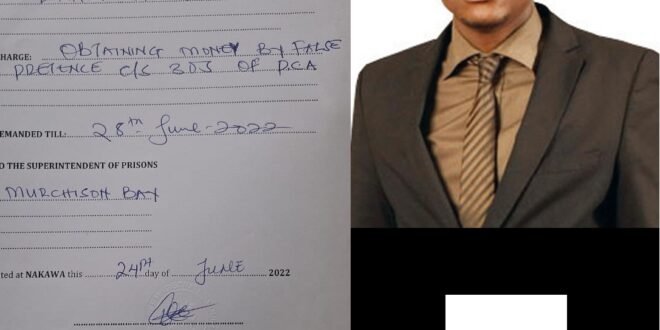
BY A CONCERNED CITIZENThere are stories that pass quietly through the courts and disappear into legal archives without ever touching the public consciousness. Then there are cases that reveal something deeper—not merely about an individual, but about the health of the systems ordinary citizens rely upon every single day.In Uganda, a certificate of title is not just a legal document; it is also a source of psychological comfort. That is why the conviction of lawyer Ernest Rukundo of Web Advocates & Solicitors, in Criminal Case No. 0149 of 2018, for obtaining money by false pretence should concern every Ugandan who owns land, intends to buy land, has land pledged to a bank, or hopes one day to pass property on to their children.This case contains a detail so unsettling that many people may not yet fully appreciate its implications.According to the findings of the Chief Magistrate’s Court at Nakawa, lawyer Ernest Rukundo of Web Advocates & Solicitors received more than UGX 21 million from clients- Sagu (U) Ltd company by false pretence that he was going to pay the said cash to Uganda Revenue Authority (URA) through Orient Bank and process a company land title whereas not.The court found that the money was never remitted as represented. There was no valid stamp duty remittance for the land in question, no corresponding stamp duty certificate, and the references presented were allegedly linked to entirely different parcels of land. Yet, despite this, a certificate of title was still issued.One might say the funds were processed—but simply not in the direction the clients had in mind. That single finding should concern the entire country.For years, Ugandans have been taught that the payment of taxes and compliance with statutory procedures form the backbone of lawful land registration. Citizens queue at URA offices, make payments, obtain receipts, hire lawyers, and follow the prescribed procedures because they believe the integrity of the title registration system depends on those processes being respected and verified.Naturally, we assume that when we pay a lawyer to remit taxes on our behalf, the lawyer will do exactly that—remit the taxes.But if a certificate of title can still be issued despite judicial findings that the corresponding stamp duty was never properly remitted, then the public is entitled to ask difficult—but necessary—questions about the integrity of the system itself, or whether compliance has somehow become more of a suggestion than a legal requirement.One must understand how Ugandans view land to fully appreciate why this matters.In developed countries, wealth may sit comfortably in stocks, pension funds, or other sophisticated financial instruments. In Uganda, however, most personal wealth sits in land.Land is the foundation upon which families build security and prosperity. It is collateral used to access financing. It provides retirement security for parents. It is an inheritance for children. It is often the single largest investment a family will ever make.A man without land in Uganda often feels exposed and unfinished.Land occupies immense emotional, cultural, and economic significance.Banks trust certificates of title.Investors trust certificates of title.Families trust certificates of title.That is precisely why this judgment concerning lawyer Ernest Rukundo’s criminal and professional misconduct lands with such quiet but profound force.That is also why cases of this nature raise national concerns extending far beyond one lawyer or one transaction.Ugandans are now left asking uncomfortable—but entirely legitimate—questions.What happens where stamp duty connected to a title was allegedly never paid?Does that affect the legal security of the title?Can innocent purchasers later discover hidden defects in transactions they knew nothing about?Can financial institutions unknowingly hold compromised securities?How many other land transactions may contain procedural irregularities that remain invisible to the public?Most importantly, what safeguards currently exist to assure Ugandans that every certificate of title issued has passed through a fully compliant, transparent, and verifiable legal process?A country may lecture its citizens endlessly about procedure, compliance, and regulation, but the true character of its institutions is ultimately exposed by what they quietly permit in practice.For years, Ugandans have watched the Uganda Revenue Authority aggressively pursue tax compliance.Traders in downtown Kampala have been raided over invoices.Businesses have been subjected to repeated audits.Penalties accumulate relentlessly.Citizens are constantly reminded that systems must be followed meticulously, every figure accounted for, and every receipt fully traceable.Yet this case appears to suggest that a lawyer—a professional entrusted with safeguarding the integrity of the legal process—can collect statutory payments, fail to remit them to the intended government agency, and still operate within a system that ultimately produces a valid certificate of title.That contradiction is both legally and psychologically troubling.No country can build long-term investor confidence while uncertainty hangs over the credibility of its property administration systems.Confidence in land registration is one of the foundations of economic stability. The moment citizens begin questioning whether legality depends strictly on due process—or, at times, on access or influence—public trust begins to weaken. Once weakened, that trust is extraordinarily difficult to restore.The punishment in this case was strikingly light. A fine of UGX 2 million, coupled with directives to pay the outstanding stamp duty, hardly projects an image of overwhelming deterrence. In Kampala, UGX 2 million can disappear over an evening of poor decisions and generous company.Criminal and professional misconduct appears, in this instance, to have attracted consequences that are, at the very least, manageable.The concern becomes even more serious when one considers the wider implications.Every day, Ugandans purchase land believing that a certificate of title represents certainty.Banks approve loans based on certificates of title.Families resolve inheritance disputes based on certificates of title.Investors commit capital because they trust certificates of title.If doubts begin to emerge about whether statutory requirements can somehow be bypassed while certificates of title are still successfully issued, then the issue ceases to be one of isolated professional misconduct. It becomes a matter of national governance and institutional integrity.The conviction of lawyer Ernest Rukundo should therefore serve as a wake-up call for stronger institutional safeguards, greater transparency in land processing, tighter integration between the Uganda Revenue Authority and the land registration system, and clearer public assurance mechanisms capable of restoring confidence in the integrity of Uganda’s property administration framework.Ugandans deserve certainty.We deserve to know that when taxes are paid, records are verified, and certificates of title are issued, every stage of the process is lawful, transparent, properly documented, and beyond manipulation.The judgment itself is revealing.The court acquitted the first accused, Mukwaya Godfrey, on the charge of procuring the execution of a document by false pretence after finding that the prosecution had failed to prove the essential ingredients of that offence. It also acquitted both accused persons on the charge of conspiracy to commit a felony, holding that the evidence presented on that count was insufficient.However, the court reached a different conclusion regarding lawyer Ernest Rukundo.After reviewing the testimony of five prosecution witnesses and the documentary evidence before it, the Chief Magistrate found that the complainants had entrusted him with UGX 21,550,000 specifically for the payment of stamp duty and the processing of a certificate of title.The evidence accepted by the court showed that UGX 18.3 million of that money was intended for payment of stamp duty to the Uganda Revenue Authority, while additional sums were paid following further requests made during the transaction.The court further found that, although a genuine certificate of title was ultimately obtained, the stamp duty for that particular land had never been paid to the Uganda Revenue Authority.Evidence from the URA Tax Administrator indicated that there was no corresponding stamp duty certificate for the transaction, no record of payment relating to the land in question, and that the payment references relied upon were linked to different parcels of land.The court reasoned that the complainants released the money because they relied upon their lawyer’s representation that the funds would be remitted to URA, as required by law, before the certificate of title could be obtained.According to the judgment, it was that representation—and the subsequent failure to remit the money for its intended statutory purpose—that constituted the false pretence.The court concluded that the complainants had been induced to part with their money by representations that were knowingly false and that the accused fraudulently obtained the funds by pretending they would be used to pay URA charges.Accordingly, the Chief Magistrate convicted Ernest Rukundo of obtaining money by false pretence.Whether one agrees with every aspect of the judgment or not, the decision raises questions that extend well beyond the criminal liability of one individual.The case touches the very foundation of public confidence in Uganda’s land administration system.If a court can find that money specifically collected for statutory taxes was never remitted as represented, yet a certificate of title was nevertheless issued, the inevitable question becomes whether existing institutional safeguards are sufficiently robust to detect and prevent similar occurrences before titles are created.That is not merely a legal question.It is an economic question.It is a governance question.It is a banking question.It is an investment question.And for millions of Ugandans whose life’s savings are tied to land, it is a deeply personal question.Ultimately, the conviction of lawyer Ernest Rukundo is not merely about criminal liability.It is about whether millions of Ugandans holding certificates of title today can continue believing—with confidence—in their lawyers, in the institutions that process land transactions, and in the systems that produce the documents securing their homes, businesses, investments, and futures.This should be a national public concern deserving of serious answers.A RECAP OF THE JUDGMENTThe judgment in Criminal Case No. 0149 of 2018, delivered by the Chief Magistrate’s Court at Nakawa on 24 June 2022, examined three separate criminal charges arising from the processing of a certificate of title for land situated in Namanve Industrial Park.The first accused, Mukwaya Godfrey, a government valuer, was charged with procuring the execution of a document by false pretence. The second accused, lawyer Ernest Rukundo of Web Advocates & Solicitors, was charged with obtaining UGX 21,550,000 by false pretence. Both accused were also jointly charged with conspiracy to commit a felony.The prosecution called five witnesses. Their evidence was that the complainants had engaged Ernest Rukundo to process a certificate of title and deed plan for approximately 16 acres of land. According to the evidence accepted by the court, the complainants paid a total of UGX 21,550,000 after being informed that UGX 18.3 million was required for stamp duty, UGX 250,000 for registration fees, and later additional sums of UGX 1 million and UGX 2 million to complete the process.The court found that the certificate of title was eventually obtained and that it was genuine. However, the evidence presented by the Uganda Revenue Authority indicated that there was no corresponding payment of stamp duty for the land in question, no stamp duty certificate had been issued for that transaction, and the payment references relied upon related to different parcels of land.In analysing the offence of obtaining money by false pretence, the court held that the complainants only released the money because they relied on representations that it would be remitted to the Uganda Revenue Authority as stamp duty before the certificate of title could be processed. The court concluded that those representations induced the complainants to part with their money and that the funds were not remitted for their intended statutory purpose.The Chief Magistrate therefore found that the prosecution had proved beyond reasonable doubt that Ernest Rukundo had obtained the UGX 21,550,000 by false pretence. He was convicted on that count.By contrast, the court acquitted Mukwaya Godfrey of procuring the execution of a document by false pretence after finding that the prosecution had failed to prove the essential ingredients of that offence. The court also acquitted both accused persons on the charge of conspiracy to commit a felony, holding that the evidence presented on that count was insufficient.The judgment therefore resulted in a mixed outcome. It rejected two of the three charges brought by the prosecution but upheld the charge of obtaining money by false pretence against Ernest Rukundo. It is this finding—and the court’s discussion of the handling of stamp duty payments during the title-processing transaction—that forms the basis of the broader questions raised in this opinion about public confidence in Uganda’s land administration system. FULL JUDGEMENT BELOW THE REPUBLIC OF UGANDAIN THE CHIEF MAGISTRATE’S COURT OF NAKAWA HOLDEN NAKAWACRIMINAL CASE NO. 0149 2018>>>>>>>>>>>>>>> PROSECUTORVERSUSA1. MUKWAYA GODFREYA2. ERNEST RUKUNDO >>>>>>>>>>>>>>>>>>>>>>>>>>>> ACCUSED PERSONSBEFORE: HER WORSHIP AKULLO ELIZABETH OGWAL-CHIEF MAGISTRATEJUDGEMENTMUKWAYA GODFREY (hereinafter referred to as Al) and ERNEST RUKUNDO (hereinafter referred to as A2), the accused persons stand charged with several offences as follows:Count 1 of the charge against Al is procuring execution of document by false pretence contrary to section 353 of the Penal Code Act.Prosecutions alleged that Al in the month of September, 2017 in Wakiso Land office in the Wakiso district procured the Registrar of Titles to sign on Certificate of Title for Block 236 plot 3008 by false pretence and fraudulently pretending that processing fee had been paid whereas not.He (A1) denied the first count of the charge.The second count of the charge is obtaining money by false pretence contrary to section 305 of the Penal Code Act.Prosecutions alleged that A2 between 25/09/2017 and 23/10/2017 in the areas of Namanve and Kamwokya in the Kampala district with the intent to defraud obtained cash to wit UG.X. 21,550,000/- from Sagu (U) Ltd company by false pretence that he was going to pay the said cash to Uganda Revenue Authority (URA) through Orient Bank and process a company land title whereas not.He (A2) denied the second count of the charge.Count 3 of the charge against Al and A2 is conspiracy to commit a felony contrary to section 390 of the Penal Code Act.Prosecutions alleged that Ernest Rukundo (A2), Mukwaya Godfrey (A1) and others still at large between the 25/09/2017 and 06/10/2017 in the areas of Wakiso and Kampala in the Kampala district conspired together to commit a felony to wit obtaining money by false pretence.Both accused persons denied the third count of the charge.The LawBurden & standard of proofIt is trite law that he who alleges the existence or none existence of a fact in issue ought to prove the existence or none existence of the fact. (Sections 101-104 of the Evidence Act applied).In criminal cases, the prosecution has the burden of proving the case against the accused beyond reasonable doubt. The burden does not shift to the accused persons and the accused are only convicted on the strength of the prosecution case and not the weaknesses in their defence (Ssekitoleko vs Uganda (1967) EA 531).By their plea of not guilty, the accused put in issue and every essential ingredient of the offences with which they were charged and the prosecution has the onus to prove all the essential ingredients beyond reasonable doubt. Proof beyond reasonable doubt does not mean proof beyond a shadow of doubt. The standard is satisfied once all evidence suggesting the innocence of the accused, at its best creates a mere fanciful possibility but not any probability that the accused are innocent (See: Miller vs Minister of Pensions (1947) 2 ALLER 372).If on the whole trial, any or all of the ingredients of the offence is/are not proved, or doubt is cast in evidence then the resolve is in favour of the accused, and the prosecution case fails and the accused person is entitled to an acquittal.False pretenceSection 304 f the PCA defines “a false pretence” as a false representation which may be made in words, writing or conduct, of a matter of fact, either past or present, which representation is false in fact, and which the person making it knows to be false or does not believe to be true.In obtaining good/money by false pretence, the presentation made by the accused should be false, and made with a fraudulent intent to induce the victim to act upon such representation. A person acts with intention to deceive when he induces another to believe that a thing is true, which is false, and which the person practicing the deceit knows or believes to be false (See: In Re: London & Clobe Finance Corporation Ltd [1903] 1 Ch 728).With Intent to DefraudIt is settled law that in order that a person may be convicted of the offence relating to false pretence, prosecution must prove that there was some misstatement which in law amounts to a pretence, i.e. a misstatement as to an existing fact made by the accused, that it was false and false to his knowledge; that it acted upon the mind of the person who parted with the money, and that the proceeding on the part of the accused person was fraudulent (See: R v Sullivan (1945) 30 Cr App R 132 at pgs 134-136). The evidence required to establish this ingredient of the offence being direct evidence.Prosecutions had to establish the following elements of the offences charged:On the 1st count of the charge:Procuring execution of a document by anotherBy false or fraudulent representationIt is the accused person responsible (in this case Al)Count 2: Obtaining Money by false pretenceThe accused knowingly and intentionally deceived the victim by false or fraudulent representation or pretence relating to a matter of fact (in the current case payment of UG.X. 21,550,000/- to URA for processing of a land title), either past or present, but not in the future (See: R vs Dent [1955] 2 ALLER 806)The accused did so intending to persuade the victim to let the accused take obtain the thing (money)The victim let the accused take the money because the victim relied on the representation or pretence.It is the accused responsible (in this case A2)Count 3: Conspiracy to commit a felonyThat there was conspiracyWith the intent to commit a felony i.e. to obtaining money by false pretence from the victimThe accused persons are responsible (in this case A1 & A2)Prosecution’s case was concluded by five witnesses and the accused persons opted to remain silent in their defence. No final submissions were made by prosecutions in this matter, both accused persons filed in their final written submissions separately, hence this judgment, which carefully appraises the entire evidence on record, applies the relevant legal principles in resolving the case. I have had the benefit of considering the respective defence written submissions as well.It was the evidence of the victim PW1 (Kassim Muhammed), PW2 (Onyango Julius), and PW3 (Ali Makki) that between September and October, 2017 they entered into a land transaction in respect of 16 acres of land situated at Namanve industrial park. They need land title and a deed plan in respect of the land. A2 being a lawyer offered to help them. He informed PW1 and PW3 that UG.X. 18,550,000/- only be sent, of which UG.X. 18,300,000/- thereof would be used to pay for stamp duty to government and UG.X. 250,000/- thereof for registration. That A2 later asked for additional sum of UG.X. 1,000,000/= only, which was sent by PW3 through PW2 (Onyango the office messenger). The money was receipted. A2 again asked for UG.X. 2,000,000/=, which PW2 again delivered and was receipted, hence making a total of UG.X. 21,550,000/=.The email correspondence dated 25/9/2017; vouchers and receipts of money from A2’s Web Advocates dated 26/9/2017 and 23/10/2017 respectively were admitted in evidence for prosecutions and marked PE.X1, PEX. 2, and PEX.3 (a) & (b).Later on, the Certificate of title for land comprised in plot 3008 Block 236- measuring 0.466ha at Namanve industrial park was availed to them (PW1 & PW2) through PW2. They were also availed with stamp duty assessment of UG.X. 18.3M/ from URA. This stamp duty was never paid to government. By the time the certificate of title was given to them, there was payment of stamp duty. The title was genuine and signed. PWI demanded for refund of their money. That A2 accepted to refund the same but changed his mind and refuted.That A1 and A2 work together. They never remitted taxes (stamp duty to URA), PW3 additionally told court that when due diligence was conducted at the URA, the latter denied the URA stamp they were given by A2. That it was him (PW3) who instructed PW2 to deliver money to A2.PW4 (Isabirye) is a Tax Administrator at the URA. He told court that on the 17/11/2017 PW3 came with a certificate of title and an instrument of transfer. That he checked in their system to get the particulars of the land procured. PW3 came with an instrument reading UG.X. 18,300,000/= and he needed confirmation of payment of stamp duty.He checked in the URA system and there was payment of stamp duty for the land in Namanve industrial park. That the certificate of title (COT) he saw was valid. Stamp duty is paid before title is granted. When payment is made, the initiator of the title is issued with a stamp duty certificate. In this case, there was no stamp duty certificate issued. There was no evidence of late payment of stamp duty for the COT.PW5, the investigating officer told court that his findings indicated that A2 had an office within the lands office where the COT was issued without paying stamp duty. That the Cot is supposed to have a Bar code showing payment of stamp duty, however, in this case there was no payment of stamp duty. Al is a government valuer. A2 never refunded the money. Al was never given any money by A2. Al was charged for under valuing the land in question. Al never issued any COT.This is prosecution case.Both accused persons opted to remain silent in giving their defence.Analysis of evidenceCount 1: Procuring execution of a document (to wit certificate of title) by false pretence.None of the prosecution witnesses (1, 2, 3 and 4) knew Al in person or ever interacted with him. It was prosecution evidence that both accused persons work together as a senior government valuer and Advocate respectively. PW3 (Ali) the managing director of the company told court that he never instructed Al to acquire for them a COT. It was submitted for the Al that evidence of prosecutions fall short of the required standard to -establish any of the essential elements of count one of the charge, namely, fraudulent procuring of execution of any document relating to the land in question.Having failed to prove as by law is required the any of the ingredients of the offence charged in count one, I find the accused not guilty of the offence of fraudulent procuring of execution of a document as charged and thus acquit him forthwith of count 1 of the charge.Count 2: Obtaining money by false pretenceIt was evidence of all the 5 prosecution witnesses that A2 obtained the sum of UG.X. 21,550,000/= to process and obtain a certificate of title (COT) for 16 acres of land located in Namanve industrial park. Of the sum of money received from PW3 and PW1 and paid by PW2 to A2, UG.X. 18,300,000/- was received for payment of stamp duty and 250,000/- thereof for land registration. PW1 and PW3 both told court they do not know how stamp duty is arrived at and registration fee. They only received information from their lawyer A2 that for the land UG.X. 18.3M was needed and that was the first amount of money they released to A2.A2 does not deny receiving UG.X. 18,550,000/- for purposes of processing land title for the complainant.Section 304 f the PCA defines “a false pretence” as a false representation which may be made in words, writing or conduct, of a matter of fact, either past or present, which representation is false in fact, and which the person making it knows to be false or does not believe to be true.In obtaining good/money by false pretence, the presentation made by the accused should be false, and made with a fraudulent intent to induce the victim to act upon such representation.It is settled law that in order that a person may be convicted of the offence relating to false pretence, prosecution must prove that there was some misstatement which in law amounts to a pretence, i.e. a misstatement as to an existing fact made by the accused, that it was false and false to his knowledge; that it acted upon the mind of the person who parted with the money, and that the proceeding on the part of the accused person was fraudulent.What happened in the instant case? A2, who had been a lawyer for the complainants, was consulted to obtain a COT and a deed plan for some land situate in Namanve industrial park. A2 then consulted PWI and PW3 for payment of stamp duty, upon presentation of the valuation assessment. PW2 then paid the money. The title was obtained and it was genuine title. However, upon a search, it was discovered from URA that stamp duty was never paid for this land yet there was a certificate of title obtained. There was no stamp duty certificate. PW4, a Tax Administrator further told court that even the references for payment of stamp duty, if any made by A2 were for some other pieces of land and not what is subject of this criminal trial.Why did the complainants pay UG.X. 18.3M to A2? This was because A2 had induced them to “make payments for stamp duty before the COT can be obtained. A2 knew that stamp duty was supposed to be paid and therefore, the complainants acting on his statement parted with the money, which was never remitted to the intended recipient URA as stamp duty. It was thus a misstatement on the part of A2 to solicit stamp duty fees from the victims well knowing that he would not pay the same but still get a title using his other own means that makes his intent and subsequent transaction fraudulent.Once additional sums of UG.X. 250,000/-, 1M and 2 M were advanced upon the inducement, the former intent to defraud spilled over to the latter advances of cash to A2.It was submitted for A2 that his actions were not fraudulent at all. That his instructions were to obtain a certificate of title, which he did and all the prosecution witnesses do not deny the same. That the particulars of the charge are that he (A2) fraudulently obtained money from the complainants and pretending to get for them a title whereas not. That the prosecution evidence falls short of the required standard to prove any of the ingredients and participation of A2 in the commission of the offence. He prayed thus for an acquittal.It is my finding thus that the accused knowingly and intentionally deceived the victims by false or fraudulent representation or pretence relating to payment of UG.X. 21,550,000/= to URA for processing of a land title. Possession of land title was the final output. The accused asked for several payments, which he receipted and did so intending to persuade the victims to let the accused take/ obtain the money. Relying on the representation of A2 the victims let the accused. take the money and it is A2 who is responsible.I therefore find that prosecution evidence establishes beyond reasonable doubt that A2 fraudulently obtained the sum of UG.X. 21,550,000/- from the complainants by pretending that he was going to pay URA charges whereas not. I accordingly find A2 guilty of the offence of obtaining money by false pretence and convict him accordingly as charged.Count 3: Conspiracy to commit a felonyNone of the prosecution witnesses adduced credible evidence to establish any of the ingredients of the offence of conspiracy to commit a felony by both accused persons. The evidence of PW5 in this regard is full of hearsay and not corroborated by any other material evidence.I shall not relay the same verbatim in this judgment. It is my finding thus that the accused persons are not guilty of the offence of conspiracy to commit a felony and I accordingly acquit them forthwith.In conclusion, prosecutions having failed to establish all the essential elements of the offences in counts 1 & 3 of the charge renders its case failed, the basis of which I find Al not guilty of the first count of the charge.I also find both Al and A2 both not guilty of count three of the charge.Al is accordingly acquitted forthwith of the offence in count 1 of the charge.I also acquit both accused persons of count three of the charge.Having established beyond reasonable doubt all the essential ingredients of the offence in count two of the charge, I find A2 guilty of the charge and convict him accordingly of obtaining money by false pretence.Dates at Nakawa this 24th Day of June 2022.COURTAKULLO ELIZABETH OGWALCHIEF MAGISTRATEAbout Post Author
Post navigation
Source link