 news TRUSTED NEW
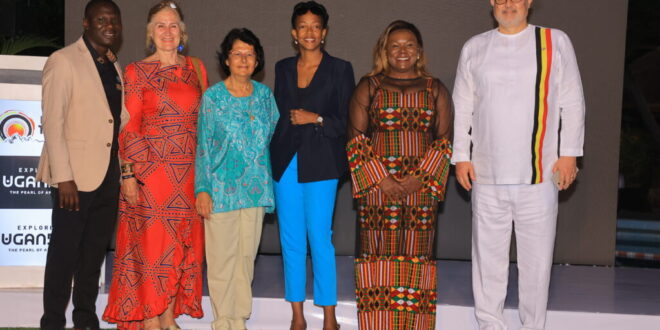
Kampala, Uganda — As Uganda intensifies efforts to position itself among Africa’s leading tourism and investment destinations, the arrival of a delegation of United Kingdom-based travel agents ahead of the Pearl of Africa Tourism Expo (POATE) 2026 reflects the country’s growing emphasis on tourism diplomacy, international market engagement, and strategic destination branding.
Received under the coordination of the Uganda High Commission London, the hosted delegation of travel advisors, luxury travel planners, safari specialists, tourism buyers, and destination curators has embarked on a ten-day familiarisation tour across Uganda aimed at deepening travel trade partnerships and expanding destination visibility within one of Uganda’s key tourism source markets. The farm trip comes at a strategically important moment for Uganda’s tourism sector as the country seeks to consolidate post-pandemic recovery gains while repositioning tourism as a central pillar within broader national development and export growth strategies. The familiarisation visit is also taking place ahead of POATE 2026, East Africa’s flagship tourism and travel trade exhibition, which continues to attract international buyers, investors, hospitality operators, and tourism stakeholders from across global markets.
During the visit, delegates are expected to experience Uganda’s diverse tourism offerings, including gorilla trekking encounters in Bwindi Impenetrable National Park, wildlife safaris in Murchison Falls National Park, conservation tourism engagements at Ngamba Island Chimpanzee Sanctuary, and cultural and urban tourism experiences in Kampala. Beyond destination exposure, the initiative highlights Uganda’s evolving approach toward tourism promotion one increasingly rooted in economic and commercial diplomacy. Over recent years, Ugandan missions abroad have adopted more proactive roles in advancing trade, tourism, investment, and export opportunities under the government’s Economic and Commercial Diplomacy (ECD) agenda.
The tourism sector occupies a particularly important position within this framework. Long viewed primarily through the lens of leisure and hospitality, tourism is now increasingly framed by policymakers as a strategic economic sector capable of generating foreign exchange earnings, supporting small and medium enterprises, creating youth employment, and strengthening Uganda’s international visibility. Welcoming the delegation, Uganda’s High Commissioner to the United Kingdom, Amb. Nimisha Madhvani described Uganda as a destination defined not only by natural beauty, but also by investment opportunity, cultural diversity, and growing international connectivity. Her remarks reflected the broader diplomatic messaging Uganda has adopted in recent years: presenting tourism not in isolation, but as part of a wider narrative around economic transformation and global engagement.
At the same time, the involvement of international travel buyers underscores the continued importance of business-to-business tourism relationships within an increasingly competitive global travel market. While digital campaigns and destination marketing remain influential, tourism flows are still significantly shaped by travel advisors, tour operators, and curated destination partnerships capable of influencing traveller decisions across long-haul markets such as the United Kingdom. Uganda Tourism Board Chief Executive Officer Juliana Kagwa further emphasized the importance of regional integration within East Africa’s tourism strategy. She noted that initiatives such as the East African Tourist Visa and regional Open Skies collaboration are gradually strengthening East Africa’s position as a seamless multi-destination tourism region.
This regional approach reflects a wider continental shift toward collaborative tourism competitiveness rather than isolated destination marketing. Increasingly, African tourism authorities are recognizing that connectivity, regional mobility, and shared infrastructure development are central to attracting high-value international travellers seeking multi-country experiences. For Uganda specifically, the United Kingdom remains one of its most strategically important tourism source markets due to historical ties, diaspora linkages, conservation tourism interest, and long-standing travel trade relationships. Strengthening confidence among UK travel agents and destination planners therefore carries broader implications for visitor arrivals, tourism revenues, and international brand positioning.
The hosted familiarisation programme also reflects the changing dynamics of global tourism marketing itself. Modern travellers increasingly prioritize experiential tourism, sustainability, conservation engagement, wellness travel, and authentic cultural interaction over traditional package tourism alone. Uganda’s tourism offering built around biodiversity, adventure tourism, wildlife conservation, and cultural heritage positions the country favourably within these emerging trends. However, officials and industry stakeholders also recognize that sustaining international tourism growth will require continued investments in infrastructure, air connectivity, destination marketing, conservation protection, and service quality. As global tourism competition intensifies, visibility alone is no longer sufficient; destinations must also demonstrate reliability, accessibility, and long-term value for travellers and investors alike.
The Uganda High Commission London reaffirmed its commitment to strengthening tourism diplomacy through strategic partnerships and sustained engagement with international travel markets. Such efforts increasingly place diplomatic missions at the centre of economic promotion, reflecting how foreign policy and tourism development are becoming more interconnected in today’s global economy. As delegates continue their journey across Uganda ahead of POATE 2026, the broader significance of the visit lies not only in showcasing destinations, but also in reinforcing Uganda’s ambition to position itself as a globally competitive tourism and investment destination within Africa’s evolving travel economy.
Post navigation
Source link