 news TRUSTED NEW
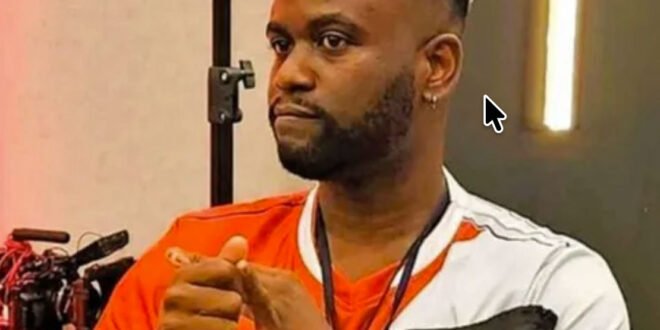
Ludovic Mbock fears he would die if he’s deported to a homophobic nation where he knows no one
Ludovic Mbock (Photo courtesy of TanTV News)As the Trump administration pursues a policy of deporting as many undocumented immigrants as it can, including upstanding members of society, the small American media company TanTV reported on the plight of Ludovic Mbock.A native of Cameroon who was moved to the U.S. as a child, Mbock has been targeted for deportation back to Cameroon, where he knows no one. Because he is gay, Mbock is worried about whether he could survive in a nation plagued by homophobic violence.Extensive excerpts from the TanTV article are below: ICE Held Maryland video-gaming champion Ludovic Mbock for 25 Days. Sending him back to Cameroon could kill him.The Maryland video-gaming champion was detained across 3 states with no criminal record. His May 21 asylum hearing could send him back to a country where being gay is punishable by five years in prison.By Adedayo FashanuWhen Ludovic Mbock walked into the ICE (U.S. Immigration and Customs Enforcement) office in Baltimore, Maryland, USA, on Feb. 17, 2026, he expected the same outcome he’d experienced every year for 18 years: a brief meeting, a few questions, and permission to return next year. Instead, an officer delivered words that shattered his world: “You’re under arrest, we have to send you back to Cameroon.”What followed was a 25-day odyssey through America’s detention system — three facility transfers across multiple states, deplorable conditions, and constant uncertainty about whether he was being deported or simply relocated. Mbock’s story exposes the human cost of aggressive immigration enforcement.But this is not just a story about detention. It is about a man who has called America home for more than two decades, built a community here, and now faces the terrifying possibility of being sent back to a country where his identity as a gay man could be, in his words, “a death sentence.”Mbock arrived in the United States legally in 2002 as a minor, brought over through his mother’s marriage. He was just a child seeking a better life. When that marriage ended, his immigration status became precarious — and what began was an 18-year cycle of annual ICE check-ins that started when he was only 15 years old.“Every year, they would ask if I had obtained travel documents to return to Cameroon,” Mbock recalls. “I never obtained them, and each year the process would simply repeat — a straightforward meeting followed by being told to return next year.”He complied without fail. He built a life, became a beloved figure in the competitive fighting video-game community, and established himself as someone friends describe as always smiling, always connecting people, always showing up. He carries no criminal record. He is not a threat to public safety. By any reasonable measure, Mbock is the kind of immigrant story America claims to celebrate.The bitter irony of Feb. 17: He was at the ICE office attempting to renew his work permit — the very document that would allow him to continue contributing to American society legally — when he was handcuffed and detained.America’s detention archipelago: Three transfers, zero noticeOver 25 days, Mbock was moved three times — from Baltimore to Louisiana to Georgia — often without advance notice and with no regard for the legal filings his attorneys had submitted to keep him in Maryland. This pattern of rapid cross-state transfers to circumvent legal challenges has become a documented feature of immigration enforcement in 2026, part of what TanTV News has called the expanding architecture of ICE detention.“They have too much power right now, so they can ignore a lot of the things that we’re throwing against them,” Mbock explains. His legal team filed habeas petitions to prevent his transfer, but the government moved him to Louisiana just three hours after the filing.The worst moment came during transport from Louisiana to Georgia. Guards woke detainees at 11 PM and the process of leaving the facility took two to three hours. During the 90-minute bus ride to the airport, detainees were kept in chains with poor ventilation — then held on that same bus at the airport for another three to four hours, waiting for a pilot since no flights were permitted before 5 AM.“We were in chains for approximately six to seven hours with poor ventilation. Someone who was diabetic almost passed out. We had to eat while chained. Many of us thought we were being deported immediately and didn’t know we were going to another facility in Georgia”, Mbock said. …A rare image from a holding area inside the ICE facility in Baltimore. shows detainees and the foil blankets provided to keep them warm. Human rights advocates have taken ICE to court over the treatment of detainees there. (Photo courtesy of Baltimore Banner)Baltimore’s facility [revealed in these videos published on Raddit and Facebook] is not a proper detention center. It is a holding cell — a space where people spend days or weeks on concrete floors, sharing a single toilet among many, with no showers, no adequate food, and no proper sleeping arrangements. These conditions are not unique to Baltimore. Facilities across the country — from Farmville, Virginia to Louisiana’s rural detention network — operate under conditions that breed illness, despair, and human rights violations.“People with medical issues cannot survive in that environment,” Mbock says. “Those facilities are… They definitely need to change that system, because that’s the horror show over there.”He met people transferred from North Carolina who reported receiving no food for two weeks while held in similar cells. The facilities in Louisiana and Georgia were more structured — functioning prison systems designed for immigrants — but they too were confined spaces where new arrivals rotated through nightly and deportations happened every single day. …Mbock also raises a structural critique that tracks with longstanding policy research: detention centers operate as profit-driven businesses. Private prison companies CoreCivic and GEO Group administer 81% of all ICE detention beds, and their operating margins run 25–30%, creating a systemic incentive to keep people locked up regardless of whether they pose any threat. Congress’s 2025 reconciliation bill included an unprecedented $45 billion for ICE detention expansion, further entrenching the profit pipeline.“While detainees aren’t supposed to be held for over six months, I met people who had been there for years,” Mbock says. “They just want people in those facilities.”Ludovic Mbock and some of his supporters celebrating his return from detention. (Photo courtesy of TanTV News)The power of communityOn March 13, 2026, Mbock was released on a $4,000 bond — and he credits visible community support as the decisive factor.“The judge appeared impressed by the audience,” he recalls. “The judge found it a ‘no-brainer case’ since I have no criminal record and I’m not a threat to society.”That community showed up from an unexpected place: the competitive fighting video-game tournament scene, where Mbock has been active for over 15 years. Known for cheering others on at events and going out of his way to make people feel welcome, Mbock found that same energy returned to him at his lowest point — in the form of a GoFundMe campaign and a courtroom full of supporters. The Washington Blade, which first reported Mbock’s release, described him as “a Cameroonian immigrant and regional gaming champion.”His advice to others facing detention is unequivocal: have friends and family show up to hearings in person. It demonstrates character and gives judges tangible evidence of community ties.When asked if he feels free following his release on bond, Mbock’s answer is immediate: “I’m not free.”See Also
He wears an ankle monitor 24 hours a day that causes physical irritation — itching, discomfort during long walks, and the practical indignity of being unable to wear shorts without exposing it. The social stigma compounds the discomfort; passersby may assume he is a sex offender or under house arrest, not someone navigating an immigration case.He also cannot work. ICE never returned his work permit after detaining him — the very permit he had paid to renew on February 17th. His attorney is now filing for a replacement. In the meantime, Mbock has no income, lives with uncertainty about his future legal costs, and carries a constant psychological weight.“It’s always in the back of my mind,” he says of his upcoming May 21 asylum hearing. “The ankle monitor serves as a constant reminder.”A ‘death sentence’ — his case for asylumReturning to Cameroon, Mbock states plainly, would likely cost him his life.“Cameroon is very anti-LGBT and does not support gay, bisexual, or trans people,” he says. “With no family remaining in Cameroon, returning would be a death sentence.”His fear is not rhetorical. Under Section 347 of Cameroon’s penal code, consensual same-sex relations are criminalized with sentences of up to five years in prison. A 2010 law additionally criminalizes using electronic communication to make “a sexual proposal to a person of the same sex.”Entrance of the Central Prison in the Kondengui section of Yaoundé, Cameroon, where seven LGBTI Cameroonians are currently imprisoned for homosexuality.Human Rights Watch has documented Cameroonian security forces not only failing to protect LGBTQ+ people from violent attacks, but actively arresting victims who report abuse — including forced anal examinations of detainees recognized by the UN as a form of torture. As recently as March 2026, five men were arrested, tried, and imprisoned in Cameroon solely for homosexuality.The fear deepened while in detention when Mbock learned the government has been transferring people to third countries they have never visited — including Uganda, which carries some of the world’s harshest anti-LGBT laws. “This prospect terrified me,” he says. “I would be sent to a foreign country where I know nothing and face similar dangers.” …The road ahead: What’s at stake on May 21For Mbock’s asylum hearing on May 21, his legal team is working to secure expert witnesses from Cameroon who can testify about country conditions and the documented dangers faced by LGBTQ+ individuals — testimony that will be critical to establishing that his fear of persecution is credible and legally founded.In the meantime, Mbock adjusts to daily life: no income, an ankle monitor, legal uncertainty — but surrounded by a community that refuses to let him face this fight alone. …For more information:
TanTV News immigration coverage was made possible by a grant from URL Collective, a nonprofit supporting local, diverse media.
Related
Source link