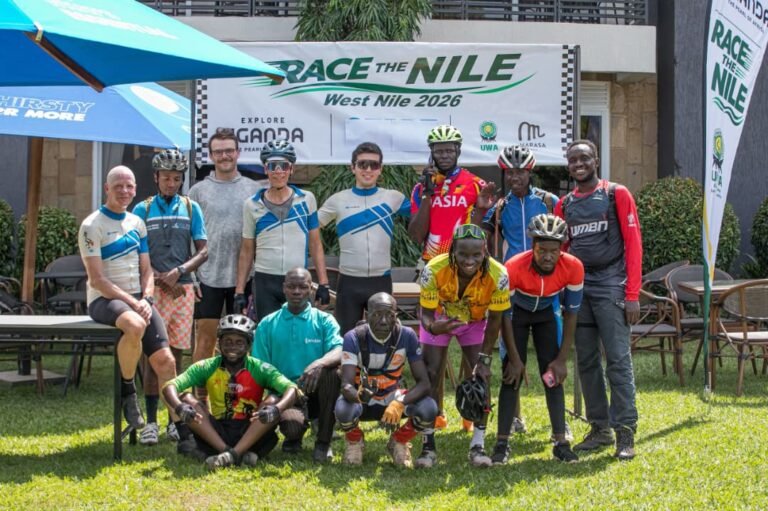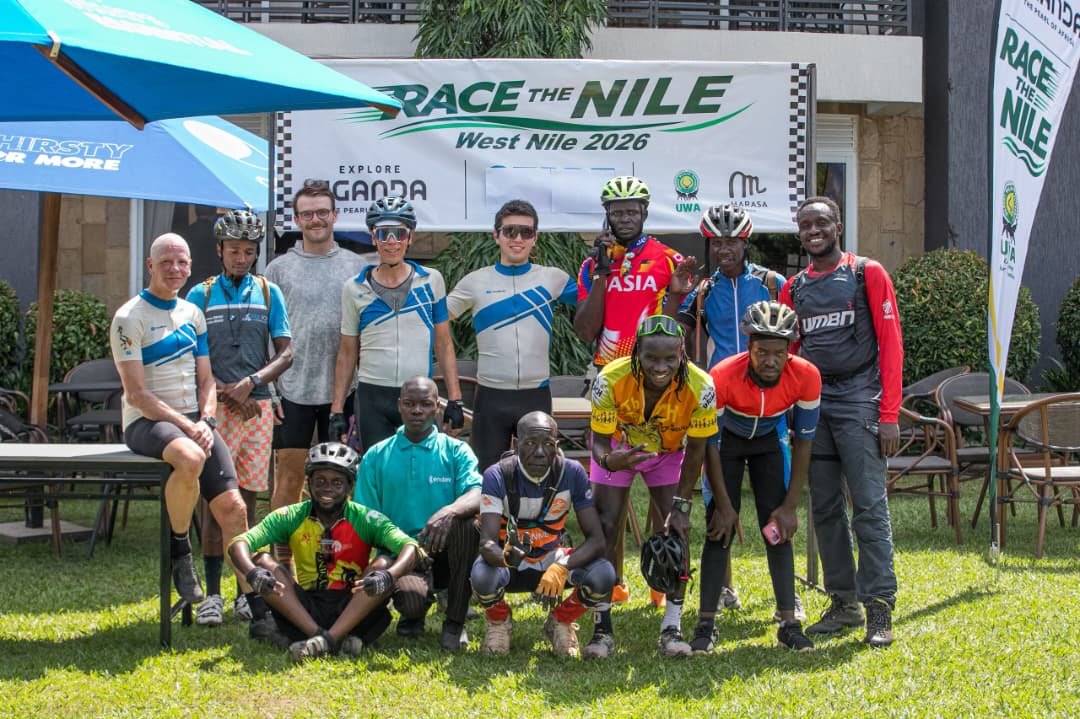
Forty-one cyclists from eight countries have embarked on an 800-kilometre ultra-endurance race across Uganda’s West Nile region, in an initiative aimed at promoting adventure tourism and opening up lesser-explored destinations to international visitors.
The cyclists set off from Arua City on Monday for the five-day Race the Nile challenge, which runs until November 27, 2026, covering 13 districts, with approximately 97 per cent of the route consisting of off-road terrain.
The participants represent Uganda, Poland, Germany, the United States, the United Kingdom, the Netherlands, Belgium and Denmark.
The race will take cyclists through rural communities and diverse landscapes, with checkpoints in Yumbe, Adjumani, Madi-Okollo and Nebbi before they return to Arua City on Friday.
As a self-supported gravel cycling challenge, participants are required to manage their own logistics while meeting daily checkpoint deadlines of 11pm to avoid disqualification. Riders are permitted to continue cycling through the night.
Organisers have put in place safety measures, including GPS trackers mounted on bicycles, Starlink satellite communication, standby medical teams and planned police escorts to support participants along the route.
Beyond the sporting challenge, Race the Nile is intended to showcase West Nile’s tourism potential and diversify Uganda’s tourism products beyond traditional wildlife safaris and gorilla trekking.
Lilly Ajarova, who spoke about the initiative, said the idea was conceived out of the need to unlock Uganda’s tourism potential beyond conventional destinations and experiences.
“Race the Nile is not simply a cycling competition. It is a tourism development initiative that uses sport as a vehicle to promote destination discovery, stimulate local enterprise, support conservation and create opportunities for communities,” Ajarova said.
She said Uganda had considerable natural landscapes, cultural heritage and adventure opportunities that remained underdeveloped as competitive tourism products.
West Nile, she noted, offers an opportunity to showcase these attractions through its River Nile, diverse cultural identity, scenic landscapes and welcoming communities.
Ajarova said the event was also intended to demonstrate that tourism development should not be concentrated around the country’s traditional attractions, but should extend to regions with equally compelling experiences.
“We cannot continue to depend predominantly on wildlife safaris and gorilla trekking, however important these products remain,” she said.
Under the Explore Uganda brand, the country is seeking to develop more experiences around adventure tourism, sports tourism, cultural tourism, water-based tourism, birding, mountaineering, culinary experiences and creative tourism.
Race the Nile is expected to introduce Uganda to a different category of travellers, including adventure enthusiasts, endurance athletes, high-end professionals and experiential tourists willing to travel internationally in search of distinctive experiences.
The 800-kilometre course was mapped around three considerations: the tourism experience, the sporting challenge and opportunities for community engagement.
Ajarova said organisers deliberately designed the route to take participants beyond highways and conventional tourist destinations, allowing them to interact with rural communities and experience landscapes that many visitors would otherwise not discover.
The predominantly off-road course will test the endurance, resilience and technical abilities of cyclists while creating a tourism corridor linking different destinations across the 13 districts.
“Essentially, the route is both a sporting course and a tourism corridor. It showcases the region while connecting destinations, communities and potential tourism investment opportunities,” she said.
The event also seeks to link tourism development with conservation, particularly given the dependence of the sector on natural environments and heritage.
In one of the event’s conservation initiatives, the overall winner will earn the opportunity to name a rhino at Ajai Wildlife Reserve through a partnership with the Uganda Wildlife Authority.
The initiative is intended to connect sporting achievement with wildlife conservation and raise awareness about the importance of protecting Uganda’s natural heritage.

Ajarova said tourism and conservation should complement each other, arguing that the long-term success of the industry depends on protecting the natural resources that attract visitors.
The organisers are engaging government agencies, local authorities, private tourism operators and community organisations to support the event.
The Uganda Tourism Board is expected to contribute to destination marketing and international visibility, while the Uganda Wildlife Authority is relevant to the conservation agenda.
Arua City Council and other local authorities are also involved in facilitating activities within their jurisdictions and mobilising communities.
Private tour operators, accommodation providers, transport companies and other tourism businesses are expected to benefit from increased visitor activity.
Ajarova said the organisers wanted partnerships that would extend beyond the cycling event and provide a foundation for sustained tourism development in West Nile.
The community component is also reflected in the event’s partnership with the New Generation Healing and Empowerment Centre (NEGHEC), a community organisation based in Nebbi District that supports vulnerable teenage mothers and their children.
The centre was established to address challenges that force some girls out of school following early pregnancies, including stigma, poverty and inadequate family support.
Through education, counselling, vocational skills development, mentorship and childcare services, the organisation seeks to help beneficiaries rebuild their lives and achieve economic independence.
The centre has produced items for the riders’ kits, providing an opportunity for its beneficiaries to participate in the event’s supply chain and earn from their work.
Ajarova said the organisers also wanted communities along the route to benefit by showcasing traditional cuisine, cultural performances, crafts and local stories.
“When riders travel through these districts, they create opportunities for local accommodation providers, food suppliers, guides, transport operators, artisans and other small businesses,” she said.
She added that communities needed to view tourism as an economic opportunity in which they could actively participate rather than an industry whose benefits largely bypass them.
International participants are also expected to contribute to Uganda’s destination marketing efforts by sharing their experiences, photographs and stories with audiences in their home countries.
Upon completing the challenge and returning to Arua City on Friday, cyclists who finish the race will receive certificates and gifts.
The longer-term ambition is to establish Race the Nile as an annual sporting tourism event capable of attracting international cyclists, adventure travellers, sponsors and tourism investors.
Ajarova said the initiative should also encourage Ugandans to explore destinations within their own country and support local tourism enterprises.
“My appeal is that we should not always wait for international tourists to discover Uganda before we appreciate what we have. Let us explore our own country, support our local tourism enterprises and become ambassadors of Uganda,” she said.
West Nile, she added, was ready to welcome visitors through the experience.
The initiative reflects efforts to diversify Uganda’s tourism offering by developing experiences that encourage visitors not only to see the country’s attractions but also to participate in them.