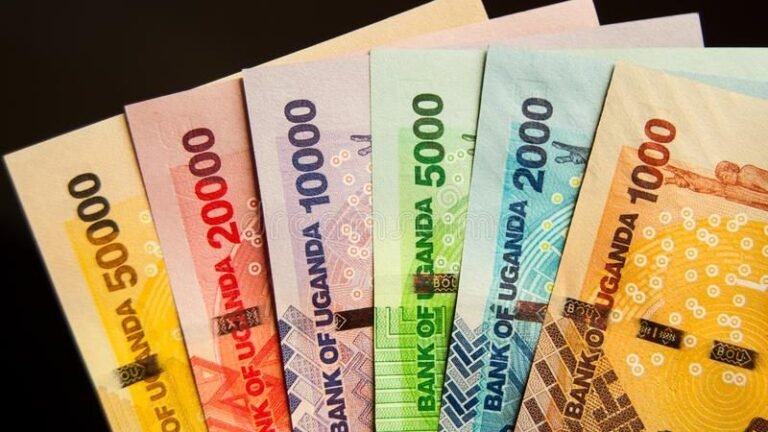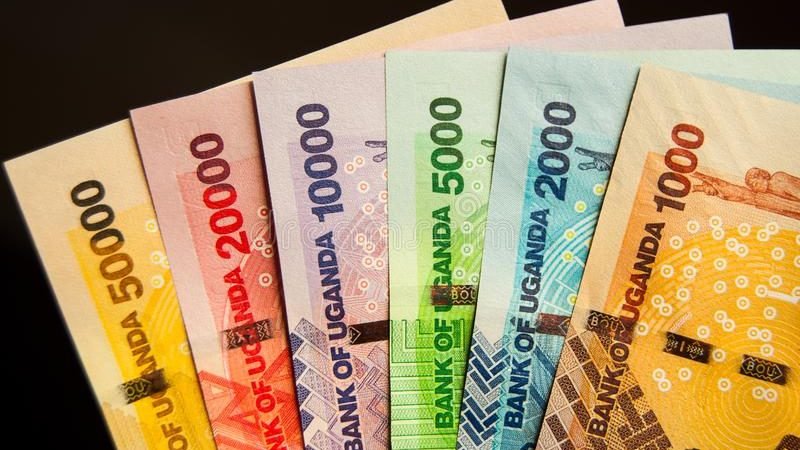
The Uganda shilling depreciated by 2.4 per cent against the US dollar this week as increased demand for foreign currency by corporates, offshore investor outflows and a stronger greenback intensified pressure on the local unit.
The shilling opened the week at Shs4,150/4,160 before weakening to a weekly low of Shs4,285/4,295. It subsequently recovered some ground to trade at Shs4,240/4,250 by Friday morning, according to Absa Bank Uganda’s weekly markets update for November 27.
The depreciation was largely driven by sustained dollar demand from companies in the energy, manufacturing, telecommunications and aviation sectors, which sought foreign currency to meet their obligations.
The pressure was compounded by offshore investors withdrawing funds from Uganda’s domestic debt market, alongside a stronger US dollar on the international market.
Although some dollar inflows entered the market during the week, Absa said the supply was slow and insufficient to meet the persistent demand, leaving the shilling exposed to further volatility.
The bank expects the local currency to remain volatile in the near term, with movements largely determined by corporate demand for dollars, offshore portfolio flows and the pace of foreign currency inflows.
While the foreign exchange market came under pressure, Uganda’s domestic debt market recorded strong investor appetite, with the latest Treasury bill auction attracting bids worth Shs1.097 trillion against an offer of Shs350 billion.
This represented a subscription rate of 313.6 per cent, indicating that investors were willing to lend the Government more than three times the amount it sought.
The Bank of Uganda accepted Shs549.4 billion in face value, translating into cash proceeds of about Shs477.9 billion.
Yields were mixed across the three Treasury bill tenors. The 91-day yield declined by 22 basis points to 11.461 per cent from 11.682 per cent, while the 182-day yield remained unchanged at 13.425 per cent.
However, the 364-day yield increased by 24 basis points to 14.990 per cent from 14.752 per cent, suggesting that investors demanded higher returns on the longer-term security.
The central bank was also scheduled to issue three-year, 10-year and 20-year Treasury bonds in an auction announced for November 25.
In the money market, liquidity remained tight throughout the week as the Bank of Uganda maintained its restrictive monetary policy stance. Interbank funding rates consequently remained elevated, ranging between 14 and 14.5 per cent.
Absa said liquidity was concentrated among a few market participants, limiting its distribution across the wider financial system. The central bank did not conduct any open market operations during the week.
Across the region, the Kenyan shilling also weakened slightly against the US dollar, reflecting sustained corporate demand for foreign currency and offshore investor outflows.

The Central Bank of Kenya intermittently sold dollars to ease pressure on the local currency and maintain orderly market conditions. However, demand for the greenback remained firm, with the dollar quoted at Sh129.90/130.10 by Friday morning.
On the international market, the US dollar strengthened against major currencies, with the dollar index rising by 0.7 per cent to 103.76 on Friday morning.
The greenback gained support from expectations that the US Federal Reserve could maintain a tight monetary policy stance, following the release of minutes from its October 27-28 meeting.
The minutes indicated that nearly all Federal Reserve officials considered further interest rate increases likely in the coming months as the central bank seeks to return inflation to its two per cent target.
The euro also weakened against the dollar, falling below the $1.10 mark for the first time since April 2025. It touched a 19-month low of $1.0967 on Thursday before recovering slightly to $1.0984 on Friday morning.
The decline was attributed to political and fiscal uncertainty in France, particularly concerns over missed deficit targets and next year’s elections, as well as the broader strength of the US dollar.
The British pound also came under pressure after UK inflation figures released on Wednesday showed headline inflation at 3.6 per cent year-on-year, while services inflation stood at 3.7 per cent. Both were below the market forecast of 3.8 per cent, prompting traders to scale back expectations of further interest rate increases by the Bank of England.
Meanwhile, international commodity markets recorded losses, with crude oil prices declining for a third consecutive week. Brent crude fell to about $92.60 per barrel, while West Texas Intermediate traded at $83.69 on Friday morning.
Gold suffered an even sharper decline, shedding nearly eight per cent during the week in its worst weekly performance since March.
The precious metal fell from $3,856 an ounce on Monday to $3,551 on Friday morning, as expectations of higher US interest rates strengthened the dollar and reduced the attractiveness of non-yielding assets.
Absa attributed the decline to hawkish signals from the Federal Reserve, which reportedly pushed market expectations of a December rate increase to 93 per cent. A sell-off in artificial intelligence-related stocks also forced leveraged investors to liquidate gold holdings to cover losses elsewhere.
The market assessment was prepared by the Trading Team in Absa Bank Uganda’s Corporate and Investment Banking Markets division.