
27 November 2026
There are some traditions that are difficult to understand until you experience them. In Burundi, one of these is the royal drumming tradition, where the sound of large traditional drums carries stories of history, identity, power and unity.
On a hill near Gitega, Burundi’s political capital, stands the Gishora Drum Sanctuary. It is a place where an important part of the country’s royal history is still remembered through music, movement and cultural practice.
The sound of the drums is powerful, the dancers move with remarkable energy, and the atmosphere is unlike an ordinary musical performance. But Gishora is not simply a place where people gather to watch drummers. It represents a tradition that has survived generations and continues to form an important part of Burundi’s cultural identity.
1. Discovering Gishora: A Cultural Treasure in Gitega
Gishora is located on a hill in Gitega Province, in central Burundi, approximately seven kilometres from the town centre.

Unlike destinations known mainly for their natural scenery, Gishora attracts visitors through its history and cultural significance. The site is associated with Burundi’s former monarchy and is recognised as one of the country’s important traditional heritage sites.
The sanctuary is arranged around a traditional royal compound, with structures that reflect aspects of the way royal spaces were organised in the past.
Visitors who arrive at Gishora do not simply encounter a collection of old buildings. They enter a place where cultural knowledge is still practised and passed on.
For anyone interested in understanding Burundi beyond its landscapes, Gishora offers a valuable starting point.
2. The History Behind the Royal Drums
To understand Gishora, it is important to understand the place drums once held in the Kingdom of Burundi.
During the monarchy, drums were much more than musical instruments. Known as ingoma, they were associated with royal authority, important ceremonies and the identity of the kingdom.

Their sound marked significant occasions, including royal celebrations and public gatherings. Drumming also formed part of ceremonies connected to the monarchy and the wider community.
Gishora is closely associated with King Mwezi Gisabo, who ruled Burundi during the nineteenth century. Historical accounts and local traditions connect the establishment of the royal residence at Gishora with his reign.
The sanctuary became an important place for preserving royal drums and the traditions surrounding them.
Today, its history continues to attract people interested in Burundi’s monarchy, traditional leadership and cultural heritage.
3. The Meaning of Ingoma: More Than Musical Instruments
The word ingoma refers to drums, but in the Burundian cultural context, their meaning goes much deeper.
Historically, royal drums represented authority, unity and the identity of the kingdom. Their use was connected to important events and ceremonies, making them significant objects within traditional society.

This is one reason the drums were treated with great respect. They were not simply instruments that anyone could use whenever they wished.
Different drums also had their own identities and historical associations. At Gishora, two particularly important drums are known as Ruciteme and Murimirwa.
Their names and stories are part of the heritage preserved at the sanctuary.
Understanding the meaning of ingoma helps visitors appreciate why the drumming tradition is so important to Burundi. The experience is not only about the sound produced by the instruments but also about the history and values connected to them.
4. The Batimbo: The People Who Keep the Tradition Alive
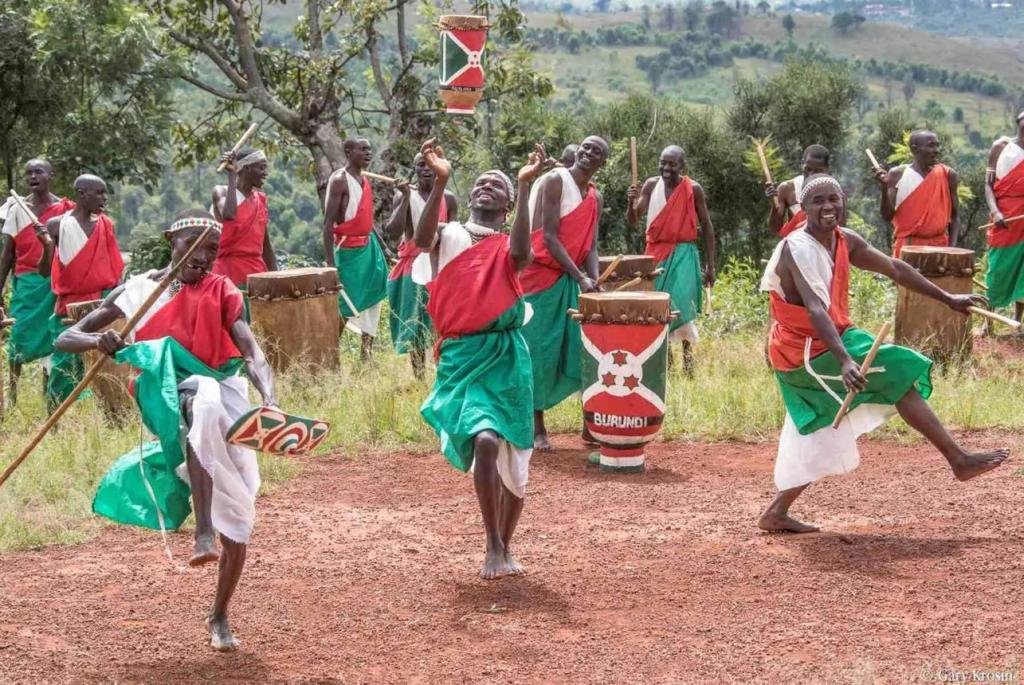
Behind every powerful drum performance at Gishora are the Batimbo, the traditional royal drummers responsible for preserving this cultural practice.

Their role goes beyond performing for visitors. They are custodians of a tradition that requires discipline, practice and knowledge passed between generations.
The performances bring together coordinated drumming, dancing, singing and movement. Each participant contributes to a larger rhythm, creating a sound that is both powerful and carefully organised.
Watching the Batimbo perform is one of the most memorable experiences visitors can have at Gishora.
Their movements require energy and coordination, while the drumming itself demands concentration and an understanding of the different rhythms.
Through their work, the Batimbo help ensure that the tradition remains part of everyday cultural life rather than becoming something remembered only through historical accounts.
5. The Royal Drum Dance: A Performance Full of Energy
One of the main reasons people visit Gishora is to experience the royal drum dance.
The performance usually begins with the drummers arranging themselves around the large instruments. As the rhythm develops, the sound becomes louder and more energetic, accompanied by coordinated movements and dancing.

The dancers often move with impressive strength and timing, lifting their legs and bodies in ways that match the rhythm of the drums.
There is also a strong sense of togetherness. The performance depends on each drummer understanding their role and maintaining coordination with the others.
In 2014, UNESCO inscribed the Ritual Dance of the Royal Drum on its Representative List of the Intangible Cultural Heritage of Humanity.
This recognition is important because it acknowledges the cultural practice itself, including its music, dance and knowledge. It also highlights the importance of the people who continue to preserve it.
6. Exploring the Traditional Royal Compound
Gishora is not only about the performances. The physical setting also tells an important part of its story.
The sanctuary includes traditional structures arranged within a royal compound. These buildings reflect the organisation of royal spaces and the different purposes they served.

Among the important structures is the traditional drum sanctuary, where significant drums were kept.
The arrangement of the compound helps visitors understand that the drums were part of a wider royal system. Their importance was connected to the monarchy, ceremonies and the people responsible for protecting them.
The architecture also provides an opportunity to appreciate traditional building methods and the use of natural materials.
Exploring the compound with a knowledgeable local guide can make the experience more meaningful because visitors learn about the significance of different structures rather than simply viewing them.
7. Gishora and Burundi’s Cultural Identity
Burundi has a rich cultural heritage expressed through music, dance, storytelling, poetry and traditional ceremonies.
The royal drums occupy a special place within this heritage because they have long been associated with the country’s history and identity.
The drumming tradition has also become one of the most recognisable cultural expressions of Burundi internationally. Performances by Burundian drummers have introduced audiences in different parts of the world to the country’s music and artistic traditions.

However, the importance of Gishora goes beyond international recognition.
For Burundians, the drums represent a connection to the past and a reminder of traditions that continue to shape cultural identity.
They also show how music can carry historical knowledge from one generation to another.
8. What Can Visitors Experience at Gishora?
A visit to Gishora offers more than watching a traditional performance.
Visitors can explore the royal compound, learn about the history of the sanctuary and understand the significance of the drums.
The live performances are usually the highlight. They provide an opportunity to experience the sound, movement and energy of the royal drumming tradition in its cultural setting.

Visitors may also learn about the people responsible for preserving the practice and how knowledge is passed between generations.
Because Gishora is a living cultural site, it is important to approach the experience with respect. Arranging a visit in advance and following local guidance can help visitors understand the site properly.
9. When Is the Best Time to Visit?
Gishora can be visited throughout the year, although it is advisable to arrange a visit before travelling.
Since performances involve the availability of local drummers and guides, visitors should confirm the schedule in advance rather than assume that a performance will take place whenever they arrive.
Burundi generally has a drier period around June to September, which can make travel around the country more convenient.

However, the most important consideration when planning a visit to Gishora is confirming the availability of the cultural experience and arranging transport.
10. Where to Stay and Getting to Gishora
Gishora is located close to Gitega, making the town a convenient base for visitors exploring the sanctuary.

Gitega has accommodation options for travellers, including hotels and guesthouses. Visitors can also explore other attractions in the town and surrounding areas as part of a wider cultural trip.
Travellers coming from Bujumbura can reach Gitega by road. The journey takes several hours, depending on traffic and road conditions.
Once in Gitega, Gishora is a relatively short journey away. Visitors can arrange local transport and a guided visit through recognised tourism contacts.
Planning ahead is useful, particularly for visitors travelling from outside Burundi who want to include the drum performance in their itinerary.
11. Preserving the Royal Drum Tradition
Like many traditional cultural practices, the royal drumming tradition depends on people who are willing to learn, practise and pass on their knowledge.
The Batimbo play an important role in this process. Their work ensures that the rhythms, movements and cultural meaning associated with the drums continue to be shared.

However, preserving the tradition also requires attention to the physical sanctuary and its traditional buildings.
Burundi’s royal residence of Gishora was added to UNESCO’s World Heritage Tentative List in February 2026. This is an important step towards wider recognition of the site’s architectural and cultural significance, although it is not the same as full World Heritage inscription.
The recognition also draws attention to the need to maintain the traditional structures and protect the cultural landscape.
Tourism can support these efforts when visitors respect the site, learn from local custodians and support the people responsible for maintaining the tradition.
12. More Than a Drum Performance
Gishora is one of those places that reminds us that a country’s history is not always found in written records or monuments.
Sometimes, it is carried through music, movement and traditions that people continue to practise.
The royal drums of Burundi have witnessed generations of cultural change, yet their importance has not disappeared. Through the Batimbo, the rhythms remain alive, connecting the country’s present to its royal past.
For visitors, Gishora offers an opportunity to experience a side of Burundi that goes beyond the usual travel attractions. It is a place to learn about history, appreciate traditional artistry and understand the people who preserve it.
And perhaps that is what makes Gishora special. The drums do not simply make music; they carry a story about a nation, its history and the traditions that continue to define it.

About The Author