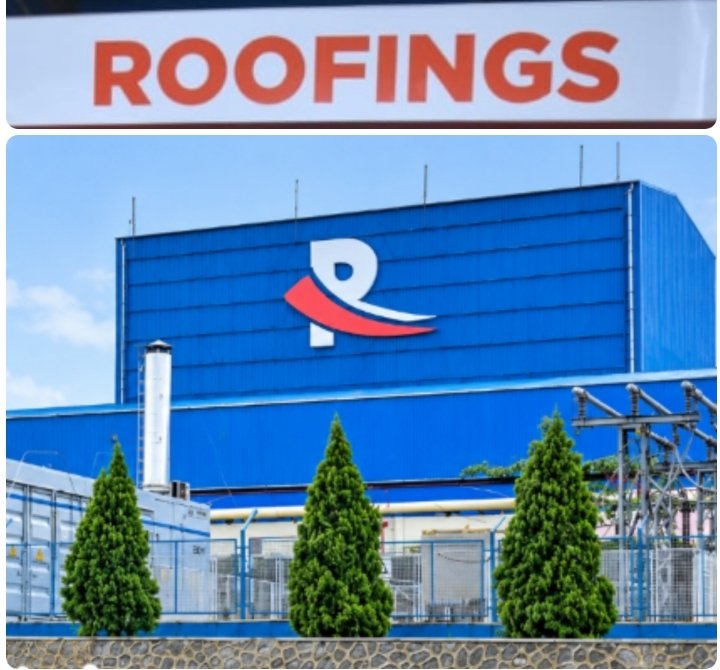

Five former employees of Roofings Limited have won a labour dispute against the manufacturing company, with the Industrial Court ordering it to pay them a combined Shs149.95 million in compensation after finding that their dismissals were unlawful.
The dispute, which began during the COVID-19 lockdown in 2020, centred on a daily transport facilitation of Shs20,000 that the company had initially paid to employees who continued reporting to work when public transport was restricted.

The workers maintained that Roofings withdrew the allowance without informing them, even as it expected them to continue reporting to the factory at a time when public transport was unavailable. The company, however, accused them of organising and participating in an unlawful sit-down strike that disrupted production and endangered other employees.
In an award delivered on November 25, 2026, Justice Anthony Wabwire Musana of the Industrial Court, sitting with panelists Can Amos Lapenga, Emmanuel Bigirimana and Dr Oling Dawn Kerjew, ruled that the company had failed to prove that the five workers organised or incited the stoppage.
The court found that Roofings had neither established a valid reason for dismissing the employees nor followed a fair disciplinary process.
“At the heart of every contract of employment lies a simple, enduring bargain: the employee renders faithful service, and the employer exercises its managerial authority with fairness, restraint, and fidelity to the law,” the court observed.
The five employees — Moses Lubega, Celestine Onzima, Geofrey Oyet, Jackson Musakulu and Martine Oola — had worked for the company for between nine and 19 years before their dismissal in July 2020.
Their case arose from events at the Roofings factory on June 6, 2020, when approximately 150 employees gathered after production came to a standstill.
According to the company, the workers abandoned their stations, switched off machines and ignored management’s instructions to resume work. Roofings accused the five claimants of mobilising colleagues into the stoppage, disobeying lawful orders and violating COVID-19 social-distancing guidelines.
The company also claimed that the disruption resulted in the loss of 350 tonnes of production.
The employees disputed the allegations. They told court that they had reported for duty and only went outside after noticing colleagues gathered at the factory. They maintained that they had neither organised the gathering nor encouraged anyone to stop working.
Celestine Onzima, who had joined Roofings in December 2007 as a machine operator before later working as a tool grinder, said he was in the tool room when he noticed employees gathered outside.
He testified that he did not participate in the alleged strike and only followed management to the gathering after noticing that work had stopped.
Onzima also told court that when he was summoned to the Human Resource office on June 8, 2020, he was issued a suspension letter bearing another employee’s name — “Onzima Denis” — instead of his own.
The court established that the company never issued him with a corrected letter and that the document bearing the wrong name was the only suspension notice available in its records.
The five employees were suspended on June 8, 2020, and summoned for a disciplinary hearing on June 25. They were subsequently dismissed on July 10, 2020.
Their case was also supported by Fred Peter Ojambo, a technician who testified that he was working alongside Onzima in the machine shop when they noticed the gathering.
Ojambo said the two briefly walked outside and found management addressing employees before returning to the workshop after about five minutes.
He maintained that Onzima could not have mobilised workers into the gathering because they had been working together when it began.
The court considered this testimony alongside the evidence presented by Roofings’ own witnesses, including Senior Production Manager Ambrose Kamusiime and Maintenance Manager Philip Sewankambo.
Kamusiime acknowledged during cross-examination that he had not personally witnessed any of the five employees inciting colleagues, threatening violence, destroying property or ordering other workers to stop working.
He also admitted that he had not prepared a report documenting the incident.
The court further examined the CCTV footage relied upon by the company. It found that the recordings had no audio and did not show violence or destruction of company property.
Sewankambo, who testified about the footage involving Onzima, conceded that the employee was merely seen walking around. His suggestion that Onzima was mobilising workers was, in his own words, “only a probability.”
The court was not persuaded that such evidence could justify the dismissal of employees who had served the company for years.
“Being present at a peaceful workplace gathering where management and police officers are addressing employees cannot, without more, be equated with organising an unlawful strike or sabotaging production,” the court ruled.
It also questioned why Roofings had selected only five employees for dismissal when approximately 150 workers had been involved in the gathering.
The court noted that no other employee was dismissed and that no worker had identified the five claimants as the ringleaders of the stoppage.
It further found that the company’s alleged production loss of 350 tonnes had not been supported by documentary evidence.
“To pluck five employees with unblemished service records spanning over a decade from a crowd of 150 workers, without proof that they instigated the stoppage, sabotaged machinery, or defied direct personal instructions, offends the basic tenets of industrial justice and substantive fairness,” the court stated.
The ruling also questioned the company’s disciplinary records. Although Roofings maintained that the employees had admitted participating in the strike during the disciplinary hearing, it did not produce proper minutes of the proceedings or the investigation report relied upon to justify the dismissals.
The document presented as minutes was, according to the court, merely an attendance list headed “Disciplinary Hearing-25.06.2020”.
The court said the absence of proper records made it impossible to establish what evidence had been presented or whether the alleged admissions had actually been made.
“Fairness demands that an employee know the evidence to be met and have a reasonable opportunity to meet it,” the court observed.
It also found that the suspension letters did not adequately explain the workers’ rights during the disciplinary hearing. Apart from telling them that they could bring a colleague, the notices did not explain their right to respond to the allegations in writing, cross-examine witnesses, produce witnesses of their own or present their case before an impartial committee.
The court acknowledged that the workers had been represented by Chief Shop Steward Bernard Ofwono and his assistant, Leonard Bulafu, but said this did not cure the failure to inform them of their other statutory hearing rights.
In examining the company’s Human Resource Manual, the court also pointed to a provision recognising employees’ right to express dissatisfaction with workplace conditions.
Clause 23.0 of the manual states that employees should be able to raise grievances and seek their settlement “without fear of coercion or reprisal.”
The court found that although the manual contained broad definitions of misconduct, it did not clearly identify the specific conduct attributed to the five workers as offences warranting summary dismissal.
It further referred to Section 75 of the Employment Act, which provides that organising or participating in an unlawful strike does not, by itself, constitute grounds for dismissal.
The court concluded that even if the stoppage had been unprocedural, Roofings still had to prove the individual responsibility of each employee and establish that their conduct fundamentally breached their employment contracts.
In its final determination, the court held that the dismissals were both procedurally unfair and substantively unjustified.
“On the balance of probabilities, and after carefully evaluating the testimony of all six witnesses, we hold that the Respondent did not have a valid, fair, or justifiable reason to dismiss the Claimants and did not follow procedure,” the judgment reads.
The court declared the dismissal of the five employees on July 10, 2020, unlawful and ordered Roofings to pay them Shs149,952,600, comprising notice pay, severance allowance, general damages and punitive damages.
The largest component is severance allowance, with the five workers collectively entitled to Shs61.89 million. The court also awarded Shs24.4 million in general damages and Shs50 million in punitive damages, in addition to Shs13.659 million in payment in lieu of notice.
Each of the five employees was awarded Shs10 million in punitive damages.
Moses Lubega, who worked for Roofings for 19 years, was awarded Shs2.601 million in notice pay, Shs16.473 million in severance allowance, Shs4.5 million in general damages and Shs10 million in punitive damages.
Celestine Onzima, who served for approximately 13 years, was awarded Shs4.104 million in notice pay, Shs17.373 million in severance allowance, Shs6.8 million in general damages and Shs10 million in punitive damages.
Geofrey Oyet, who worked for 11 years, was awarded Shs2.016 million in notice pay, Shs7.392 million in severance allowance, Shs3.4 million in general damages and Shs10 million in punitive damages.
Jackson Musakulu, who served for nine years, was awarded Shs1.806 million in notice pay, Shs8.127 million in severance allowance, Shs4.5 million in general damages and Shs10 million in punitive damages.
Martine Oola, who worked for approximately 12 years, was awarded Shs3.132 million in notice pay, Shs12.528 million in severance allowance, Shs5.2 million in general damages and Shs10 million in punitive damages.
The court also ordered Roofings to pay interest at 15 per cent per annum on all the monetary awards, running from November 25, 2026, until payment in full.
The company was further directed to issue each former employee with a certificate of service within 21 days of the award and submit copies to the Registrar of the Industrial Court within 30 days.
The five workers were also awarded the taxed costs of the case.
However, the court declined to order Roofings to compensate the former employees for losses they attributed to salary-backed loans and property allegedly lost after they could no longer service the loans following their dismissal.
The claimants had sought substantial sums under this head, including Shs170 million claimed by Lubega, approximately Shs34 million by Onzima, Shs15 million by Oyet and about Shs35 million each by Musakulu and Oola.
The court said they had not provided sufficient loan documentation to establish that the facilities were directly linked to their salaries or that Roofings had guaranteed or undertaken to settle the debts.
It therefore found no legal basis for transferring liability for the personal loans to the former employer.
In its concluding remarks, the court said the COVID-19 emergency did not suspend the obligation of employers to exercise managerial authority fairly and within the law.
“To answer a peaceful, short-lived expression of that concern over a withdrawn allowance by plucking 5 long-serving employees from a crowd of 150, without a shred of verifiable proof that they led a strike, sabotaged machinery, or defied a direct order, is not discipline,” the court said.
The judgment brings to a close a labour dispute that began with a Shs20,000 daily transport facilitation during the COVID-19 lockdown and ended with Roofings being ordered to pay five former employees nearly Shs150 million.
In related court judgements, read about other rulings where Pearl Bank, Pepsi manufacturer Crown Beverages and Coca-Cola were ordered to pay their former employees over unfair dismissal Here, There and Over There.