
27 November 2026
Imagine walking through a city built centuries ago, where enormous stone walls still stand without cement holding them together. Narrow passages lead to ancient enclosures, and behind every structure is a story about the people who once called this place home.
This is Great Zimbabwe, one of Africa’s most remarkable historical sites.
Located in south-eastern Zimbabwe, near the modern-day city of Masvingo, Great Zimbabwe is the remains of an ancient city built by the ancestors of the Shona people. It was once the centre of a powerful kingdom, an important trading destination and a place where impressive architecture reflected the wealth and organisation of its society.
Today, its stone walls remain a powerful reminder that Africa had sophisticated cities, trading networks and political systems long before European colonial rule.
1. Discovering Great Zimbabwe: A City Built From Stone
Great Zimbabwe is located approximately 30 kilometres south-east of Masvingo in south-eastern Zimbabwe.
The name itself comes from the Shona word dzimba dzemabwe, commonly translated as “houses of stone”. It is a fitting name for a place whose most recognisable feature is its enormous dry-stone architecture.

Construction of the city began around the 11th century and continued for several centuries, reaching its greatest importance between the 13th and 15th centuries.
The site covers a large area and contains the remains of stone walls, residential spaces, passages and other structures that reveal how the city was organised.
What makes Great Zimbabwe particularly impressive is the craftsmanship. The builders used carefully shaped granite stones, arranging them in courses without relying on mortar to hold the walls together.
The result is an architectural achievement that has survived for hundreds of years and continues to attract historians, archaeologists and visitors from around the world.
2. The People Who Built Great Zimbabwe
Behind the impressive stone structures were people with a complex social, political and economic system.
Great Zimbabwe was built by the ancestors of the Shona people, whose communities developed across the Zimbabwean plateau.

The city became the centre of an important kingdom whose influence extended across a large part of the region. Its prosperity was supported by agriculture, cattle keeping, ironworking, gold production and long-distance trade.
At its height, Great Zimbabwe is believed to have supported a substantial population. UNESCO estimates that the wider city had more than 10,000 inhabitants during the 14th century.
People living there were involved in different activities, from farming and crafting to metalworking and trading. The city was not simply a collection of stone buildings; it was a functioning society with economic, political and cultural institutions.
Understanding the people behind the ruins is important because Great Zimbabwe should not be viewed only as an architectural attraction. It represents the achievements of an African civilisation.
3. The Great Enclosure: The Heart of the Ancient City
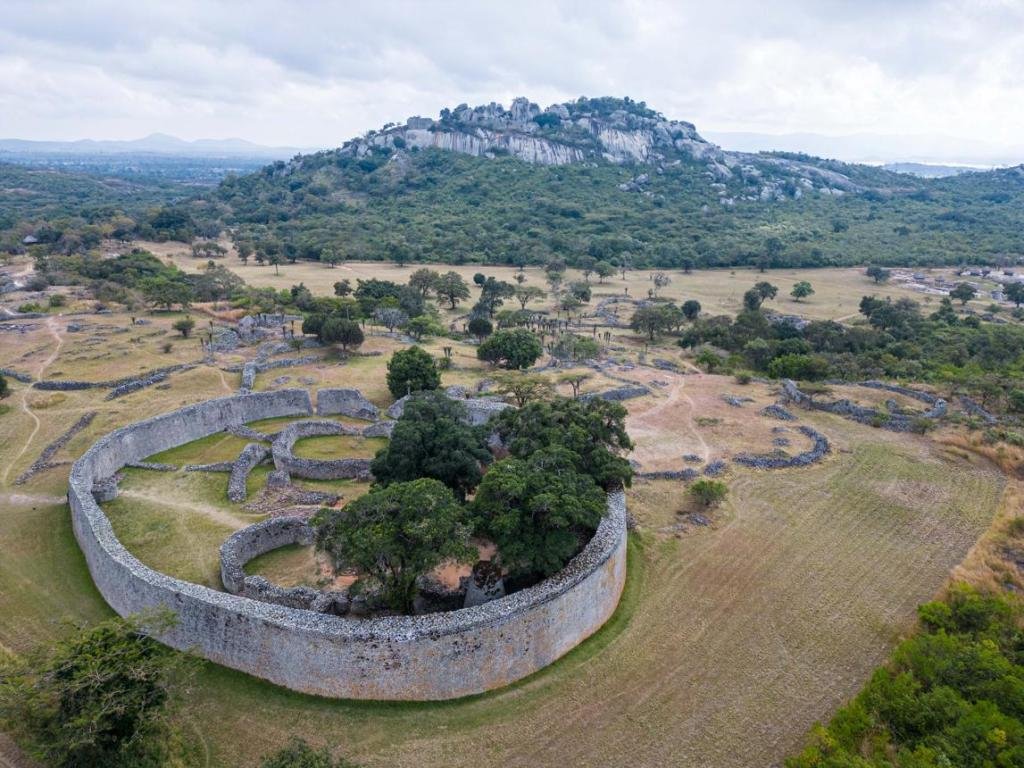
One of the most recognisable structures at Great Zimbabwe is the Great Enclosure.

It is an enormous oval-shaped stone structure surrounded by high granite walls. Some sections of the outer wall rise to approximately 11 metres, making it an extraordinary example of traditional African stone construction.
Inside the enclosure are smaller walls, passages and the famous Conical Tower, which has become one of the site’s most recognisable features.
The purpose of every structure is not fully understood, but archaeological evidence suggests that the enclosure contained residential and communal spaces.
The craftsmanship is particularly impressive. The granite stones were carefully arranged, creating curved walls and decorative patterns that demonstrate the builders’ understanding of architecture.
Standing beside these walls gives visitors an idea of the scale of the work involved. It is difficult not to wonder how the builders organised such a large construction project using the tools and technology available at the time.
4. The Hill Complex: A Place of Power and Spiritual Significance
Another important part of Great Zimbabwe is the Hill Complex, sometimes referred to as the Hill Ruins.

Built around a large granite hill, this section contains some of the oldest structures at the site. Its stone enclosures and narrow passages reveal how the ancient city developed over time.
The Hill Complex is generally associated with royal authority and ritual activities. Its elevated position also gives it a commanding view of the surrounding landscape.
Archaeologists have found evidence of residential occupation and objects that suggest the area had important ceremonial functions.
The location itself is fascinating. The builders used the natural granite formations as part of the architectural design, creating structures that fit into the landscape rather than attempting to completely change it.
For visitors, exploring the Hill Complex provides another perspective on how Great Zimbabwe was organised and why its different sections mattered.
5. The Zimbabwe Birds: Symbols of a Nation
Among the most famous discoveries at Great Zimbabwe are the soapstone birds commonly known as the Zimbabwe Birds.

These sculptures were carved from soapstone and found on tall stone pillars within the ruins. They are believed to have held important symbolic and possibly spiritual meaning.
Their exact significance during the time of the ancient kingdom is still discussed by historians and researchers, but they have become powerful symbols of Zimbabwe’s national identity.
One of the birds appears on Zimbabwe’s national flag, while representations of the sculptures can also be found on the country’s currency and official symbols.
The birds are a reminder that Great Zimbabwe is not simply a historical attraction. Its cultural importance continues to influence how the modern nation understands and represents itself.
6. Great Zimbabwe and the Ancient International Trade Network
Perhaps one of the most interesting parts of Great Zimbabwe’s history is its connection to international trade.
The ancient city was located within a wider network of trading routes that connected the Zimbabwean plateau to the East African coast and communities across the Indian Ocean.
Gold and ivory were among the valuable commodities traded through these networks. In return, goods from distant regions reached the interior of southern Africa.
Archaeological excavations at Great Zimbabwe have uncovered Chinese porcelain, Persian glass beads and gold and Arab coins associated with Kilwa, an important trading centre on the East African coast.

These discoveries provide evidence that Great Zimbabwe was connected to a much wider world.
It is particularly interesting to think about how goods travelled between communities separated by long distances, at a time when modern transport and communication systems did not exist.
The city’s history challenges the idea that ancient African societies were isolated from international trade. Great Zimbabwe was part of a connected economic world.
7. The Valley Ruins: Understanding Everyday Life
While the Great Enclosure and Hill Complex often receive the most attention, the Valley Ruins are also important to understanding the ancient city.

These remains are spread across the valley and include residential structures, stone walls and traces of everyday activities.
They provide clues about how people lived beyond the main monumental buildings.
Archaeological evidence suggests that households were organised into different living spaces, with areas used for cooking, sleeping and other domestic activities.
The Valley Ruins help visitors appreciate that Great Zimbabwe was not built only for rulers or ceremonies. It was also a place where ordinary families lived, worked and raised children.
This part of the site adds a human dimension to the history. Behind the impressive walls were people with everyday responsibilities, ambitions and relationships.
8. Why Was Great Zimbabwe Abandoned?
One question that often comes up when discussing Great Zimbabwe is why such an important city eventually declined.
By around 1450, the city had lost much of its former importance, and its population gradually moved elsewhere.
There is no single explanation that accounts for every aspect of its decline. However, environmental pressure, population growth and changes in the availability of resources are among the factors discussed by researchers.
UNESCO notes that the surrounding hinterland may no longer have been able to provide enough food for the growing population, while deforestation also placed pressure on the environment.
As people moved away, other centres of power became more influential in the region.
Although the city declined as a major political centre, its cultural and historical importance did not disappear. Its legacy continued through the communities, traditions and political developments that followed.

9. Great Zimbabwe and the Birth of a National Identity
Great Zimbabwe is not only important because of its ancient history. It also has a direct connection to the identity of the modern country.
When Zimbabwe gained independence in 1980, the country adopted the name Zimbabwe, drawing inspiration from the ancient city.

This decision reflected the importance of reclaiming the country’s African history and recognising the achievements of its ancestors.
The Zimbabwe Bird also became part of the national flag, further connecting the modern state to the ancient civilisation.
For many Zimbabweans, Great Zimbabwe represents pride, heritage and the achievements of African people.
It is also an important reminder of why historical sites should be preserved. They help communities understand where they come from and give younger generations an opportunity to learn about their past.
10. What Can Visitors Experience at Great Zimbabwe?
A visit to Great Zimbabwe offers much more than an opportunity to take photographs of old stone walls.
Visitors can explore the Great Enclosure, walk through sections of the Hill Complex and learn about the Valley Ruins.

The site also provides opportunities to understand traditional construction methods, ancient trade and the organisation of the Shona civilisation.
A knowledgeable guide can make the experience particularly rewarding by explaining the history behind different structures and helping visitors understand how the ancient city functioned.
The surrounding landscape also adds to the experience, with granite hills, vegetation and open spaces creating a beautiful setting for exploring the ruins.
For people interested in African history, archaeology and cultural tourism, Great Zimbabwe is a destination worth experiencing.
11. When Is the Best Time to Visit?
Great Zimbabwe can be visited throughout the year, although weather conditions may affect how comfortable it is to explore the site.
Zimbabwe generally experiences a rainy season from around November to March and a drier period from April to October.
The cooler, drier months are often more comfortable for walking around the archaeological complex and exploring its different sections.

The rainy season can bring greener surroundings, but visitors should be prepared for wet conditions and check the local weather before travelling.
Regardless of the season, comfortable walking shoes, drinking water and enough time to explore the different sections of the monument are useful.
12. Where to Stay and Getting to Great Zimbabwe
Great Zimbabwe is located near Masvingo, which is the main town used by many visitors exploring the monument.

Travellers coming from Harare can reach Masvingo by road, with the journey taking several hours depending on traffic and road conditions.
From Masvingo, the monument is approximately 30 kilometres away and can be reached by local transport or an organised tour.
Accommodation options are available around Masvingo and near the monument, ranging from hotels and lodges to other guest accommodation.
Visitors planning to explore the site should arrange transport and accommodation in advance, especially during busy holiday periods.
13. Protecting Great Zimbabwe’s Historical Legacy
Great Zimbabwe is a valuable part of Africa’s shared heritage, and preserving it is important for future generations.

The stone walls, archaeological remains and surrounding landscape have survived for centuries, but they still require careful management.
Weather conditions, vegetation, tourism pressure and inappropriate conservation methods can contribute to the deterioration of historic structures.
The site is protected by Zimbabwe’s National Museums and Monuments authorities, which are responsible for managing and conserving the monument.
Visitors also have a role to play. Respecting restricted areas, avoiding damage to the stone structures and following the guidance of site staff are simple ways to help protect the monument.
Conservation should also involve local communities, whose history and cultural identity are closely connected to the site.
14. More Than an Ancient City of Stone
Great Zimbabwe is one of those places that changes how you look at African history.
Its enormous walls tell a story of architectural skill, while its archaeological discoveries reveal a society connected to trade networks stretching far beyond its immediate surroundings.
The people who built the city developed a system of leadership, trade, agriculture and craftsmanship that supported a major African kingdom for centuries.
Today, the ruins remain as a reminder of what their ancestors achieved and why that history deserves to be recognised.
For anyone interested in discovering Africa beyond its famous wildlife destinations, Great Zimbabwe offers something special. It is a journey into the past, but also an opportunity to understand the history behind a modern African nation.
And perhaps the most remarkable thing is that the stones are still standing, carrying the story of a civilisation that helped give Zimbabwe its name.

About The Author