 news TRUSTED NEW
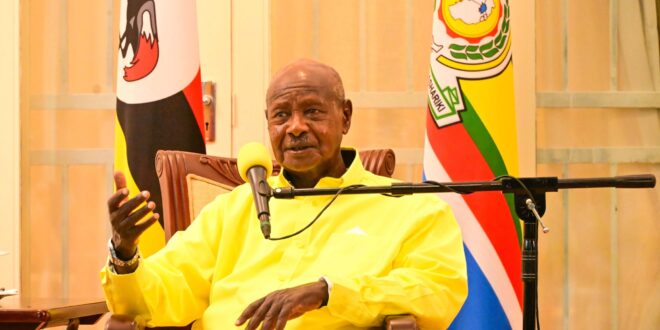
By Ronald Kasirye | The Hoima Post
When Yoweri Museveni captured power in 1986, he did so as a revolutionary promising a new Uganda. He condemned dictatorship, criticized leaders who overstayed in office, and pledged to build democratic institutions that would outlive any individual.
Nearly four decades later, many Ugandans believe that promise has been broken.
The man who once spoke against life presidents is now among the longest-serving leaders in Africa. The government that promised fundamental change is increasingly accused of suppressing dissent, concentrating power, and undermining the democratic principles upon which it claimed to be founded.
For many citizens, the question is no longer whether Museveni transformed Uganda. The question is whether he transformed it into the very system he once fought against.
The Constitutional Road to Permanent Rule
One of the strongest criticisms of Museveni’s presidency centers on constitutional changes that allowed him to remain in power.
In 2005, presidential term limits were removed. In 2017, the presidential age limit was scrapped. Both changes effectively eliminated constitutional barriers that could have forced a leadership transition.
Supporters argued that these amendments reflected democratic processes and parliamentary decisions. Critics saw something entirely different: a systematic dismantling of safeguards designed to prevent the concentration of power in one individual.
Today, Uganda finds itself in a position where an entire generation has never known another president.
The Shrinking Space for Opposition
The experience of Uganda’s opposition tells a story of its own.
Dr. Kizza Besigye, once Museveni’s ally and personal physician, became one of his fiercest critics. Over the years, Besigye faced repeated arrests, prosecutions, restrictions on movement, and confrontations with security forces.
Robert Kyagulanyi, popularly known as Bobi Wine, emerged as the face of a younger generation demanding political change. His rise was met with arrests, campaign restrictions, detention, and repeated clashes between security agencies and opposition supporters.
Other opposition leaders, activists, journalists, and civil society figures have similarly reported intimidation, surveillance, arrests, and restrictions on political activity.
While government officials maintain that security actions are lawful and necessary to preserve order, critics argue that the pattern reflects a political environment where opposition is tolerated only within limits defined by the state.
The Military and Politics
Museveni came to power through armed struggle, and critics argue that the military has remained deeply embedded in Uganda’s political life ever since.
Election periods have frequently been characterized by heavy security deployments, military involvement, and concerns raised by domestic and international observers regarding intimidation and unequal political competition.
For many Ugandans, the continued prominence of security institutions in political affairs raises questions about whether elections are truly contests of ideas or contests of power.
The perception that state institutions overwhelmingly favor the incumbent has weakened public confidence in electoral processes and democratic accountability.
The Tribalism Debate
Perhaps no issue generates more controversy than allegations of tribalism.
For years, opposition politicians and government critics have argued that key positions within the military, intelligence services, security agencies, and strategic government institutions have been disproportionately occupied by individuals from regions and communities closely associated with Museveni’s political base.
The government has consistently rejected these accusations and maintains that appointments are based on merit and competence.
Yet the perception persists.
For many Ugandans, tribalism is not merely about ethnicity. It is about access to power, influence, opportunity, and state resources. It is about who gets appointed, who gets promoted, who receives protection, and who remains connected to the center of power.
Whether entirely accurate or not, the widespread belief that the national cake is unevenly distributed has contributed significantly to public frustration and political polarization.
The Rise of a Political Dynasty?
As Museveni’s presidency enters its fourth decade, concerns about succession have become increasingly difficult to ignore.
The growing political profile of General Muhoozi Kainerugaba has fueled speculation that Uganda may be moving toward a father-to-son transfer of power.
Supporters dismiss such concerns as political propaganda. Critics see warning signs of dynastic politics emerging within a republic that was never intended to be governed as a family project.
The mere existence of this debate reflects a deeper problem.
In a healthy democracy, leadership transitions are expected and planned. In Uganda, discussions about succession remain dominated by questions surrounding one family.
A Legacy at a Crossroads
Museveni’s supporters point to important achievements, including relative stability compared to previous decades, infrastructure development, economic reforms, and Uganda’s role in regional security.
Those accomplishments form part of his record and cannot be ignored.
Yet neither can the concerns.
The repeated amendment of constitutional limits, the treatment of opposition figures, allegations of human rights abuses, the growing role of security agencies in politics, accusations of favoritism, and fears of dynastic succession have all shaped public perceptions of his rule.
History often presents leaders with a final test.
It is not how they gain power that defines them.
It is whether they build institutions strong enough to survive without them.
For many Ugandans, that question remains unanswered.
Forty years after taking power, Museveni stands at a crossroads between two legacies. One is that of a liberator who rescued Uganda from chaos. The other is that of a ruler who remained in office so long that the democratic ideals he once championed became increasingly difficult to recognize.
The judgment of history will depend on which legacy ultimately prevails.
Related
Source link