 news TRUSTED NEW
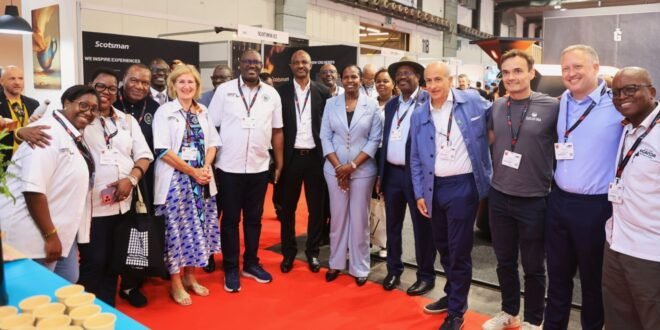
Brussels, Belgium — Uganda has officially launched its first unified national coffee brand, “Uganda Coffee: It’s in Our Nature,” marking a strategic shift in how one of Africa’s largest coffee producers intends to compete in the global marketplace. Uganda unveils its first national coffee brand, “Uganda Coffee: It’s in Our Nature,” at World of Coffee Brussels 2026, where Uganda is featured as the event’s Portrait Country, positioning Africa’s leading coffee exporter as a premium global origin rooted in quality, sustainability, and cultural heritage. The initiative seeks to reposition the country from being known primarily as a supplier of raw coffee beans to becoming a globally recognized premium coffee origin with a distinctive identity rooted in quality, sustainability, and cultural heritage. The launch represents more than a branding exercise. It is an economic diplomacy strategy aimed at strengthening Uganda’s competitiveness in international markets, enhancing export value, attracting investment, and reinforcing the country’s reputation as the birthplace of Robusta coffee.
For decades, Uganda has ranked among the world’s leading coffee exporters, yet much of its coffee has entered global markets anonymously, often blended, rebranded, and sold under foreign labels. The result has been a persistent imbalance in value creation, where producing countries receive only a fraction of the profits generated across the global coffee value chain. The new national brand seeks to address this challenge by giving Ugandan coffee a recognizable international identity. According to official export figures from Ministry of Agriculture, Animal Industry and Fisheries (MAAIF), Uganda exported 8.78 million 60-kilogram bags of coffee worth US$2.38 billion during the twelve months ending April 2026, representing a 22 percent increase in export volume and a 23 percent increase in export value compared to the previous year. In April 2026 alone, exports reached 591,687 bags, generating US$155.54 million. These figures underline coffee’s position as Uganda’s single most valuable agricultural export and a cornerstone of the country’s foreign exchange earnings.
Coffee as Economic Diplomacy
Launching the brand in Brussels carries significant geopolitical and commercial symbolism.
Belgium hosts not only one of Europe’s largest coffee trade exhibitions but is also home to the European Union, Uganda’s largest regional coffee market. Europe accounted for more than half of Uganda’s coffee exports in April 2026, with Italy and Germany among the principal destinations. By introducing the brand directly to international buyers, specialty roasters, investors, and distributors, Uganda is positioning coffee as an instrument of economic diplomacy. This approach aligns with broader African strategies under the African Continental Free Trade Area (AfCFTA), which encourages member states to increase value addition, strengthen regional brands, and reduce dependence on exporting unprocessed commodities. Rather than competing solely on production volume, Uganda is increasingly seeking to compete on reputation, traceability, sustainability, and product identity.
Building a National Identity Around Coffee
The campaign’s central message “It’s in Our Nature” is intended to communicate both Uganda’s environmental advantages and its cultural relationship with coffee. Literally, it refers to Uganda’s volcanic soils, favorable climate, abundant rainfall, biodiversity, and ideal growing conditions. Symbolically, it portrays coffee as an extension of Uganda’s national identity reflecting hospitality, resilience, craftsmanship, and trust. This narrative is reinforced by the brand’s visual identity, which incorporates coffee beans into the logo alongside the Crested Crane, Uganda’s national bird. The design also draws upon the country’s national colours while integrating earthy coffee tones intended to evoke authenticity and premium quality. Beyond aesthetics, the branding seeks to differentiate Uganda within an increasingly competitive global specialty coffee market, where origin stories have become as important as flavour profiles.
One of the campaign’s distinguishing features is its emphasis on Uganda’s cultural heritage. Historically, coffee has played important ceremonial roles in several Ugandan communities, symbolizing reconciliation, friendship, hospitality, and social cohesion. By incorporating these traditions into its international branding, Uganda is presenting coffee not merely as an export commodity but as part of its cultural identity. This approach reflects an emerging global trend in agricultural marketing, where consumers increasingly value products linked to authentic cultural narratives, environmental stewardship, and ethical production. Countries such as Colombia, Ethiopia, Costa Rica, and Jamaica have successfully leveraged national storytelling to strengthen the global recognition of their coffee industries. Uganda now appears determined to join this group by transforming its coffee heritage into a competitive commercial advantage.
The launch also highlights Uganda’s efforts to align with the European Union Deforestation Regulation (EUDR), which requires exporters of certain commodities including coffee to demonstrate that products entering the EU are not linked to deforestation after December 2020. Compliance with these standards is no longer optional for producers seeking continued access to European markets. Officials noted that Uganda’s coffee sector has invested in stronger traceability systems, improved quality assurance, and sustainability measures designed to meet evolving international market requirements. These developments position Uganda to retain market access while strengthening buyer confidence in its coffee supply chains.
Uganda’s coffee branding initiative reflects broader national policy objectives centred on industrialisation, export diversification, and value addition. The country’s long-term development strategies, including the National Development Plan IV, identify agro-industrialisation and export competitiveness as critical drivers of economic transformation. The initiative also aligns with Vision 2040, which seeks to transition Uganda from a predominantly agrarian economy into a modern, industrialised middle-income country. Internationally, the programme supports the objectives of the United Nations Sustainable Development Goals, particularly:
SDG 1: No Poverty, by improving incomes for coffee-growing households.
SDG 8: Decent Work and Economic Growth, through expanded agricultural value chains.
SDG 9: Industry, Innovation and Infrastructure, by promoting value addition and branding.
SDG 12: Responsible Consumption and Production, through sustainable coffee production.
SDG 17: Partnerships for the Goals, demonstrated through collaboration with the European Union, the International Trade Centre, and the MARKUP II programme.
While the launch represents a significant milestone, branding alone will not determine Uganda’s long-term competitiveness. Sustaining a premium international reputation will depend on consistent quality control, investment in processing infrastructure, farmer support, climate resilience, logistics efficiency, and greater domestic value addition. Experts have long argued that Africa captures only a small proportion of the profits generated within the global coffee industry because much of the roasting, packaging, branding, and retailing occurs outside producing countries. For Uganda’s national brand to achieve its intended impact, the country will need to progressively expand beyond exporting green beans toward exporting finished, branded coffee products that command higher market value.
The launch of “Uganda Coffee: It’s in Our Nature” marks a strategic evolution in Uganda’s approach to international trade. It reflects a broader recognition that in today’s global economy, competitiveness is shaped not only by production capacity but also by identity, reputation, sustainability, and the ability to tell compelling national stories. For Africa, the initiative offers an important lesson. The continent’s future competitiveness will depend increasingly on moving beyond exporting raw commodities to building globally respected brands that capture greater value from local resources. Uganda’s new coffee identity is therefore more than a logo. It is an attempt to redefine how African products are positioned in international markets transforming coffee from a commodity into a symbol of national heritage, economic resilience, and global opportunity. If successfully implemented, the initiative could become a model for other African agricultural sectors seeking to translate natural endowments into lasting commercial and diplomatic influence.
Post Views: 0
Post navigation
Source link