 news TRUSTED NEW
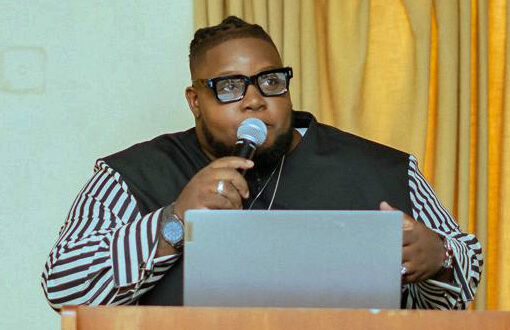
Trans leader denounces social media, journalists, and Haitian society’s transphobia
Dominique X Saint-Vil is the undisputed leader of the transgender men’s community in Haiti“We can no longer hide ourselves. But the media hides us.”This quote from an anonymous transgender Haitian is a key to how Dominique X. Saint-Vil, director of the Trans Organization of Haiti —- one of the few voices remaining in Port-au-Prince to advocate for the transgender community —- understands the factors that perpetuate hatred against LGBTIQ people in Haiti.Haiti’s persistent LGBTIQphobia, says Saint-Vil, is abetted by individuals’ passivity, resignation, ignorance and deliberate silence. It is energized by the traditional press and by both American and Chinese digital platforms, especially those platforms’ digital algorithms that promote divisive online content. That, in turn, contributes to the difficulty that Haiti’s government institutions experience in establishing their legitimacy and hinders them from pursuing their mission to protect Haiti’s citizens, including sexual and gender minorities, he adds.In the lead-up to the International Day Against Homophobia, Transphobia, and Biphobia (IDAHOTB) on May 17, Saint-Vil wrote this analysis of Haiti’s situation (translated here from French).Social Media, Influencers, and the Haitian LGBTIQ Community:The Silence That KillsBy Dominique X. Saint-VilBACKGROUND: WHY NOW?On May 17, 1990, the World Health Organization finally removed homosexuality from its list of mental illnesses. Thirty-six years later, in a Haiti in the throes of a total institutional crisis, Haitian influencers continue to treat LGBTIQ people—and particularly transgender people—as a social pathology, a divine curse, a national disgrace. And the media, both in Haiti and in the diaspora, look the other way.This article is not a polite plea. It is a documented act of denunciation.I. HAITI’S DIGITAL PARADOXHaiti presents a striking contradiction: with an internet penetration rate ranging between 30 and 35 percent of the population, the country is one of the least connected in the Western Hemisphere. Yet social media—led by Facebook, followed by TikTok and YouTube—exerts a disproportionate influence on the formation of public opinion, whether in Port-au-Prince, Miami, New York, or Montreal.This paradox has a direct consequence: in this contested digital space: The floor is seized by a minority that speaks on behalf of everyone. And the dominant voices are not those that build—they are those that destroy.Gangs now control up to 85% of Port-au-Prince. More than 700,000 people have been displaced. In 2023, the United Nations Integrated Office in Haiti (BINUH) documented more than 8,400 direct victims of gang violence—a 122% increase compared to 2022. In this context, Haitian LGBTIQ people face a double threat: physical violence from gangs that specifically target them, and daily symbolic violence on social media.These two forms of violence feed into one another. And the media only reports on the first—when they report at all.II. THE ECONOMY OF HATE: INFLUENCERS AND THE PROPAGANDA OF LGBTIQ-PHOBIC RHETORICLet’s be blunt: some Haitian influencers have made transphobia and homophobia a fully embraced business model.On Facebook Live, YouTube, and TikTok, figures from the Haitian diaspora—often based in the United States or Canada—host sessions where the LGBTIQ community is described as “foreign depravity,” a “social disease,” and a “cultural invasion.” These terms aren’t made up: they circulate, they’re repeated, and they’re shared.All of this relies on a well-oiled machine:
Anger drives engagement: the more hateful the content, the more reactions and shares it generates.Engagement drives visibility: Meta, TikTok, and YouTube’s algorithms prioritize divisive content.Visibility drives revenue: donations via livestreams, YouTube Super Chats, and ad revenue.
Eric Damaseau is a Guadeloupean opinion leader living in Bordeaux, France. (Photo courtesy of @espacefm).The case of Éric Damaseau—a Guadeloupean influencer whose YouTube channel “La Pause Sans Filtre” was found guilty in December 2025 by the Paris Criminal Court of making public homophobic slurs—illustrates this Caribbean phenomenon. He had portrayed LGBT+ people as “depraved” individuals suffering from a “disease” and had called for their exclusion from public spaces. Despite repeated complaints and the multiple closures of his channel, he continued to create new accounts and regain his audience.A crucial structural factor: content in Haitian Creole almost entirely escapes the moderation systems of Facebook, TikTok, and YouTube. This is a form of technological discrimination that no one is speaking out against enough.III. THE MEDIA VOID: COMPLICITY CREATED BY ABSENCEThe Haitian media—both in Haiti and in the diaspora—have failed in their fundamental editorial responsibility.Where is the regular, serious, respectful coverage of the situation of LGBTIQ people in Haiti in Le Nouvelliste, on national radio stations, in The Haitian Times, or in the diaspora media in Miami or New York? It is virtually nonexistent. When it does exist, it is either event-driven, exoticizing, or editorial in a way that perpetuates prejudices.This journalistic void creates a space that is filled by hatred.The Special Rapporteur of the Inter-American Commission on Human Rights (IACHR) has described Haiti as a country facing “the most serious and persistent challenges to the practice of journalism in the hemisphere.” This is true, and it would be dishonest to deny it. Haitian journalists have paid with their lives for the right to report. But that reality does not excuse everything. It does not explain, in particular, the silence of newsrooms operating out of New York, Boston, Montreal, or Paris—in safe environments, with legal protections. Their silence regarding the Haitian LGBTIQ community is not prudence. It is a choice. And that choice deserves to be named.IV. THE DIASPORA: A BROKEN MIRROR AND AN AMBIGUOUS FUNDERThe Haitian diaspora—estimated at over one million people in the United States—occupies a particularly contradictory position. On the one hand, it benefits from the legal protections offered by host countries. Some members actively advocate for Haitian LGBTIQ rights. On the other hand, a significant portion funds and amplifies hate speech through direct donations during livestreams.Emigration erodes the sense of belonging and drives some to cling to rigid cultural markers—language, religion, “values”—as substitutes for the lost homeland. It is in this fertile ground that homophobia and transphobia find their place: they become expressions of identity, proof that one has remained authentically Haitian.“We aren’t like that.” — A phrase that sums up the rejection of the LGBTIQ identity as a group that has existed for decades within Haitian society.Activist organizations in the diaspora—whether English-speaking, French-speaking, or Haitian—also bear their share of responsibility. Many are only visible on May 17, June 26, or during a media crisis. Between these moments, the field is deserted. Haitian trans people live their reality 365 days a year. Their struggle cannot be seasonal.Pastor Gregory Toussaint during a sermon resembling a political rally (Photo courtesy of @Kozé Krétyen)V. THE RESPONSIBILITY OF THE HAITIAN GOVERNMENTA 2020 presidential decree introduced, for the first time in Haitian history, protections against discrimination based on sexual orientation. These measures sparked an outcry from religious organizations, including some representatives of the Protestant diaspora—among them the prominent pastor Gregory Toussaint. They launched a petition that gathered more than 130,000 signatures.In practice, these protections remain a dead letter. Haiti has no law against online hate speech. Transgender people can be prosecuted under the vagrancy law. Gender-affirming care is nonexistent—the few doctors confronted with this reality often advise patients to “pray.” The 2023 U.S. State Department Report soberly notes that armed gangs specifically target LGBTIQ people because of their identity. No effective state protection exists against discrimination and the resulting violence.Homophobia and transphobia are regularly exploited as nationalist identity markers, diverting attention from real crises: insecurity, institutional collapse, economic hardship, and social and educational exclusion.VI. EDUCATION: A NEGLECTED AREAThe absence of education on sexuality, gender, and rights in the Haitian education system is not merely a pedagogical shortcoming. It is an area that the state has deliberately neglected—and that hateful influencers have moved into.When a Haitian teenager seeks to understand what they are feeling, they do not find the answer at school. They find it on Facebook. They find it in sermons livestreamed by evangelical pastors. This shift—from the classroom to the screen, from the teacher to the preacher—is producing generations who have learned to hate before they have learned to question.Charlot JeudyVII. RESISTANCE: DO NOT REDUCE SURVIVORS TO THEIR VICTIMIZATIONOrganizations like KOURAJ (Kouraj Pou Pwoteje Dwa Moun), founded in 2011, have led the fight for LGBTIQ rights in Haiti at the cost of immense sacrifices. Its founding president, Charlot Jeudy, was found dead at his home in November 2019. His death, which remains unsolved, symbolizes the high cost of this struggle.The Kay Trans shelter in Port-au-Prince, run by a local association with support from the UNDP and other international donors, represents one of the few physical safe spaces for Haitian trans people. Its very existence is a remarkable act of resistance. Artists, content creators, and anonymous activists persist in existing—often without resources, without protection, and without media visibility. It is this resistance that deserves to be at the center of media narratives, not the exhibition of these people as circus freaks: media appearances are all too often scenes of hatred or traps set with the aim of degrading the lives of trans people, rather than educating the public about their reality with compassion.VIII. POSSIBLE SOLUTIONS: OPEN QUESTIONSFor Haitian and diaspora media:
When will a Haitian LGBTIQ-focused editorial team finally be formed? Wouldn’t it be a major asset to have journalists specializing in LGBTIQ rights?Why do diaspora media outlets, operating in safe environments, perpetuate the silence in Haiti on these issues?How can we document hate speech in Creole without inadvertently becoming its vehicle?
For digital platforms:
Facebook, TikTok, and YouTube must be held accountable for their failure to moderate content in Haitian Creole.Legal remedies exist in France, Canada, and the United States: Have organizations explored these avenues? Is the lack of action in this regard due to ignorance, contempt, or a lack of structure and training in this regard?
From an activist perspective:See Also
The visibility of LGBTIQ organizations cannot be limited to a few key dates each year; it must be integrated into national life. After all, LGBTI people in Haiti are, above all, Haitians!Is coordination between Haitian organizations on the ground and international organizations genuine, or merely superficial? Does the disparity in actions that could have an impact not mask a much deeper problem?
Holding the Haitian government and the international community accountable:
The 2020 anti-discrimination protections must be enforced and strengthened, not ignored; state institutions that claim to be democratic and respectful of human rights must strive to set an example.The international community must explicitly include LGBTIQ rights in its aid conditions for the Haitian government and demand quantifiable results, just as it does for interventions against infectious diseases (malaria/tuberculosis)—and, for good measure, HIV should also be mentioned.
CONCLUSIONMay 17 cannot be reduced to commemorative posts on Instagram, one-day hashtags, or press releases from organizations that disappear on May 18 and reappear the following year on the same date—or only in cases of force majeure.For Haitian transgender people who live every day under threat—from gangs that target them, influencers who dehumanize them, media that ignore them, and a state that abandons them—May 17 is just one day among 365 days of survival.The question is not whether these people deserve to be spoken of. The question is whether we are capable, collectively, of breaking our silence in the face of violence and hatred.SOURCES AND REFERENCES IN FRENCH AND ENGLISH• U.S. Department of State, 2023 & 2024 Country Reports on Human Rights Practices: Haiti• Human Rights Watch, World Report 2023: Haiti• BINUH/OHCHR, Quarterly Report on the Human Rights Situation in Haiti, July–September 2025• IACHR/SRFOE, Special Report on Press Freedom in Haiti, 2025• RSF (Reporters Without Borders), Haiti Country File, 2025• UNDP, Building Safe Spaces for Trans People in Haiti (Kay Trans)• Grassroots International, Having KOURAJ to Make a Difference in Haiti, 2024• Global Voices, In Haiti, homophobic movements use anti-colonial rhetoric against LGBTQI+ communities, 2020• STOP Homophobia association, Éric Damaseau sentenced for homophobic public insults, December 2025• The Haitian Times, Silence is Survival in Haiti Amid Aid Cuts and Press Threats, August 2025• Haiti archives of 76crimes.com and 76crimesfr.com, 2023–2026• Index on Censorship, Silence is Survival in Haiti, vol. 54, no. 2, 2025This article was written by Dominique X. Saint-Vil, Executive Director of OTRAH, Human Rights Trainer and Educator, Haitian Trans Activist. It may be freely republished with attribution. Contact: dominiquexavierstvil@gmail.com / dominique19099@gmail.com WhatsApp: +225 509 361 528 66 / Tel: +225 509 372 217 16
Related
Source link