 news TRUSTED NEW
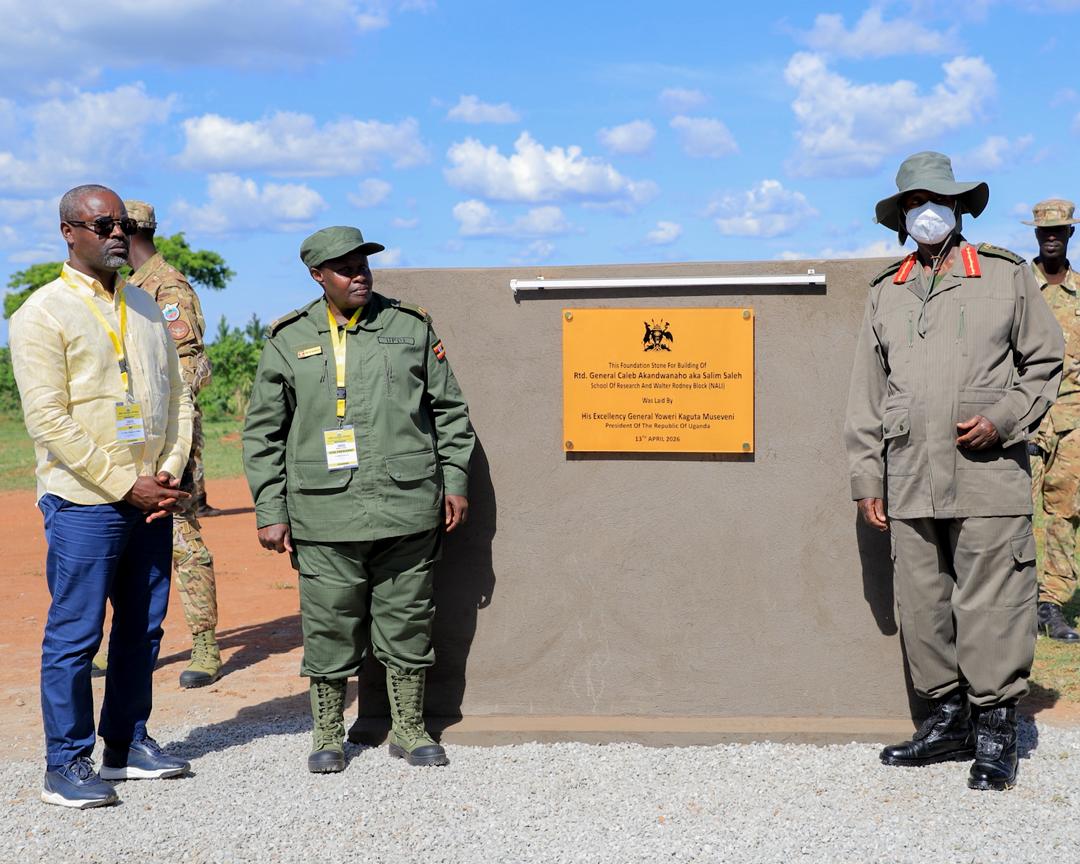
Kyankwanzi – Government officials have underscored the importance of patriotism, ideological grounding, and accountability as key pillars for Uganda’s socio-economic transformation, during discussions on the expansion of the National Leadership Institute (NALI) in Kyankwanzi.
President Yoweri Kaguta Museveni, Vice President, Maj (Rtd) Jessica Alupo and Deputy Speaker Thomas Tayebwa at the Foundation stone.(Courtesy photo)
Col. Emmy Rukogota revealed that the planned facility will serve as a center for promoting African culture and providing a platform for ideological engagement. The complex will feature a modern multimedia auditorium and studios to support both physical and virtual learning.
He explained that the center will preserve Uganda and Africa’s liberation history while advancing “Musevenomics,” a philosophy focused on wealth creation and economic transformation.
According to Rukogota, the facility will also honour the contribution of Gen. Caleb Akandwanaho, also known as Salim Saleh, recognizing his role in mobilization during the liberation struggle and his continued involvement in community development initiatives such as SACCOs.
He described Gen. Saleh as a pillar of patriotism and national development, whose legacy justifies the establishment of such a centre.
Meanwhile, the Head of Public Service and Secretary to Cabinet, Lucy Nakyobe, called on civil servants and leaders to embrace patriotism, warning that national development cannot be achieved without a committed and values-driven workforce.
She revealed that government has introduced mandatory ideological training at NALI for all newly recruited public servants and senior officials. The two-week induction programme is aimed at instilling discipline, patriotism, and a deeper understanding of government policies.
Nakyobe noted that several senior officials, including Permanent Secretaries, Chief Administrative Officers (CAOs), and town clerks, have already undergone the training, with more cadres expected to follow.
She, however, raised concern over increasing corruption in public service recruitment, particularly within district service commissions, where reports of job-buying have emerged.
Describing the trend as unacceptable, she urged legislators to review existing laws to address loopholes that enable such practices.
Nakyobe warned that corruption is becoming deeply entrenched and poses a serious threat to the country’s future if not urgently tackled.
She highlighted key areas of concern, including procurement irregularities, payroll fraud, absenteeism, and bribery in service delivery.
“In procurement, there is collusion between officials and contractors, leading to inflated costs and substandard work, which explains why some roads deteriorate shortly after construction,” she said.
She also emphasized that absenteeism, especially in critical sectors like health and education, amounts to corruption, noting that time is a valuable public resource that must not be wasted.
Nakyobe called for stronger leadership and accountability, urging leaders at all levels to set an example by demonstrating integrity and commitment to public service.
She tasked Members of Parliament to strengthen oversight, enact stricter laws, and ensure value for money in government expenditure.
On the health sector, Minister of Health Dr. Jane Ruth Aceng highlighted both progress and persistent challenges, stressing the importance of preventive healthcare in reducing disease burden.
She noted that with Uganda’s growing population, the health system cannot sustain treatment for all conditions, making prevention through proper nutrition, exercise, and healthy lifestyles critical.
Dr. Aceng pointed to improvements in health infrastructure, including designs that cater for persons with disabilities, as well as expanded access to mental health services.
She also revealed progress in organ transplant services at Mulago National Referral Hospital, which has successfully conducted more than 12 transplant surgeries, with all donors and recipients reported to be in stable condition.
To address staffing gaps, Dr. Aceng said government is equipping nurses with diagnostic skills to support service delivery at lower health facilities, especially in the absence of specialized personnel.
Source link