 news TRUSTED NEW
A closer look at people involved in Senegal’s anti-gay crackdown
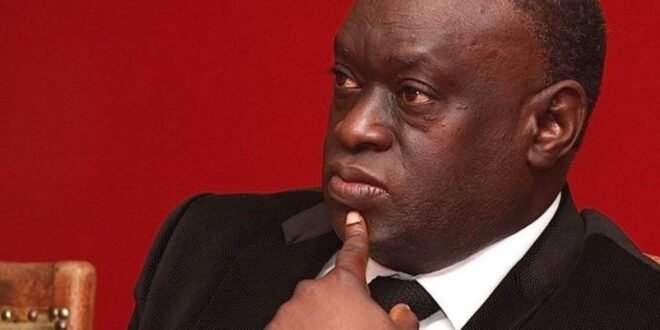
El Hadji Moustapha Diouf, a prominent lawyer in Dakar, refuses to defend defendants accused of homosexuality. (Photo courtesy of @metrodakar)
On April 30, 2026, the controversial journalist Pape Ndiaye, a legal commentator and columnist for the television network Walf TV, reported that nearly 319 suspected homosexuals had been arrested in less than three months since the start of the year, listing the number of defendants in each case. Meanwhile, the arrests have not let up.
On Friday, June 12, six new arrests took place in Linguère in central Senegal, as part of investigations linked to the May 15 arrest of Matar Ndiaga Seck for “acts against nature”. Seck, long portrayed as a power behind the scenes for Ousmane Sonko—the current president of the National Assembly—is actually his childhood friend. The six individuals arrested are now themselves being prosecuted for “acts against nature”, and four of them, who are HIV-positive, are also being charged with the intentional transmission of HIV, according to the Senegalese newspaper Le Soleil.
Since March 31, when Senegal enacted a harsh new anti-LGBTQ law, “unnatural acts” — meaning same-sex intimacy — have been punishable by 5 to 10 years in prison in Senegal, with fines of up to 10 million CFA francs (about 15,000 euros or US $17,688). The offense of advocating “unnatural acts” is punishable by 3 to 7 years in prison and fines of up to 5 million CFA francs (about 7,500 euros or US $8,844).
Two knowledgeable observers of events in Senegal answered questions from Erasing 76 Crimes about who is being targeted and why.
The situation of Senegalese lesbians
Mya Wélé is a lesbian from Senegal is currently living in asylum in Canada.
Erasing 76 Crimes: “Have any lesbians been arrested since the intensification of police raids against the LGBT+ community?”
Mya: “No, not yet, but the tightening of legislation in Senegal also affects lesbians, and the social pressure on them is no less intense. However, they are even more invisible in the media.”
The intent to cause harm above all else
Mouhamadou, a native of Senegal currently working elsewhere in West Africa, is a knowledgeable observer of life in his home country.
Erasing 76 Crimes: “What is driving the current wave of arrests?”
Mouhamadou: “First and foremost, there is a clear and obvious intent to cause harm. And no one is safe. The arrest of Matar Ndiaga Seck before his departure for Mecca is the most glaring proof of this. He was indicted based on text messages exchanged with a lover, dating back to the period between 2010 and 2013. Each time, they dig up skeletons from the closet to build a criminal case against him.
Presidential advisor Matar Ndiaga Seck was arrested on homosexuality charges on May 15. (Photo courtesy of Seneweb)
These are sometimes brilliant people who are being destroyed, like the doctor at the National Blood Transfusion Center in Dakar, who was wrongly accused of contaminating blood bags with HIV and whose arrest received extensive media coverage this spring.
In contrast, thousands of criminals are released every year during Eid [the Islamic holiday marking the culmination of the annual hajj pilgrimage], pardoned by the President of the Republic of Senegal.
My country is experiencing a reversal of values — prison cells are being cleared to cram in innocent people whose only “crime” is loving someone of the same sex or engaging in consensual sexual relations with someone of the same gender”.
Public figures who are adding fuel to the fire
Erasing 76 Crimes: “Who are the key figures behind this crackdown in Senegal?”
Mouhamadou: “Without listing them in any particular order, there is El Hadji Moustapha Diouf, the prominent leading figure of the Dakar bar and the lawyer for Hissène Habré [the former Chadian president prosecuted for complicity in crimes against humanity, acts of torture, and barbarism]. Diouf laughs out loud in the media as he says he will never take on the case of a defendant suspected of being homosexual. He is a lawyer, but says this is “a matter of conscience”.
Yet he is by no means a paragon of moral virtue. He is a public figure who was already sentenced on appeal to a six-month suspended prison term in France in 2014 for a sexual assault that occurred in a law office on March 21, 2012.
He is not the only one behind the crackdown.
Take, for example, the former prime minister and current president of the National Assembly, Ousmane Sonko. [On May 22, during a current affairs question period in the Senegalese Parliament, Sonko stated: “There is a small group in the West that wants to impose itself on the rest of the world.”] He lambasts the West for defending homosexuals and says he intends to protect Senegal’s national sovereignty regarding culture and customs, even though he was convicted of corrupting youth in the case that pitted him against the plaintiff Adji Sarr [who accused him of repeatedly raping her], before being granted amnesty by then President Macky Sall.”
“Guy Marius Sagna, a representative from Ousmane Sonko’s PASTEF party for the Ziguinchor district, has been making a series of sensational statements against LGBT+ rights.
See Also
Sagna converted to Islam in 2024 and now goes by the name Mouhamed.] “However, far from being a paragon of virtue, Sagna fathered a child out of wedlock during an adulterous affair, even though adultery is a crime in Senegal. (Articles 329–331 of the Penal Code).”
Mame Mactar Gueye, vice president of the Islamist pressure group Jamra in Senegal (Photo courtesy of TMF)
“Mame Mactar Gueye is the most erratic of them all; I don’t even want to know what goes through his head. He constantly brings up a list of over 600 homosexuals whom he claims to have turned over to the authorities. But in my opinion, all of this is false, unless he personally had sexual relations with each of them. Besides, Senegalese law prohibits private individuals from collecting this type of data or maintaining such files.”
[Collecting or transmitting personal data without consent constitutes a serious invasion of privacy punishable under Article 363 bis of the Senegalese Penal Code. The unauthorized retention of such files is punishable under Articles 431-7 through 431-65 of the Penal Code relating to cybercrime. If he were convicted of these offenses, Gueye would be liable to five years in prison and a fine of 5 million CFA francs (about 7,500 euros or US $8,844).]
Source link