By Alexander Luyima | The Hoima Post
KAMPALA, UGANDA — In the heart of Kampala, the staging of the divine has become one of the country’s most lucrative, unregulated financial enterprises. Every Sunday, thousands of desperate believers pack mega-churches, throwing their hard-earned money at the altars of charismatic “prophets” and “apostles” in exchange for promises of instant wealth, cancer cures, and supernatural breakthroughs.
But beneath the booming praise and worship lies a highly calculated, syndicated machine of financial fraud and fabricated miracles. While the public has long suspected foul play, recent whistleblowing, forensic insights, and landmark court convictions are exposing the mechanics of how Uganda’s premier faith-healing brands operate—and why the state repeatedly fails to stop them.
Behind the Curtain: Engineering the “Miracle”
For decades, critics like Human Rights Activists and former insiders have insisted that the miraculous manifestations seen on Christian television networks are not acts of God, but acts of theater.
According to exhaustive accounts by Pastor Solomon Male, a veteran whistleblower who spent years inside these ministries, the production of a miracle is corporate. Whistleblowers have revealed that churches actively employ scouting networks to recruit vulnerable, disabled, or economically desperate individuals. These actors are allegedly paid up to Shs 500,000 per service to fake conditions like blindness, lameness, or demonic possession, only to be “healed” at the exact moment the camera pans to the pulpit.
For those who are genuinely sick, the reality is darker. Forensic tracking of church operations has revealed strict, profit-driven vetting processes. In ministries like those formerly run by the late Pastor Augustine Yiga, terminally ill congregants were forced to fill out forms detailing their employment history and asset ownership. Prayer priority was explicitly sold to the highest bidder, with pastors demanding upfront payments of Shs 1.2 million or more for an audience with the “man of God,” leaving impoverished believers to succumb to preventable conditions.
The Sham of “Holy Retail”
When the staging of physical healings is not enough, Uganda’s mega-pastors turn to unregulated commercial monopolies. Critics frequently target figures like Prophet Samuel Kakande, whose ministry has commercialized ordinary items under the guise of anointing. Kakande’s church famously retails standard agricultural produce grown on his private plantations as “Holy Rice” for an astronomical Shs 50,000 per kilogram, alongside bottling standard tap water as priced miracle remedies.
Simultaneously, Pastor Aloysius Bugingo has faced public backlash for aggressively coercing his congregation to “sow seeds” strictly in foreign denominations, such as U.S. dollars, optimizing the ministry’s profit margins away from the depreciating local shilling.
The medical double standard remains the most damning evidence of fraud. While pastors routinely command their flocks to flush life-saving HIV and cancer medications down the toilet in demonstration of “absolute faith,” they quietly seek advanced Western healthcare when they themselves fall ill. Observers point to Pastor Robert Kayanja of the Rubaga Miracle Cathedral; despite proclaiming thousands of supernatural cancer healings at his altar, he reportedly flew his own family member abroad for professional oncology treatments when faced with a serious medical crisis.
The Political Shield and the State House Buffer
The persistent survival of these ministries is not an accident of faith; it is a calculation of political survival. In Uganda, the pulpit is a vital asset for the ruling National Resistance Movement (NRM). During tightly contested election cycles, these mega-churches function as massive, ready-made voting blocs for President Yoweri Museveni.
In exchange for endorsing the presidency and ensuring their vast congregations toe the party line, these pastors are granted informal immunity. When local police or anti-fraud units attempt to investigate complaints of extortion, child exploitation, or money laundering, calls from high-ranking political entities frequently freeze the files.
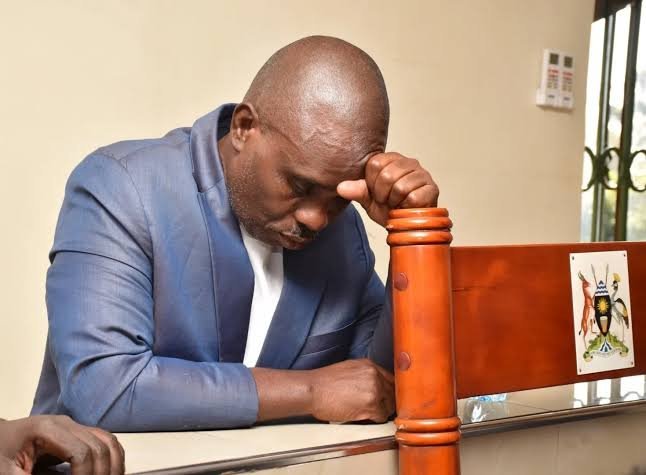
This protective circle was vividly exposed during the massive multi-billion-shilling scandal involving Pastor Siraje Ssemanda of the Bombo Revival Church. Ssemanda, alongside his network, established a fraudulent NGO called the Hands Across the World Initiative. The syndicate successfully fleeced over 5,000 victims—including 400 private school owners—out of more than Shs 4 billion by promising state-backed scholarships, trips abroad, and direct connections to the presidential program Operation Wealth Creation.
When the victims realized the promises were completely hollow, the State House Anti-Corruption Unit (SH-ACU), then pushed by immense public pressure, finally intervened. Ssemanda was apprehended at the Mutukula border while attempting to flee into Tanzania.
The forensic trail quickly widened, leading the State House Anti-Corruption Unit to summon high-profile political figures, including presidential advisor Catherine Kusasira and prominent city Pastor Mondo Mugisha, who were heavily implicated in promoting the scam by claiming direct access to President Museveni and Gen. Salim Saleh.
Justice Interrupted
While Chief Magistrate Gladys Kamasanyu eventually sentenced Ssemanda to two-and-a-half years in prison and imposed a Shs 405 million fine in January 2023, critics argue that the sentence was a mere slap on the wrist compared to the billions stolen. Furthermore, the political heavyweights tied to the scam largely escaped systemic legal consequences.
The superficial nature of state oversight is precisely why public figures like businessman Frank Gashumba have resorted to public challenges, such as his standing Shs 500 million bounty for any pastor who can prove a single miracle inside a certified hospital intensive care unit.
As long as the state relies on the pulpit to secure its hold on power, any proposed government regulation from the Ministry of Ethics will remain a performative exercise. The “Miracle Machine” will continue to run unabated, fueled by the desperation of the poor and protected by the signatures of the powerful.
Uganda Must Demand Answers
This is a moment for Ugandans to ask difficult questions, demand transparency, and insist that the law applies equally to everyone, regardless of religious title, political connections, or the size of a congregation.
The government must ensure that credible allegations of fraud, financial exploitation, and dangerous medical claims receive independent investigation. Law enforcement agencies must follow the evidence without fear or favour. Religious institutions must be transparent about financial demands made of their followers, while public officials must explain any involvement in schemes that claim access to government programmes or political leaders.
Believers also deserve protection. No Ugandan should have to choose between seeking medical treatment and demonstrating faith. No family should be pushed deeper into poverty by promises of instant wealth or miraculous healing. And no victim should feel powerless to report suspected wrongdoing because the person accused commands a large following or enjoys access to influential political figures.
This is not an attack on Christianity or on the freedom of worship. It is a demand that faith remain a matter of conscience rather than a licence for exploitation. Genuine religious leaders have an opportunity to distinguish themselves by condemning deception, protecting vulnerable congregants, and supporting accountability wherever credible allegations arise.
Uganda’s journalists must continue asking difficult questions. Civil society must defend those who speak out. Parliament and the relevant regulatory authorities must examine whether existing safeguards are sufficient to protect worshippers from financial and medical exploitation. And citizens must refuse to allow political influence or religious celebrity to replace evidence and the rule of law.
The international community, including Ugandans living abroad, should pay attention to these questions because the consequences of exploitation do not end at the church door. They reach families, livelihoods, public health, and confidence in national institutions.
The real test of Uganda’s commitment to justice is not how loudly its leaders condemn corruption, but whether they are willing to investigate credible allegations when the people involved command thousands of followers and enjoy powerful political connections.
A pulpit must never become a shield against accountability. A congregation must never become a marketplace of desperation. And a promise of healing must never become an excuse to exploit the sick.
Ugandans deserve the freedom to worship without fear of deception. They deserve public institutions that protect them without favour. They deserve religious leaders who understand that the trust of a congregation is a responsibility, not an opportunity for personal enrichment.
The question is no longer whether the miracle industry deserves scrutiny. The question is whether Uganda has the political will to follow the evidence, protect its people, and hold everyone accountable under the same law.
Faith belongs to the people. Accountability belongs to everyone. And no one, however powerful their pulpit, should stand above the law.