By Alexander Luyima, GDipICL | The Hoima Post
In Uganda, the struggle for political freedom is not fought only at rallies, in the streets, or at the ballot box. Sometimes, it unfolds in government offices, before public officials, and through legal procedures that are supposed to protect every citizen equally.
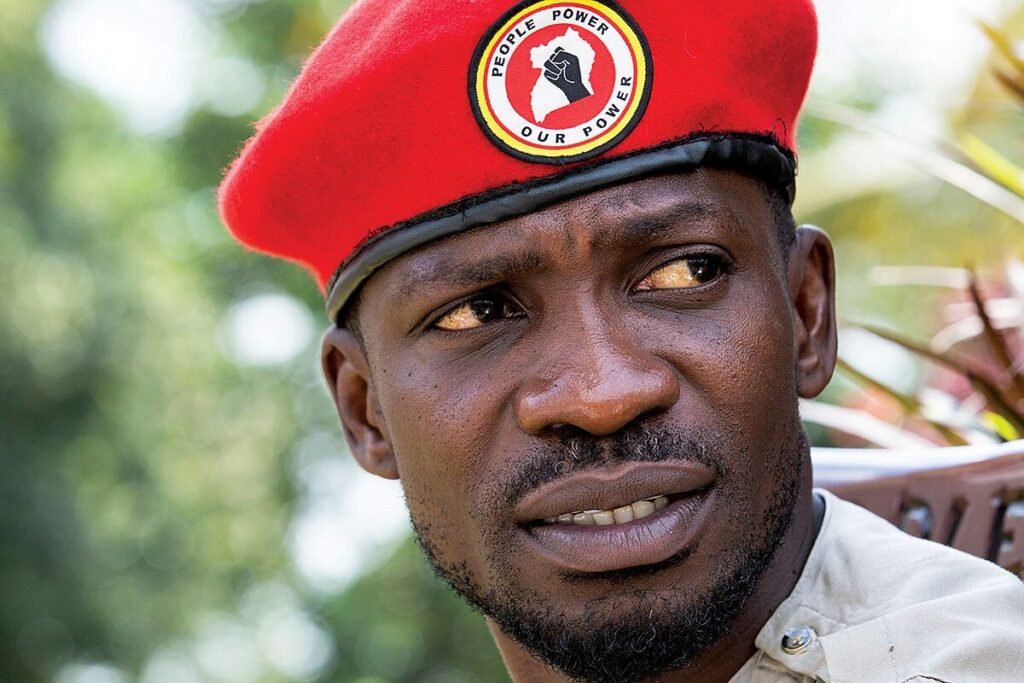
Bobi Wine’s political journey illustrates the difficult challenge of pursuing democratic change within a system whose institutions critics accuse of serving the interests of those in power.
In 2020, as Uganda prepared for a decisive electoral contest, Bobi Wine and the National Unity Platform sought to establish their political movement within the country’s legal framework. The broader struggle surrounding opposition politics raised a fundamental question: What happens when citizens attempt to exercise their legal rights in a system where public institutions are perceived to operate under political pressure?
The issue goes beyond the registration of a political party. It touches the very foundation of constitutional democracy.
When the Law Becomes a Political Battleground
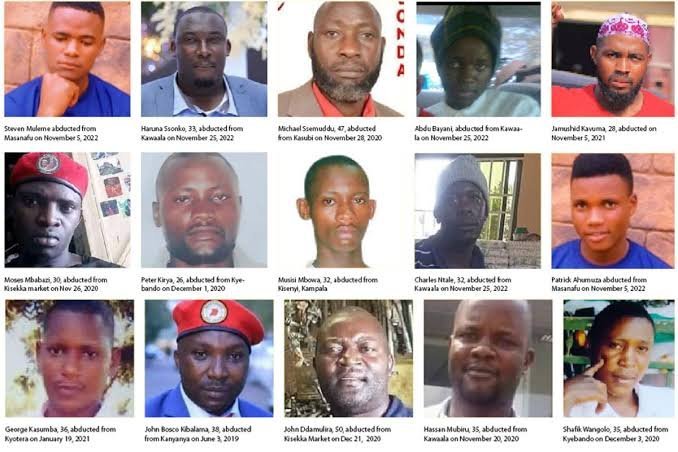
Imagine attempting to build a political movement while facing allegations of intimidation, surveillance, threats, and administrative obstruction. Imagine believing that you have followed the required procedures, only to encounter delays and obstacles that leave you questioning whether the system is working impartially.
For an opposition leader, the challenge is not merely to win public support. It is also to navigate institutions that may determine whether that support can be translated into meaningful political participation.
This is where Bobi Wine’s political struggle takes on a deeper significance.
A dictatorship does not always reveal itself through force alone. It can also reveal itself through the selective application of the law, the intimidation of public officials, and the obstruction of legitimate political competition.
When administrative procedures are deliberately manipulated to disadvantage political opponents, the consequences extend far beyond the individuals involved. Citizens lose confidence in public institutions, political participation becomes increasingly risky, and the promise of equal treatment under the law begins to lose its meaning.
These are serious concerns in any country that claims to uphold democratic principles.
The Courage to Challenge Power Through the Law
Bobi Wine’s decision to pursue political change through an organised political party demonstrates an important principle. The existence of an unjust system does not automatically eliminate the value of using legal and constitutional channels to challenge it.
Indeed, insisting that public institutions follow their own rules can expose contradictions between a government’s democratic promises and the experiences of those seeking to hold it accountable.
However, legal recognition alone does not guarantee a level playing field. A political party may exist formally while still facing practical barriers to organising, campaigning, mobilising supporters, or participating freely in public life.
This is why the rule of law must mean more than the existence of statutes, regulations, and government offices. It must also mean that those laws are applied fairly, that officials can perform their duties without political interference, and that citizens can exercise their rights without fear of retaliation.
The true test of a democracy is not how freely the ruling party operates. It is how fairly the system treats those who challenge its hold on power.
Uganda’s Democratic Crisis Is Bigger Than One Politician
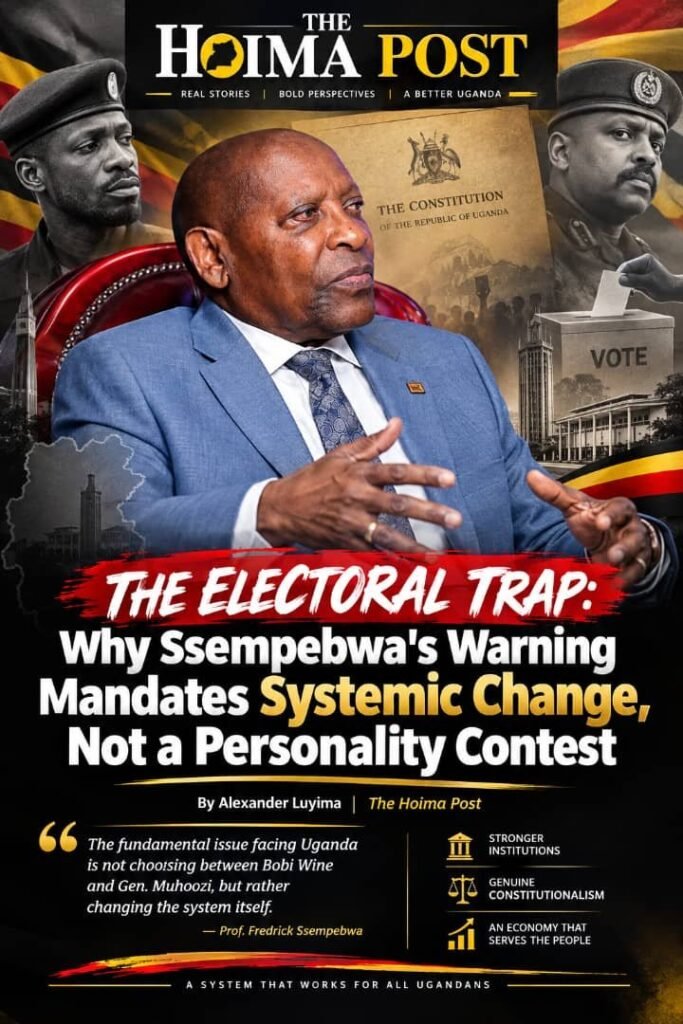
It would be a mistake to reduce Uganda’s political struggle to a personal contest between Bobi Wine and President Yoweri Museveni. Personalities may dominate political headlines, but the deeper issue concerns the institutions that determine how power is acquired, exercised, challenged, and transferred.
An independent judiciary, a professional public service, impartial electoral administration, and accountable security agencies are essential to a functioning democracy. Without them, even the most carefully written constitutional guarantees risk becoming promises that exist on paper but are difficult to enforce in practice.
Uganda’s opposition movement therefore faces a challenge that extends beyond winning elections. It must also confront the structural conditions that can undermine political competition and weaken public confidence in the electoral process.
For ordinary Ugandans, these questions have practical consequences. They affect whether citizens can support their preferred candidates without intimidation, whether political parties can organise freely, whether election results command public confidence, and whether peaceful political change remains a realistic possibility.
The issue is not whether Bobi Wine or any other opposition leader should be above the law. No politician should be. The issue is whether the law applies equally to everyone, including those who hold the highest offices in the country.
When Institutions Serve Power Instead of the People
A government cannot credibly claim to uphold the rule of law if the public believes that access to justice depends on political loyalty or that institutions are more responsive to the interests of the powerful than to the rights of ordinary citizens.
Such a perception is dangerous because public trust is one of the foundations of political stability. When citizens lose faith in institutions, even legitimate government decisions can become difficult to defend.
The solution is not to abandon the law. It is to insist on its impartial enforcement, strengthen institutional independence, protect fundamental rights, and ensure that public officials remain accountable to the Constitution rather than to individual political interests.
Bobi Wine’s legal and political struggle brings this question into sharp focus. It challenges Ugandans to consider whether the country’s institutions are sufficiently independent to protect political competition, even when that competition threatens those who have governed for decades.
The answer matters not only to the opposition but also to Uganda’s future.
The Final Question: Who Does the Law Protect?
Ultimately, democracy cannot survive on elections alone. It requires institutions that respect constitutional limits, protect political freedoms, and allow citizens to challenge those in power without fear.
Bobi Wine’s struggle represents a broader question facing Uganda: Can a citizen challenge a powerful political establishment and still expect the institutions of the state to treat that citizen fairly?
If the answer depends on who holds power, then the problem is far greater than any individual political dispute.
The law must be more than an instrument for controlling citizens. It must be a safeguard against the abuse of power. Public institutions must serve the nation, not a political establishment. And democracy must provide a genuine path for peaceful change, not merely the appearance of political choice.
When the pursuit of justice becomes a struggle against the very institutions meant to deliver it, the crisis is no longer simply political. It is a crisis of the rule of law itself.
For Uganda, the ultimate measure of democratic progress will not be whether one leader defeats another. It will be whether the country builds a system in which no leader is above the law, no citizen is denied equal protection because of political belief, and no institution is beyond public accountability.
That is the struggle that matters, and that is the standard by which Uganda’s democracy must ultimately be judged.
Alexander Luyima, GDipICL
The Hoima Post