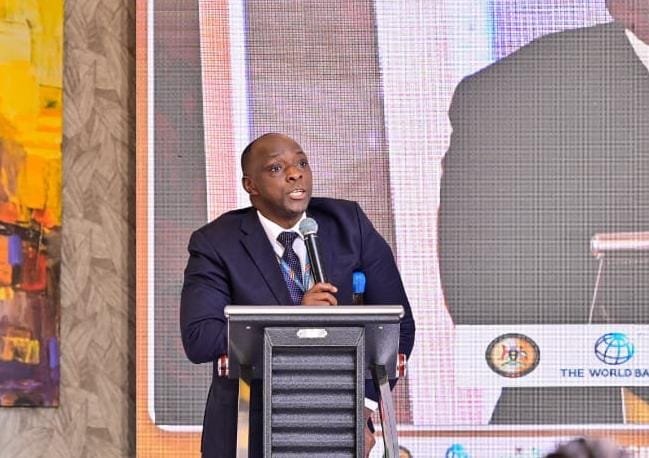
Uganda is looking to Germany’s local government financing model for lessons on how to strengthen the financial capacity of local authorities, improve service delivery and drive economic transformation.
A delegation from the Ministry of Local Government, led by the Permanent Secretary and accompanied by the Commissioner for Local Economic Development (LED), is in Germany on a benchmarking visit to study the country’s approaches to local governance, financing and renewable energy development.
The delegation, which includes officials from the Ministry of Trade, Industry and Cooperatives and Germany’s development agency, GIZ, is examining how financial autonomy, local taxation and revenue-sharing arrangements enable local governments to finance and execute their responsibilities.
The engagements have highlighted the importance of matching responsibilities assigned to local governments with adequate financial resources, decision-making powers and institutional capacity.
Germany’s experience could offer lessons for Uganda, where local governments continue to grapple with limited funding to deliver public services and implement development programmes within their jurisdictions.
Beyond governance and financing, the delegation is studying Germany’s renewable energy sector, particularly its more than 9,000 biogas plants, which turn agricultural waste into energy and fertiliser while creating employment and income opportunities.
Insights from the German Farmers’ Association (DBV) have also demonstrated how farmer-led initiatives, cooperatives, supportive government policies and private sector investment can stimulate local economies and ensure that more wealth is retained within communities.

On November 24, the delegation visited Saxony, a German region known for its research institutions, education, technological innovation and industrial development. The region hosts major industrial investments, including BMW vehicle production and semiconductor manufacturing.
The visit provided an opportunity for Ugandan officials to examine how investment in research, technology and industrial production can stimulate regional economic growth, attract investment and create employment.
The Ministry said the benchmarking exercise is not intended to replicate Germany’s governance model but to identify practical approaches that can be adapted to Uganda’s institutional and economic circumstances.
The lessons are expected to inform efforts to strengthen local government financing, improve service delivery, attract investment and position local authorities as key drivers of economic transformation.