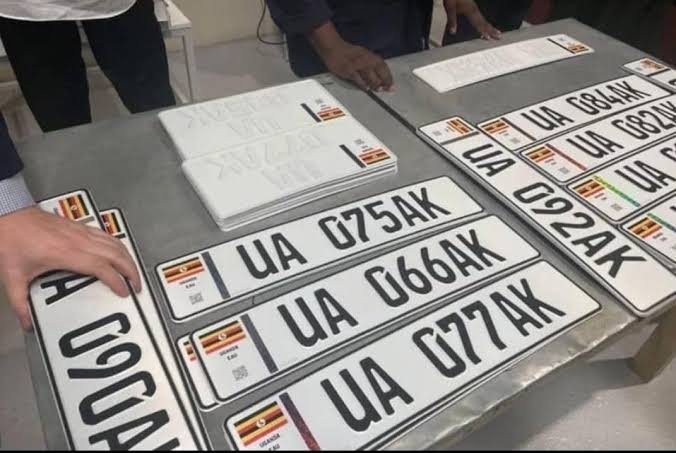
By Alexander Luyima | The Hoima Post
If the contract never provided for digital number plates, and a former minister says the idea originated from a presidential directive, who turned that directive into a national project, and where is the paper trail?
Uganda is facing a question that goes beyond number plates. It concerns how power is exercised, how public projects are conceived, and whether citizens are receiving the full truth about decisions that affect their money and their lives.
During a parliamentary investigating committee session, questions emerged over the origins of the controversial digital number plate project. A representative stated that the company had denied telling the country it was introducing digital number plates and maintained that the contract contained no provision for them.
The challenge to the Ministry of Works and Transport was direct. Who started the digital number plate story?
Gen. Edward Katumba Wamala, the former Minister of Works and Transport who now serves as Minister of Public Service, offered an explanation during the parliamentary exchange. He pointed to a presidential directive requiring number plates to trigger a signal if someone tampered with them. According to Katumba Wamala, that requirement was what led to the system being described as digital number plates.
However, this explanation raises further questions rather than settling the controversy.
Who translated the President’s directive into a government project? Was the technology properly assessed before implementation? What exactly did the government agree to purchase, and under what contractual terms? If the original contract did not cover digital number plates, what legal and financial arrangements were subsequently made to introduce them?
These are not questions that can be answered through political explanations alone. They require documentary evidence, a clear timeline of decisions and accountability from the officials responsible.
A presidential directive may explain where an idea originated, but it does not automatically explain how that idea was evaluated, financed, contracted or implemented. Each of these stages deserves scrutiny, particularly when a project has implications for public expenditure and millions of motorists.
The reported absence of a feasibility study also deserves serious examination. Before a major technological system is introduced nationwide, citizens should have confidence that its costs, benefits, security implications and practical necessity have been properly considered.
Digital technology can improve vehicle identification and help detect tampering. The issue is not whether Uganda should embrace modern technology. The issue is whether public projects are introduced through transparent, properly documented and accountable processes.
The Bigger Political Question
Ugandans deserve to know who made the decisions, how public money was committed and whether the appropriate procedures were followed.
Parliament must establish the facts by examining the contract, the presidential directive, relevant procurement records and any subsequent agreements connected to the project.
The objective should not be to assume wrongdoing or condemn technological progress. It should be to establish the truth and ensure that public institutions remain accountable to the people they serve.
TheAlexanderVLogs Take
When a company reportedly says one thing about its contract and a government official offers an explanation of how a project originated, the public deserves more than competing accounts. It deserves evidence.
The central question is no longer simply who first used the term digital number plates. It is whether the government can provide a clear, documented account of how the project moved from a presidential directive to a national undertaking.
In a democracy, a presidential directive may start a process, but transparency must explain every step that follows. Uganda deserves answers, and Parliament has a responsibility to help establish them.